Work Of A Non-League Groundsman

Work Of A Non-League Groundsman: In the no-frills, grass roots world of non-league football, it’s possible the most important man on the pitch is the groundsman.

Sitting on a plastic chair, in muddy boots and paint stained jacket, David Page is every bit the non-league groundsman I was hoping to meet.

“The day begins with a cup of tea,” he says, welcoming me into the cosy former shipping container, which serves as his office and general tea room. “You’ve turned up at the perfect time. Days like this provide a glimpse into real life non-league football.”

My journey to Crown Meadow, the home of Vanarama National League North side Lowestoft Town was old school. No out of town, bland stadium here, but a walk along Seago Street, past rows of terrace housing, eventually arriving at the metal gates. It feels like a proper football ground, steeped in history, rooted in the local community. I vividly remember watching games here, on dark winter nights with friends some twenty-plus years ago. Experiences like those stay forever in the mind.

The club has seen mixed fortunes – fighting bankruptcy, relying on supporters’ donations, then an FA Vase final at Wembley, successive promotions, play-off finals and now reaching the heights of National League North non-league football. By any standards, it’s been one heck of a journey for the Trawlerboys.

Sipping our tea, we stare out at the bleak conditions. Rain pummels the pitch with such force that I doubt today’s important match against one of the league’s biggest teams, Stockport County, will go ahead.

“It’ll be on,” says David. He should know. He’s looked after the pitch for 19 years. He takes off his deep blue baseball cap, which proudly bears the club logo. The previous night was a sleepless one, he says, worrying about the pitch and checking for regular weather updates.

“I never switch off. I can’t – I keep thinking about my pitch and what condition it will be in.” David is a Lowestoft man. He used to work in the fishing industry, spending days and nights out on the North Sea on one of the many trawlers that frequented this stretch of coast. But nineteen years ago, he was approached by the Lowestoft Town chairman to become their groundsman. He joined the ground-keeping course at Ipswich Town, learning from the best in the business, Alan Fergusson, now head groundsman at St Georges Park, home of the England international team.

Sitting in the press box, overlooking the ground, I chat to David. He is focused on the pitch, watching rain sweep across, soaking the already soaked turf. It’s like watching a chess player planning his next move.

“What you see is what you get here,” he says. “We don’t have the luxury of training pitches or elaborate facilities, this pitch sees a lot of action. Four of our sides play and train on the surface.” The first team, reserves, youth and women’s sides all regularly use the surface, making the groundsman’s job all the more difficult. It’s in remarkable condition, considering.

Despite the advancement of technology and pitch care, the job of a non-league groundsman has changed little, and the task of getting the pitch ready for match day is much the same as it always was, although, as David is keen to point out, there is a vast improvement in equipment.

“When I first came up here, the groundsman at the time took me to the shed, handed me the rechargeable drill and pointed to the lawnmower – that was it.” The Trawlerboys’ shed is now home to a host of ground improving aids – large and small rollers, slitter, mowers, rakes and no end of tools to help keep the surface in top condition. A combination of good equipment and superb knowledge means the club did not postpone one game last season, impressive for any club, but especially for a non-league side.

It hasn’t always been like that. David recalls one match day when he arrived to find three-quarters of the pitch under water.

“I could have cried,” he says. We head towards the home team changing room. George the kit man is already laying out the players’ match day kit. Rows of bright blue shirts hang from the hooks, while freshly laundered towels and other essentials are carefully placed at the ready for each player.

David checks the facilities, making sure everything is working. The job of a groundsman at this level is one of caretaker too. The club also has several volunteers who help with painting and maintenance.

On a match day David typically arrives around 6.30am and is normally the last to leave in the evening. He returns early Sunday morning to clean the stands and changing rooms, and see to the pitch if there is a women’s game on. “It’s a good job my wife works in the turnstiles, otherwise we would never see each other,” he says.

As the rain eases off, we head out onto the pitch. Holding his trusty groundsman’s fork, David begins slowly lifting the turf, allowing some of the standing water to disperse. The pitch feels spongy and I imagine it won’t take much for the surface to cut up, but David remains hopeful.

“We have the referee coming around 10am for a pitch inspection – I think we’ll be OK”. Heading back to the office I warm up by the heater while David, the referee and club secretary stroll across the soggy pitch.

“Is it on, mate?” asks a Stockport County fan, one of many who have stayed in town overnight after a six-hour car journey. The game is given the go ahead, preparations for match day continue, and as the rain subsides, the line marker is brought pitch side. It’s a job that can take a good hour and means walking miles over the course of a week. I head for the exit.

The next time I see David is at half time in the match. He’s out there, patting and lifting the turf, nurturing the surface. A last minute goal sees the Trawlerboys grab a score draw. The fans pour out of the exit, smiles on their faces. David is pitch side, staring out onto his beloved turf, pondering his next move.

Click here to read the original article

For the latest industry news visit turfmatters.co.uk/news

Get all of the big headlines, pictures, opinions and videos on stories that matter to you.

Follow us on Twitter for fun, fresh and engaging content.

You can also find us on Facebook for more of your must-see news, features, videos and pictures from Turf Matters.

Pitch Work At Pirelli Stadium

Pitch Work At Pirelli Stadium: Work has been completed on a new drainage system at the Pirelli Stadium as the pitch is prepared for the 2018-19 season.

Burton Albion groundsman Simon Marshall says the groundstaff are “always keen to improve the surface”, and extra work has been undertaken this summer to get the pitch in the best condition for Albion’s attempt at earning promotion back to the Championship next season.

Efforts began immediately following the European Under-17 Championships last month, with games having taken place at the Pirelli.

On top of the usual seeding of the playing surface, which is done annually between campaigns and is currently being carried out, the new drainage system was put in place to maintain a better condition for the pitch throughout the coming season.

“Over the years we have had problems with the drainage, so we are having a new major drain system that should keep the pitch in better condition,” said Marshall.

“Then we won’t need to put down as many waterproof sheets due to the inconsistencies across the pitch.

“From the groundstaff’s point of view, we are always keen to improve the surface, and with the chairman and the club’s backing, we are making progress year on year.”

After a season in which the Brewers went seven months without a home victory, Nigel Clough will be hoping his side can become a tougher proposition at the Pirelli again in 2018-19.

That will rely on the quality of football they can produce in League One – and the surface they are playing that football on.

“Pitch work is done every year, but they need continued investment and major work now then,” said Clough.

“You can see from the pictures the amount of work going on out there, and hopefully it will give us a good playing surface for next season.”

Click here to read the original article

For the latest industry news visit turfmatters.co.uk/news

Get all of the big headlines, pictures, opinions and videos on stories that matter to you.

Follow us on Twitter for fun, fresh and engaging content.

You can also find us on Facebook for more of your must-see news, features, videos and pictures from Turf Matters.

ISEKI To Sponsor Sam Forgan

ISEKI To Sponsor Sam Forgan: ISEKI UK today announced that it has signed a one-year deal to sponsor local professional golfer Sam Forgan.

Sam, who is based at the well-respected Stowmarket Golf Club in Suffolk, is currently competing on the Euro-Pro tour having narrowly missed out on getting his card for the Challenge Tour last year.

ISEKI To Sponsor Sam Forgan

“Hopefully this sponsorship will give me more opportunities and a better chance of getting on the Challenge Tour this coming year” said Sam, commenting on the recent announcement “Working with ISEKI will also be a great learning experience for me and will give me an understanding of the supply side of the golf industry. I am really looking forward to the experience”

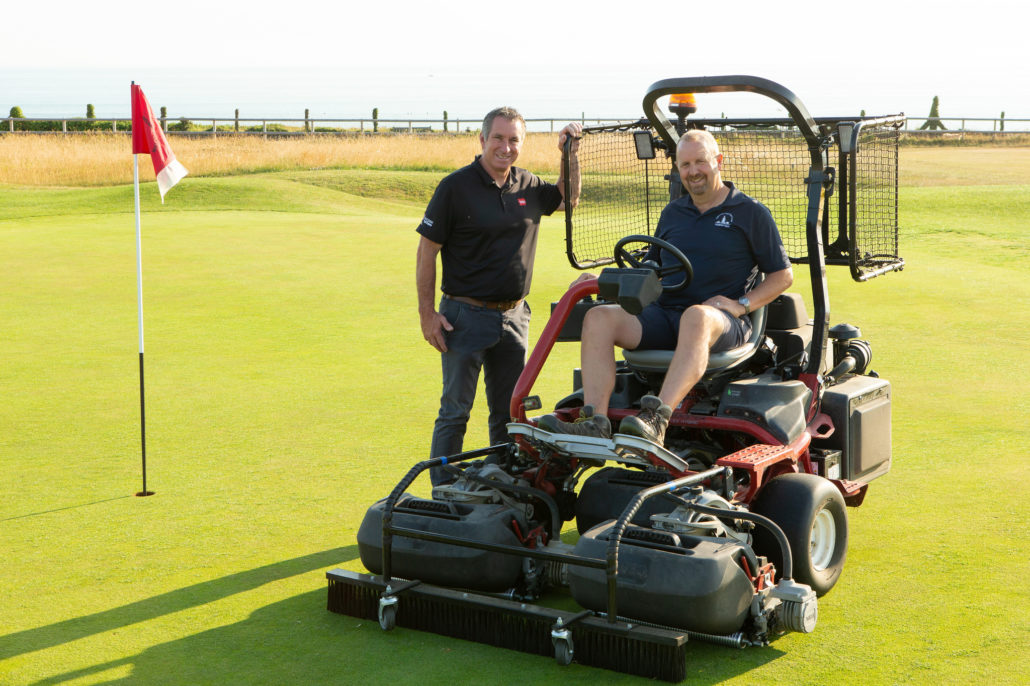
David Withers, Managing Director of ISEKI UK, pictured here with Sam was equally excited about the new relationship. “I had the pleasure of meeting Sam and hearing more about his ambitions for the future and we are delighted to be able to help in this way” said Withers, adding “whilst this is good for Sam it is also good for us, Sam travels all-round the country playing golf and will be promoting our wonderful products everywhere he goes……also hoping he might give me a few pointers to improve my swing!!”

For more information, visit: www.iseki.co.uk

For the latest industry news visit turfmatters.co.uk/news

Get all of the big headlines, pictures, opinions and videos on stories that matter to you.

Follow us on Twitter for fun, fresh and engaging content.

You can also find us on Facebook for more of your must-see news, features, videos and pictures from Turf Matters.


GKB North of the Border

GKB North of the Border: When your heritage as a machinery manufacturer and dealer dates back to 1816 you expect nothing less than the best. The Groundcare Division of Thomas Sherriff, which began in 1986, is based in East Lothian and with a further six branches provides comprehensive sales, parts and service support for commercial, agricultural and consumer equipment. The company has now become an official GKB Machines dealer, taking delivery of the first three machines, a Combiseeder, Sandfilller and SP100 Sandspreader.

Sherriff’s had seen GKB products at a number of events and were impressed with the build quality but needed to see how they performed. “When we met GKB they came across as a forward-thinking company,” says Thomas Sherriff’s Groundcare Manager, Richard Scott, “and with a background in contracting and maintenance they have an exceptional insight into what groundsmen and greenkeepers need from products for maintaining sports turf and golf courses.” Thomas Sherriff arranged with GKB’s Operations Manager, Tom Shinkins, a series of product demonstrations for customers locally where the three machines were put through their paces.

GKB North of the Border

The GKB Combiseeder was developed to meet market demand for a fast, efficient way of seeding and surface aerating with virtually no surface disturbance. The Sandfiller provides a fast solution to drainage with economic and environmentally friendly intensive aeration and sand filling in a one-pass action. The SP100 Sandspreader is a top dresser that conveniently mounts onto a turf truck such as the ProGator, Truckster or Workman.

“Seeing these machines in action the results were obvious and the quality exceptional,” says Richard, “from the day Tom came and met us we have all got on well and he’s always there with support should we need it. We’re very pleased to be selling the product as GKB dealers.”

For more information, visit: www.gkbmachines.com

For the latest industry news visit turfmatters.co.uk/news

Get all of the big headlines, pictures, opinions and videos on stories that matter to you.

Follow us on Twitter for fun, fresh and engaging content.

You can also find us on Facebook for more of your must-see news, features, videos and pictures from Turf Matters.

Euroflor To Enthrall At Hever Castle

Euroflor To Enthrall At Hever Castle: Hever Castle Golf Club’s head greenkeeper Rob Peers is a man on a mission: “to encourage visitors to both the golf course and the castle estate to fully enjoy and be fully immersed and engaged with the complete site”.

And he is confident that by using a variety of Rigby Taylor’s Euroflor urban meadow flower seed mixes he will achieve this and, by so doing, ‘integrate’ the golf course with the castle estate and enable and encourage all visitors to Hever – golfers and their partners/guests and, likewise, castle visitors – to be fully aware of everything that the historic site in Kent has to offer.

Euroflor To Enthrall At Hever Castle

Built in the 13th century, Hever Castle was originally a country house which came into the hands of Henry VIII who, in 1539, bestowed it upon Anne of Cleves in 1540 as part of the settlement following the annulment of their marriage. The property has since passed through various ownerships.

“With over 400 acres of golf course and estate, including formal gardens, there’s something here for everyone,” says Rob, “and by using the Euroflor mixes to create colourful and eye-pleasing areas with the wow factor, I can foresee a real crossover of visitors between the different areas of Hever – effectively bridging any ‘gap’ between the golf course and the estate.”

Rob and his eight-strong greenkeeping team devote around 80% of their time managing and maintaining the 27-hole golf course; the remainder is spent on areas of the estate that border the golf course and are outside of the remit of the castle’s gardening team.

After studying at university as a quantity surveyor, Rob joined the golf course team in 1994 as a casual and, he says, “I immediately fell in love with greenkeeping”. Since then he has undertaken a swathe of training courses, including gaining Level 3 in Amenity Horticulture Sports Turf Maintenance, as well as tuition/certification courses for aboriculture and pest control. A year ago he was appointed head greenkeeper, after a spell as deputy head greenkeeper.

While his first year as head of the team has, he says, enabled him to recognise the full potential of the benefits of ‘marrying’ areas of the golf course with the wider estate it has also, he adds, “been an exciting, challenging and at times scary period”.

Rob has an infectious enthusiasm for biodiversity and environmental issues – “on the greens, for example, we are doing more to make the sward as healthy as possible by, for example, increased aeration and using more sand rather than chemicals” – and this embraces measures (including bee hives) to improve the incumbent fauna and flora.

It was while he and the team were clearing certain ‘border’ areas (which led to a natural upsurge in bluebells and wild garlic, for instance), that Rob began having thoughts about the potential use and effectiveness of wildflowers in certain areas; some close by/on golf course areas; others in areas sandwiched between the course and the estate.

“Aside from converting unused, largely overgrown plots into colourful and attractive areas for everyone to enjoy, I also know that a project like this is great for my greenkeeping team. It raises our skill sets, improves our engagement with the site and lifts job satisfaction levels.”

Several areas of the estate have been made ready for the Euroflor mixes and in most cases this has entailed clearance of grass, brambles and weeds or a reduction in lake-side reed beds.

One area with particular focus will be the recently-discovered (by him) remains of a riverside bower (shelter) that was inspired by Anne of Cleves, the fourth wife of Henry VIII. This brick-built construction dates back to the early 1900s. “It was in an area previously masked by long grass, brambles and weeds,” adds Rob, “but I think it will be the perfect showcase for a white-based wildflower mix.”

But why Rigby Taylor and why Euroflor seeds (from Top Green, the largest seed producer in Europe)?

“Each week I meet up with a good friend, a fellow head greenkeeper who, despite operating on a relatively small budget on a nine-hole course, commented that he receives excellent service from Rigby Taylor’s regional sales director, Mike Ring, and he suggested I contact Mike.

“I thought that if Rigby Taylor responded so well to such a customer then as sure as anything the company would pay attention to me! And that has certainly proved the case because I can’t fault Mike’s response, back-up and level of support.”

He continues: “Mike also put me in touch with Howard Wood, Top Green’s Euroflor consultant, and it was after a conversation with Howard – a man with more than 35 years’ landscaping/wildflower experience throughout Europe and Africa – that the project here really gained momentum.

Euroflor To Enthrall At Hever Castle

“Howard offered invaluable advice and recommendations on which Euroflor mixes would sit best in the various locations I had identified in terms of colour and height, as well as texture and form.” The chosen mixes are:

  • Flora Britannica – 26 species including  Black Medick, Viper’s Bugloss and Red Clover – on/near the 8th hole/green;
  • Rainbow annuals – 14 species including English Marigold, Tickseed and China Aster – being used on two areas, including one that links the course and estate;
  • Posy (cut flower mix), comprising 12 species;
  • Sarah Bouquet – 30 species;
  • Peace (white, six to eight species – being used for the Anne of Cleves bower; and
  • Honey – 12 species including Borage, Cosmos and Baby’s Breath – being used on/near the 6th hole/green.

Rob will also be using the Souvenir 100% Red Poppy mix, fittingly in the surrounds for the 11th tee. The poppies will be planted to mimick a clock face at 11.00am (if viewed from above). In addition, the Souvenir mix will also be planted sympathetically at the entrance of the Kent and Sharpshooters Yeomanry Military Museum which is situated within the castle grounds.

Howard also advised Rob on bed preparation, including soil analyses for mineral deficiencies or extreme pH levels before the removal of all vegetation then the application of a glyphosate-based weed killer or hand weeding.

That said, Rob will also be using Rigby Taylor’s latest FloraFleece biodegradable matting for some planting. This weed suppressant and support for Euroflor sowing is a recycled fabric composed of 50% jute, 25% cotton and 25% brown wool, with a hessian scrim. Laying this effectively eliminates the need to ‘clear’ an area of weed.

“Howard and I got together and discussed every plot, in some cases viewing it from afar to judge whether the chosen colours and heights would potentially have the desired impact,” says Rob. “Leaning on Howard’s expertise, I’m sure I’ve chosen correctly and now it’s simply a matter of time before we find out!”

For more information, visit: www.rigbytaylor.com

For the latest industry news visit turfmatters.co.uk/news

Get all of the big headlines, pictures, opinions and videos on stories that matter to you.

Follow us on Twitter for fun, fresh and engaging content.

You can also find us on Facebook for more of your must-see news, features, videos and pictures from Turf Matters.