New SISGrass & HG Turf partnership

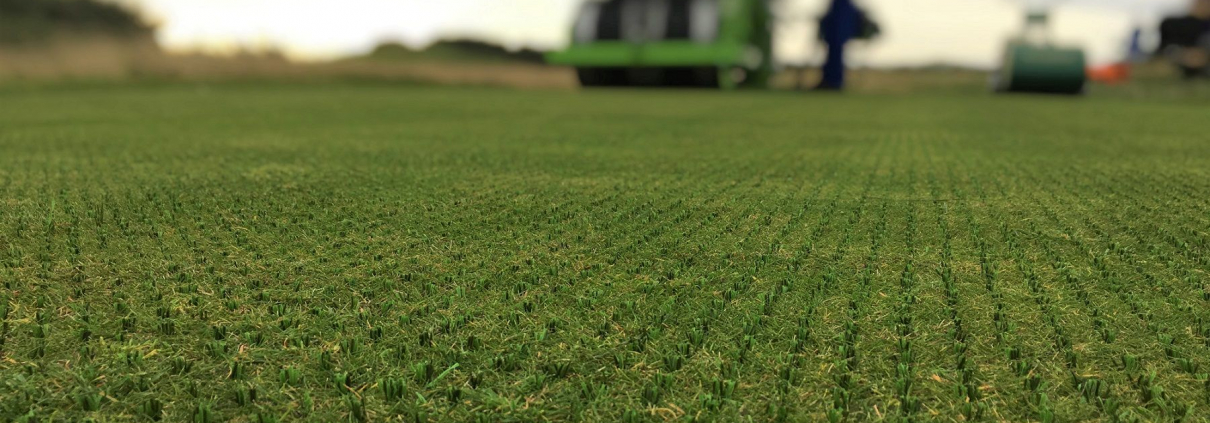
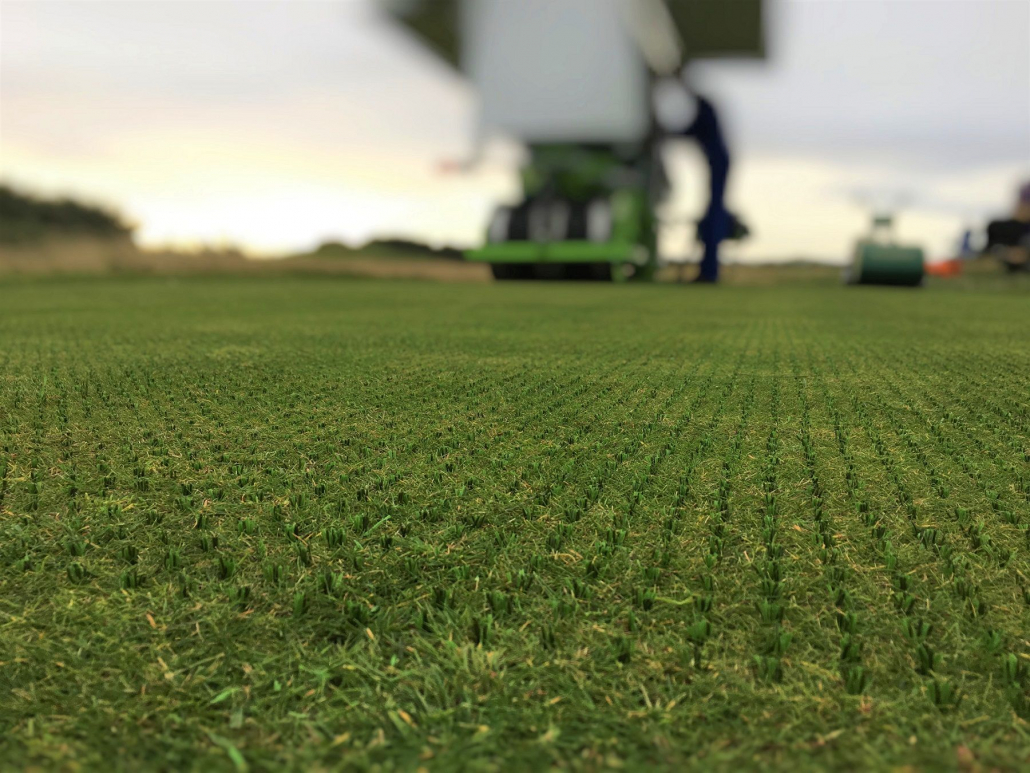
New SISGrass & HG Turf partnership: The new partnership offers the Australian sports turf industry a revolutionary new hybrid grass system – stitched hybrid grass by SISGrass. The SISGrass machine is versatile and provides the fastest installation on the market. Injecting artificial grass fibres into the playing surface, the surface is instantly stabilised, and the natural grass is protected.

SISGrass is stitched in a 20mm x 20mm square pattern, with 20mm of fibre above the surface and 180mm of fibre below the surface. The hybrid surface, which comprises 5% artificial grass and 95% natural grass, increases the playing hours by up to 3 times.

New SISGrass & HG Turf partnership

New SISGrass & HG Turf partnership

SISGrass is designed for long-term performance, with a life expectancy of 10 years+. The polyethylene fibres are UV stable and wear resistant. The fibres can also be recycled, which makes SISGrass a sustainable choice.

The SISGrass machine is powered by electricity and guided by laser for greater accuracy during installation. One machine can stitch a full-size football pitch in 7 days. A smaller version of the stitching machine is also available for goal boxes, golf tees, tennis courts and cricket pitches.

SISGrass was launched in 2015 and has been installed in over 100 pitches including 50 stadium pitches worldwide. SISGrass has been used with cool-season grass in the Premier League, FIFA World Cup, UEFA Champions League and Rugby World Cup. SISGrass has also been used with warm-season grass in the AFC Asian Cup. SISGrass is also widely used in community sport.

HG Turf Group has been supplying the market with hybrid grass for more than 20 years. The introduction of SISGrass expands HG Turf Group’s offer of grass systems.

We’re delighted to partner with HG Turf Group. Our SISGrass technology has been installed all over the world and working with this experienced partner presents an exciting opportunity to provide quality hybrid surfaces to a new market in Australia

New SISGrass & HG Turf partnership

New SISGrass & HG Turf partnership

Ivo Lamot, Managing Director, SISGrass

We are very excited to partner with SISGrass and offer their patented technology in Australia. Our collaboration includes the purchase of a SISGrass stitching machine, which will guarantee local supply and support of this international technology. SISGrass completes our hybrid grass portfolio. Our partnership with SISGrass is a significant milestone for HG Turf Group, and we are thankful for this opportunity

For the latest industry news visit turfmatters.co.uk/news

Get all of the big headlines, pictures, opinions and videos on stories that matter to you.

Follow us on Twitter and Instagram for fun, fresh and engaging content.

You can also find us on Facebook for more of your must-see news, features, videos and pictures from Turf Matters.

The Worker Is King: GKB Sandspreader

The Worker Is King: GKB Sandspreader: GKB Machines, the company behind sustainable, reliable and robust maintenance machinery for natural, synthetic and hybrid turf are offering the ability to keep your sports pitch or golf course in prime condition throughout the year, thanks to the GKB Sandspreader.

During both construction and maintenance, there are multiple reasons for sand filling and top dressing. In either case, the GKB Sandspreader enables the distribution of a wide variety of materials in the appropriate quantities with hassle-free application.

The Worker Is King: GKB Sandspreader

The Worker Is King: GKB Sandspreader

Ranging from 1m3 to 4m3, there are several hopper capacity options in four different designs. The shape and design of the sand hoppers ensures efficient operation and ensures your clear view along the machine. Giving you complete control from the tractor, an optional touchscreen allows you to manoeuvre the machine from within. Not only this but the GKB Sandspreader can also be delivered with four pivoting balloon tires for the perfect distribution of the weight on your grounds.

Adapting to fit a multitude of vehicles, the SP100 especially has been developed on the back of the success of GKB’s trailed versions and is suitable for assembling on a turf truck. For example; the John Deere® Gator™, Toro® Workman® or the Jacobsen® Truckster. With complicated construction removed, mounting the GKB Sandspreader is straightforward. A simple bolt-on system and stand legs allows the SP100 to be quickly removed. Also fitted with hydraulic controls means this efficient machine can run directly off the hydraulics of the chosen turf truck.

With development constantly happening within the heart of GKB, the GKB Sandspreader was created to offer not only maintenance and construction but also versatility. Available with a conveyer belt on the front or rear, this machine can be used as a material handler for filling drainage equipment, a smaller dresser or even bunkers. With the standard design, you can set the speed of the conveyer belt and the disc spreaders utilising an attached control unit. The double, hydraulically powered, spreading discs are adjustable on multiple points and in this way enables you to create a faultless sand distribution.

For more on GKB Machines and their reliable and robust range of machinery for natural, hybrid and synthetic turf, please visit www.gkbmachines.com or contact Tom Shinkins on 07495 883617 to enquire about the GKB Sandspreader and to book a demonstration.

For the latest industry news visit turfmatters.co.uk/news

Get all of the big headlines, pictures, opinions and videos on stories that matter to you.

Follow us on Twitter and Instagram for fun, fresh and engaging content.

You can also find us on Facebook for more of your must-see news, features, videos and pictures from Turf Matters.

Keep pond algae under control

Keep pond algae under control: With mild summer conditions proving a catalyst, preventative action using cultural control methods is encouraged to effectively manage filamentous algae.

Filamentous algae, known as blanket weed, begins life underwater forming visible mats of weed near the surface or clinging to plants after considerable growth below surface has occurred.

Keep pond algae under control

Keep pond algae under control

Left untreated, this common weed spreads quickly and can cover the entire surface of a pond, reducing light and available oxygen leading to risk to aquatic life. At this stage, biological treatments will no longer be as effective.

Dr Abigail Graceson, Technical Manager for Agrovista Amenity said: “When filamentous algae are allowed to proliferate to the stage where the majority of the water’s surface is covered, our solutions are limited.

“That’s why it’s important to take a long-term approach to management. This includes reducing the use of fertilisers close to the water’s edge, increasing the amount of oxygenating plants, and creating a buffer zone around the edge of aquatic and semi-aquatic plants.”

Products which can help to manage pond algae fall into three categories – biological, enzymatic and physical. Biological products manipulate the aquatic environment through introduction of bacteria which feed on excess nitrates and phosphates in the water, reducing their availability to the algae.

Enzymatic products disrupt the molecular structure of weed, causing the plant to completely break apart.

Finally, there are two main types of physical products – dyes which reduce the amount of sunlight penetrating below the surface of the water; and products which capture the algae within a substrate preventing it from absorbing nutrients.

Dr Graceson recommends understanding why the algae is growing excessively in the first place, to help inform control methods and product selection. With no authorised traditional chemical control treatments, often physical intervention will be required once algae have become established.

She added: “Enzymatic products are likely to assist with the control of existing problematic algae, but most treatment options are most effective when applied preventatively, or at the very start of visible signs of excessive algal growth.

“If sufficient amounts of algae are removed through physical methods, such as through raking, then a bacteria-based product may then help with ongoing control.

“If you are concerned about removing aquatic creatures during physical removal of algae, leave the algae at the side of the pond for a short while so they can return to the water.”

For further algae control advice, contact enquiries@agrovista.co.uk

For the latest industry news visit turfmatters.co.uk/news

Get all of the big headlines, pictures, opinions and videos on stories that matter to you.

Follow us on Twitter and Instagram for fun, fresh and engaging content.

You can also find us on Facebook for more of your must-see news, features, videos and pictures from Turf Matters.

Reesink’s John Pike retires

Reesink’s John Pike retires: Reesink Turfcare has announced with sadness and genuine gratitude for the role he has played in the company, the retirement of regional manager John Pike. After 17 and a half years working with the Toro UK distributor and its predecessor Lely UK, and close to half a century working in the turfcare industry, it’s certainly been an interesting career.

John first started work straight out of school and made the move to Triumph Motorcycles in the West Midlands, but after completing his engineering HND he soon realised he belonged in his home county of Dorset. He moved back and began working as a warehouse assistant at J.T. Lowes Garden Machinery, part of the Flymo company (the original importers of Toro), in what was originally meant to be a summer job, but soon saw him work his way up to trade and retail sales manager, and then area sales manager for Flymo in 1986.

Reesink's John Pike retires

Reesink’s John Pike retires

It wasn’t until 2001 that he joined the then Toro UK distributor Lely as a business development manager, and it was his passion for Toro machinery that inspired him to join, says John. “I had been involved with Toro since 1972, and enjoyed demonstrating the Toro70, 58, Trojan, GM3 and GM72 through the 70’s and 80’s and saw the brand develop and progress. I’ve always had faith in Toro’s quality and its place as an industry leader within turfcare.”

Coming from a consumer machinery company, John was one of the first to join Lely without full commercial experience. “I had to go from selling many thousands of inexpensive mowers a year, to selling hundreds of Toro machines at a much higher price point, so that was definitely a learning curve for me.”

But that didn’t stop John from making his mark with both Lely, and later Reesink, playing a fundamental role in the appointment of new Toro dealers and service centres in the South West region, a career highlight for him.

“I’m particularly proud of the work I did appointing service centres, some of which I had to really fight for,” says John. “And of course whenever I was able to convert a customer to Toro that gave me a real buzz. The harder the challenge, the more satisfying it was!”

John has seen many changes throughout his time in the industry, but the move towards finance deals he says has been the biggest. “It used to be that clubs would buy one or two machines a year on a rolling basis, which would mean they’d end up with a fleet of both brand new and 10-year old machinery! When I started, I would only get two or three fleet deals a year, and only really with the bigger clubs. Now, the introduction of finance options allow more clubs, irrespective of size, to secure fully modern fleets for course maintenance, which has been a really positive change to see.”

David Cole, managing director at Reesink says: “John has been the stable bedrock of our Midlands and South West regions forever, it seems. So, replacing him will be an obvious challenge – but he leaves his many colleagues and dealer partners in good shape for the next step. We wish John a long and happy retirement and thank him for his excellent contribution to the Toro profile and customer service in his region.”

John’s retirement plans have changed somewhat due to the ongoing Covid-19 pandemic, however this isn’t going to stop him from enjoying all of his hobbies.

“Originally I was meant to be flying off to the sunny Maldives to spend a couple of weeks detoxing the workaholic out of me! But that will have to be postponed for now. Instead, I’m looking forward to enjoying my hobbies; shooting, water skiing, off-road driving and photography – definitely enough to keep me busy!”

Having “loved every aspect of the job” it certainly is bittersweet for John to be saying goodbye. “I will miss most the relationships I’ve made during my time at work. I’ve made so many friends, and I’ve had so many lovely comments and well wishes already from customers and colleagues alike. In return, I wish them all the best for the future.”

For the latest industry news visit turfmatters.co.uk/news

Get all of the big headlines, pictures, opinions and videos on stories that matter to you.

Follow us on Twitter and Instagram for fun, fresh and engaging content.

You can also find us on Facebook for more of your must-see news, features, videos and pictures from Turf Matters.

Why greenkeeping is the best job in the world

Why greenkeeping is the best job in the world: Some of the country’s leading greenkeepers reveal the things they love most about their job on the golf course…

We all love golf and the hours spent out on the course are usually among the highlights of our week, writes BIGGA‘s Karl Hansell. I can’t tell you the hours I’ve spent sat at my desk, dreaming I was out on the course.

But what if you actually worked out there? Swap the desk for a fairway or the work van for a state-of-the-art piece of equipment on the final day of The Open.

BIGGA spoke to five greenkeepers about why they think greenkeeping is the best job in the world. Their answers were surprising, interesting and we’ve got to be honest, we’re a little bit jealous.

#1 – You can travel the world

Bill Whybrow left school aged 16 with few ideas about what he wanted to do next. Although he wasn’t the most gifted student, he hoped to gain a career in sport. A talented golfer, he started helping out at his golf course, Garon Park in Essex, and embarked upon a career that has now seen him work at golf courses all over the world.

“While I was at college I began volunteering at Garon Park,” said Bill, 25. “And by the time I finished college I knew I wanted to be a greenkeeper, rather than work in a leisure centre. I was offered a seasonal position at first but then was taken on full-time. I loved every aspect of the job, from being out in nature to helping renovate the course and making it better to play.

“Garon Park was local to me so it was safe, but I wanted to spread my wings and so I got in contact with a course superintendent called Steve Chappell, who had been the head greenkeeper for the 2014 Ryder Cup at Gleneagles. He now works at Royal Bled Golf Club in Slovenia and I knew he was on the look-out for seasonal greenkeepers.

“I met Steve at BTME, which is the annual meet-up and education event for the UK’s greenkeepers, hosted by BIGGA. We had an informal chat and after an hour he told me I had a position in Slovenia if I wanted it!

“I spent the summer in Slovenia and since then have been a seasonal greenkeeper in the Netherlands and Australia and I’m currently a greenkeeper at Lucerne GC in Switzerland. Since March 2018 I’ve been a globe-trotting greenkeeper, experiencing different cultures and seeing parts of the world I never imagined I would – while getting paid to do it! The best part is I get to take my clubs around the world and play on the surfaces I have prepared.

“One day in the future I hope to have my own course to manage. I love my job and wouldn’t change it for the world.”

#2 – You get to use new technology

James Bledge is course manager at Royal Cinque Ports, a two-time Open venue and 120-year-old links course in Kent.

For greenkeepers like James, over the centuries the goal has stayed the same – to provide top class playing surfaces for golfers – but the technology and techniques available to them has improved drastically.

“I am honestly not even that old, but at the start of my career technology went as far as a kettle in the canteen, there was nothing at all!” said James, 40. “We are now spoiled for choice and I can theoretically manage our golf courses from anywhere in the world.

“Although the availability of technology changes from golf course to golf course and budgets will impact what you have access to, my day as a golf course manager involves a huge amount of technology, which makes it a really interesting job.

“I might start by checking moisture levels with a GPS moisture meter, which sends a map of the green to my smartphone via Bluetooth and highlights where all the wet and dry areas are, so watering can be targeted. The same smartphone can then control our irrigation system and we can fine tune where we want water to be sprayed, allowing us to be incredibly precise.

“Modern golf course machinery is progressing at a speed of knots and autonomous mowers will soon be extremely common. They’ll need greenkeepers to control them and make sure they’re working correctly. More and more electric machines are being introduced to the industry and it could only be a matter of time before you can change the height on a machine at the touch of a button.

“Technology in turf has many forms and it’s a really exciting time to be in the profession!”

#3 – You get front row seats to the biggest sporting events

The one thing that unites every major sporting event that’s played on turf is that the ground has been prepared by a talented team of groundsmen and greenkeepers. Although they work at some of the world’s most famous sporting venues, you’ll find these are ordinary guys who through hard work and a little bit of luck have earned jobs maintaining the hallowed turf at countless venues.

But to host a major event, such as The Open, golf courses also enlist the support of volunteers from all over the world, who give up their free time to help prepare the venue and gain some incredible experience, while getting behind the scenes access to major sporting occasions that money can’t buy.

For members of BIGGA, there’s also the opportunity to join volunteer support teams, which help with course preparation and undertake tasks such as bunker raking throughout the event. That’s how Stefan Carter got involved with course preparation for major tournaments and the Wentworth greenkeeper hasn’t looked back.

“I originally started my career at Forest Hill in Leicester and never imagined that just a few weeks later I would have almost completed the ‘grand slam’ of golf tournaments – for a greenkeeper, that is,” said Stefan, 28.

“My first taste of tournament greenkeeping was at the 2013 Open at Muirfield. To be walking up the 18th green on the Sunday evening with thousands of spectators cheering on their favourite golfers was a truly breath-taking experience.

“I loved it and one of the most amazing things about greenkeeping is that head greenkeepers are always incredible accessible, so you can ask them for career advice and support and they’ll help you out. If you have a conversation with them, they’ll remember you and it means when they’re on the lookout for volunteers for major events, you can often get involved – which helps your career and opens up even more doors!

“A personal career highlight was being part of The Masters at Augusta National in 2018. A year’s internship had given me a first-hand insight into why Augusta National is undoubtedly the best of the best and to see all the hard work come together was simply unforgettable.

“Other highlights inside the ropes include seeing the legendary 17th green up close at TPC Sawgrass and the military-like operation of switching all the plants on the hole, including on the island, to pink flowers for Mothering Sunday after play on Saturday in what is known as ‘The Pink Out’.

“Being part of the 200-strong team for the 2018 Ryder Cup at Le Golf National also brings back incredible memories. I remember standing by the first tee when a thunder clap erupted from the grandstand as the Europeans readied themselves for battle.

“Of course, each year we get to prepare the course at Wentworth for a number of events, including the BMW PGA Championship. It’s amazing to think how far I’ve come from my time at Forest Hills and I can’t wait to see what the future has in store.”

#4 – You get to work surrounded by nature

There’s a clear understanding within the golf industry that the sport has a massive role to play in supporting the biodiversity of the UK, which is increasingly under threat. Golf courses take up around 2% of the entire landmass of the British Isles and that means greenkeepers can play a huge role in conversation efforts.

Golf courses are essentially one big wildlife reserve, with a variety of habitats making them incredibly attractive to all different kinds of nature – from wildflowers to rare animal species.

Spending time in nature has been proven to improve health and wellbeing and rather than being stuck inside an office, greenkeepers are out there experiencing that environment first hand and helping to develop and promote it wherever possible.

James Hutchinson, 47, is a former greenkeeper and now works with BIGGA as an ecology specialist.

“All courses I visit have some kind of water feature, woodland, tall dune or simply an area where golfers do not go and this is a pleasant place to take five minutes to unwind,” said James.

“It may be surprising to hear, but most of a golf course is actually out-of-play or rough areas. Even things like bunkers can provide valuable habitat for sand martins or mining bees.

“One of the reasons that golf has been so popular since the UK lockdown was lifted is that it gives golfers the chance to spend quality time out in nature, which is something we’re losing in our increasingly-urbanised society.

“There really can’t be many professions like ours where you get to spend your days out in nature and even in winter, when the weather turns colder, there’s still a lot going on at your average golf course. The butterflies and bees may be overwintering in a log pile you created, but there are plenty of other animals, such as hare and deer, to watch given the trees are bare and grasslands have died back.

“I’m so glad that I spent 25 years as a greenkeeper and that I get to continue visiting these havens for wildlife on a regular basis.”

#5 – There’s a clear career path

OK so we’ve heard about some of the brilliant things about greenkeeping that you may not have been aware of, but the best benefit is potentially something that we all consider when looking at what career to go into.

In our modern world of dead-end jobs, the clear career progression structure that greenkeeping offers, with top course managers earning up to £100,000 a year, makes it an attractive option for the ambitious and career-driven.

Lucy Sellick, 45, became Wales’ first female course manager when she was appointed to the top job at Wenvoe Castle Golf Club. She’s been a greenkeeper for 30 years and worked her way up from apprentice to a management position through the clear career structure that’s in place within the greenkeeping profession.

“I am often asked how I got into greenkeeping and people are surprised to hear that it was by accident and that I was motivated by money!” said Lucy.

“When I was 16 a neighbour was building a golf course and I helped out. Then when the course was completed I asked if they would take me on as an apprentice and they did!

“Eight years later and a greenkeeping qualification under my belt, I got a role position at Celtic Manor. Going from a small team to over 50 during tournaments certainly took me out of my comfort zone! I got to experience and do things you can’t imagine, all with high standards and presentation that I still maintain today.

“After eight European Tour events and the construction of a Ryder Cup course, I became deputy course manager at Saltford Golf Club. The club invested in our professional development and that helped us improve the quality of the course. At this point I also became part of a BIGGA committee and the learning opportunities offered by the association really helped me.

“Finally, all that knowledge and experience came together and I smashed the glass ceiling by being appointed course manager at Wenvoe Castle. It’s everything I expected it to be, with highs and lows and the team doing the best they can with the resources we have. Membership is increasing and the standards are getting higher, but importantly we’ve also got a happy, confident team.

“Just because I reached where I wanted to be in my career doesn’t mean that things stopped. Next up I may try to become a Master Greenkeeper, while I also fancy working overseas. I could never have guessed that I would become a BIGGA Regional Chairperson and be the first female member of the association to sit around the board table. It’s incredible where greenkeeping can take you!”

For more information about becoming a greenkeeper, visit www.bigga.co.uk or email info@bigga.co.uk

Click here to read the original article

For the latest industry news visit turfmatters.co.uk/news

Get all of the big headlines, pictures, opinions and videos on stories that matter to you.

Follow us on Twitter and Instagram for fun, fresh and engaging content.

You can also find us on Facebook for more of your must-see news, features, videos and pictures from Turf Matters.