Tag Archive for: And

Emirates Golf Club and the Air2G2

Emirates Golf Club and the Air2G2: The Air2G2 from Campey Turf Care Systems is being used at Emirate’s Golf Club, Dubai, to keep the award-winning Majlis Course in prime condition.

As Dubai’s number one golf course, it is imperative that machinery manager and second assistant, Dónal Mulvey, and the 72 strong golf course maintenance department consisting of greenkeepers, mechanics, irrigation, landscape and spray technicians maintain the high standards expected by members and customers.

Emirates Golf Club and the Air2G2

Emirates Golf Club and the Air2G2

Dónal has worked for Emirates Golf Club since January 2017 having completed a Bachelor of Science in Horticulture, which included a 30-week placement at Royal Dublin Golf Club as a greenkeeper, where he stayed for a further five years training as a greenkeeper and mechanic. With almost four years of experience working on the Middle East’s first grass golf course, he is familiar with the issues faced in one of the driest and arid regions of the world, where reusing salt-rich treated sewage effluent (TSE) water is common practice.

After seeing the Air2G2 on various social media platforms and first-hand at GIS, the club thought the machine could be a huge asset to the Majlis’ 30-year-old push-up greens that host 45,000 rounds of golf a year as well as the Faldo Course, which takes 55,000.

“We purchased the Air2G2 for many different reasons,” Dónal explains. The main one being the Majlis greens are 30-year-old push-up greens with no drainage. Given the high volume of water we put out which is all TSE water, we have a constant issue with salt build-up and air exchange. We also have a high volume of golf throughout the year, and any aeration we can do with no disturbance to the greens is extremely beneficial.

“The machine does exactly what it claims to do providing deep aeration with no surface disturbance. We can run it at any time, and the golfers are none the wiser. We mainly tackle weak areas on the greens, and the machine is used three times a month on the entire green and four to six times on collars and affected areas.

“The more and more we use it, the less noticeable it is. When we first started the ground would move slightly due to compaction. Now that we run it regularly, there is no movement in the soil, and there is less compaction and more oxygen, and we can also see moisture and EC levels drop after using the machine.”

Nick Brown Product Specialist for Campey Turf Care is delighted to be working closely with The Emirates Golf Club to provide turf maintenance solutions. “Campey Turf Care always encourages best practice, and we like to work closely with our end users to ensure they have access to the right advice and equipment to suit their specific needs. Working closely with Dónal, we have examined all the options and helped provide the right solution. In this instance the Air2G2 has delivered the results and we are extremely pleased.”

The Air2G2 uses three probes to latterly inject pressurised air up to 12-inches beneath the surface of the soil to fracture the compacted layers that form because of footfall, mechanical traffic and daily wear and tear. Because the air is injected directly into the root zone, the surface of the turf is left undisturbed, allowing play to continue instantly.

For more information on the Air2G2 or any of Campey’s aeration machinery, please visit www.campeyturf.com

For the latest industry news visit turfmatters.co.uk/news

Get all of the big headlines, pictures, opinions and videos on stories that matter to you.

Follow us on Twitter and Instagram for fun, fresh and engaging content.

You can also find us on Facebook for more of your must-see news, features, videos and pictures from Turf Matters.

Honour and a privilege

Honour and a privilege: Scott MacCallum talks with Adam King, Head of Grounds at Radley College in Oxford, and learns that while there is competitiveness to do your best, that doesn’t necessarily mean with each other.

I had a pretty normal school education. I got sufficient grades to go on to do the journalism course that I wanted to take, while I also enjoyed the sporting side of things, playing rugby for the school in my early years.
Honour and a privilege

Honour and a privilege

In fact, I enjoy all sports but, to be perfectly honest, I’ve never been very good – the archetypal Jack of all Trades… You know the rest.

But things might have been different. I enjoy golf, but grew up in a town where the golf club had no professional, so my swing was, and still is, hand built – more Heath Robinson than Rolls Royce. At my school our PE staff were more facilitators than coaches, allowing us access to sport but without any genuine coaching, while our playing fields were sloped to such an extent that I could run 100 metres in around 11 seconds in one direction and 22 seconds in the other.

So, while I’ve always been grateful for the education I received, I am, and have always been, envious of those people who benefited from a private education. And even more so, of those who boarded. Nothing to do with Harry Potter, but these guys had access to fabulous sports facilities, plenty of time for sport on the timetables and coaches to ensure that proper foundations are put into technique, whether that be batting, scrummaging or golfing.

Not so sure about quidditching.

I certainly don’t feel underprivileged, but those thoughts did come flooding back when I spoke with Adam King, Head of Grounds at Radley College, in Oxford, and particularly resonated when he talked about two of the newest additions to facilities, neither of which, funnily enough, require input from himself from an agronomic perspective.

We used to include pictures of well presented pitches on our school prospectus. Now we have pictures of our Strength and Conditioning Unit, which cost close to £1 million, and our rowing tank, which enables the boys to train right the way through winter,” explained Adam.

Strength and Conditioning Unit! What I would have given to have had access to that. I went from scrawny to overweight in the blink of an eye.

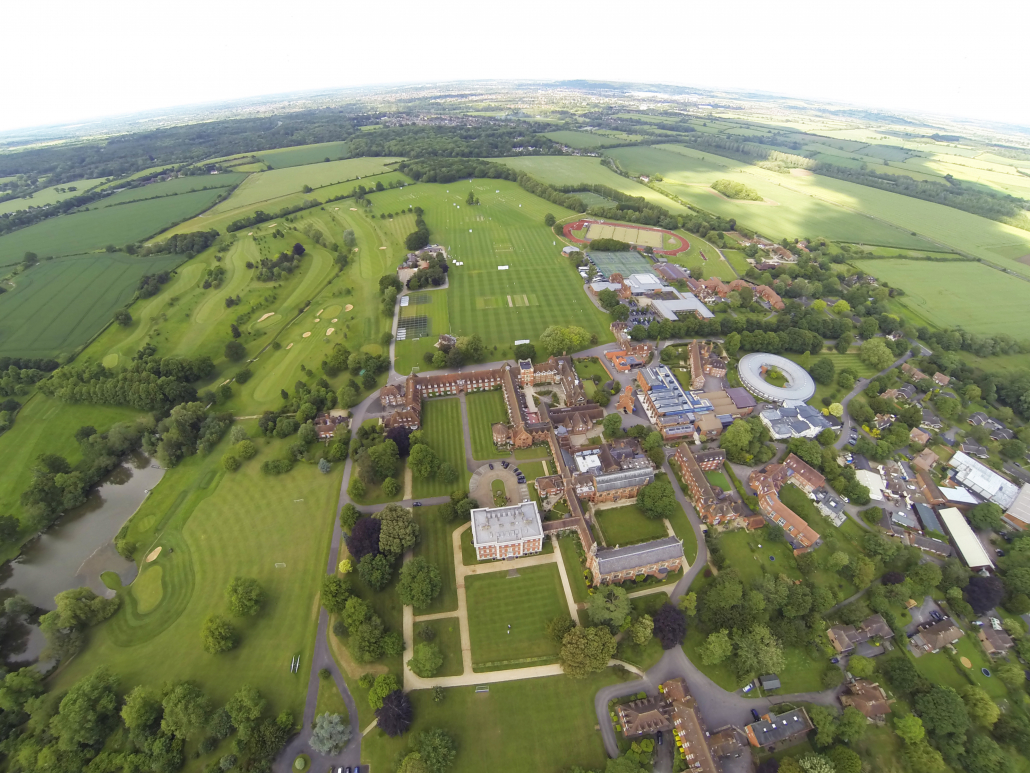
Radley is one of only four all boarding boys’ schools in the entire country – the others being Eton, Harrow and Winchester. There are currently 737 boys on roll and this will grow to 750 when the latest boarding house becomes fully operational. Among the Old Boys are Peter Cook, Ted Dexter, Andrew Straus, Brough Scott, Nigel Twiston-Davis and Lord Scarman.

“Sports plays a major part of what the boys do here,” said Adam, merely confirming my long-standing jealousy.

Honour and a privilege

Honour and a privilege

“They are out four afternoons a week, plus Saturdays and when we are playing against our big ‘rival’ schools there can be 24 rugby teams out at the same time. It’s a great sight.”

With everyone on site including the teaching staff, who all live in school houses, retaining a school bubble is easier than for some.

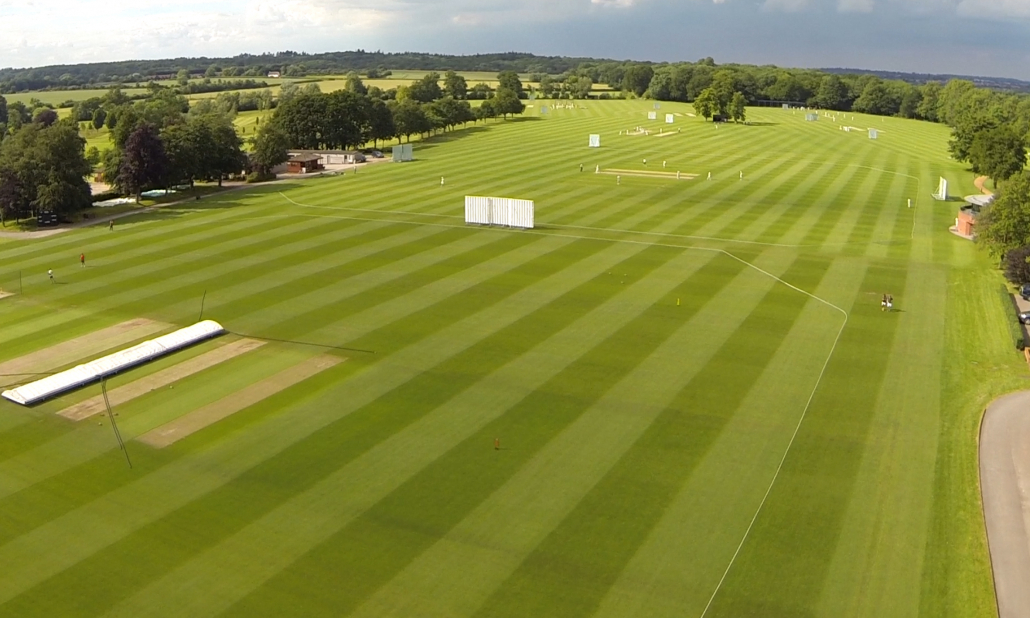
“We are a campus school, spread over 800 acres, so we don’t have the same worries that Eton, Harrow and Winchester, for example, have of boys walking around the town. We are in one massive bubble and with so many sports on offer – touch rugby only at the moment; football, cricket, hockey, athletics, tennis, golf and rowing it means that the boys are nicely spaced out and can enjoy what they are doing,” said Adam, who has been at the school since 2000.

During the March to June lockdown Adam’s regular staff of 19 was reduced to four to enable essential work on the gardens and grounds to be carried out, and two greenkeepers to maintain the school’s nine hole golf course, which has its own membership of 350.

“In many ways it took me back to my days back in 1989 at Stowmarket Golf Club, sitting on a tractor pulling a set of Lloyds gangs. Tranquil times, with no phone, no interruptions. It was quite surreal, but quite pleasant at the same time,” he recalled.

“Then it dawned on us that the boys weren’t coming back for the summer term and that we were, therefore, not going to have any cricket, and the mood went the other way. Everyone got a bit down and the implications of what was happening began to hit home. It was a really odd summer.

“At times we were wondering where it was all leading and whether the boys would be coming back in September.

“We are in a much more fortunate position now and, as a school, we are the fullest we have ever been. We only have 10 or 12 of our international students who are currently distance learning.”

Honour and a privilege

Honour and a privilege

Staff gradually began returning and the Grounds Team had a full complement by mid September, when work on cricket pitches began in earnest in preparation for matches later in the year.

“The Old Boys played a Twenty20 last week against another school and there are another few fixtures planned for the next few weeks,” said Adam, speaking the day after the Prime Minister had announced further restrictions which could stretch well into 2021.

“Our plan was to go to play touch rugby until half term in October and then go to rugby after half term at the beginning of November.

What we’ve heard now is that that is probably not going to happen and we will continue to play touch rugby or go to football or hockey.

As a school we are very keen that every boy does something every day – we can’t have them sitting around their boarding houses,” said Adam, whose advice to anyone new to school groundsmanship is to get involved with the school as much as possible. He himself coaches cricket and football.

The pandemic came on the back of a period of weather which had had Adam bemoaning the wet weather of last winter and spring.

“We are always in the hands of Mother Nature and she was working against us but ironically she then worked with us for a long time. We had a hot dry spell in April to May. It was a Godsend. If there had been a flush we would have been in all sorts of trouble trying to keep on top of things with our reduced numbers. Then there was a flush in August which was brilliant which got everything up and running.”

It is possible to give the weather credit for doing its best to assist there are many more elements which have gone towards the improved standards that can be seen at schools up and down the country.

I do wonder what Jim Arthur would be thinking now, with all the technology that is available. Things have move on massively in the last 20 years and we are lucky to have all the tools in the tool box that we need to create the top sports surfaces we want for the boys to play sport on,” said Adam, who name checked the Koro and Primo Maxx as two of the significant developments in recent years.

That ability to produce surfaces across a range of sports is one of the things which marks a top school and university groundsman out from the crowd. Radley is just completing a five year deal with Toro for machinery while what can’t be done with the machinery in house – Koroing is carried out by ALS, who have been working at the school as long as Adam has been there.

“Being multi skilled is what keeps us all in the job but you grow into some of those skills. For example, cricket and rugby pitches were easy, but I didn’t know much about astro pitches when I started. You grow into those roles.

“The nice thing about the groundsmen on the circuit is that there is competitiveness to do our best but not with each other. Some do great jobs on much smaller budgets than I have, and probably do a better job but ultimately everyone is always judged on the cricket season,” said Adam, who added that he and his Deputy would visit other grounds two or three times a season to watch games and share thoughts and ideas with fellow groundsmen.

All the guys are pulling hard to produce the best surfaces they can and it is fantastic for the industry.”
Honour and a privilege

Honour and a privilege

It is an industry, however, that Adam feels is not supported as well as it should be.

“We’ve never been well supported by the organisations and we’ve always had to fend for ourselves, but I could talk about that for two weeks,” said Adam, who added that a notable exception was ICL who host an annual Schools’ Seminar.

As an explanation, Adam points to the fact that other sectors have a much higher profile with the top football and rugby groundsmen having their work seen on television on a weekly basis during the season.

“Whereas here, nobody sees our work apart from the boys, their parents and ourselves. That said we don’t crave that sort of exposure.”

Adam considers himself extremely privileged to be working at such an extraordinary place, a place where work on the sports surfaces has to be combined with maintaining the grounds of the numerous properties in the Radley portfolio.

The summer is the time when many staff come and go and we have to ensure that their gardens are neat and tidy, so it is a major project for the gardening team. We’ve just finished laying 3,000 square metres of turf around the new Boarding House.”

Variety is very much the spice of life and Adam is grateful to his superb team – many sportsmen in their own right – who, in addition to being skilled gardeners, greenkeepers and groundsmen, contribute to a great team spirit.

Looking ahead Adam see the industry flattening out over the next five year.

“I can’t see companies investing millions in producing a new machine at the moment because they are not going to sell too many,” said Adam, while acknowledging that the move towards hybrid and electric will be maintained.

Despite the pandemic, and the uncertainty caused, Adam sees a great future ahead for the school, while I’m hoping to do some sort of Benjamin Button so I can go back and enjoy all the benefits of being a boarding school boy.

A tried and tested combination

A tried and tested combination: The Bishopton, Renfrewshire based dealership, Hamilton Ross Group, has recently supplied a customer with five Muthing MU-FM160 flails fitted to their Kubota F3090 tractors.

For the company Ground care Manager Jamie Gardiner said, “The combination of the Muthing MU-FM 160 flail on the Kubota F3090 power unit has proved very popular with our customers. This fleet deal proves how effective the equipment is for large scale operations, even in the toughest of environments on the West Coast of Scotland”

A tried and tested combination

A tried and tested combination

Simon Richard, UK Agent for the Muthing range says, “The restrictions on movement during these difficult times will leave some challenging areas when we eventually get back to cutting grass and the MU-FM 160, for power units up to 40hp, is the perfect combination for the widest range of contractor and local authority grounds maintenance tasks. The well balanced Muthing rotor, with specially formed flail lugs, protects against damage from obstacles and the self-cleaning roller with well-rounded edges preserves both soil and turf. The optimised distance between the outer rotor circle and the roller guarantees perfect contour following and even quality of cut. Market leading reduction in foreign object deflection make it the flail of choice when working safely in public areas”

For more information visit www.slopemower.co.uk

For the latest industry news visit turfmatters.co.uk/news

Get all of the big headlines, pictures, opinions and videos on stories that matter to you.

Follow us on Twitter and Instagram for fun, fresh and engaging content.

You can also find us on Facebook for more of your must-see news, features, videos and pictures from Turf Matters.

BIGGA and R&A’s updated advice

BIGGA and R&A’s updated advice: The British and International Golf Greenkeepers Association and R&A have updated their guidance after the lockdown for coronavirus was extended

Greenkeepers have been given updated advice on what counts as essential maintenance during the coronavirus pandemic.

BIGGA and R&A's updated advice

BIGGA and R&A’s updated advice

The British and International Golf Greenkeepers Association (BIGGA) and R&A have issued new guidance after the Government extended the lockdown period, aimed at stemming the spread of the virus, for at least another three weeks.

Their new position was put together in order to take into account the “changing seasonal climactic condition and the need to utilise the time of reduced greenkeeping teams most effectively”.

The association were clear that the directions were not a justification to increase staffing numbers at clubs.

Here is their new statement in full…

Essential Maintenance update – 17 April

The following update (Version 2) to the Essential Maintenance Statement for Golf Courses is published in view of the extension of the UK Government regulations, the changing seasonal climatic conditions and the need to utilise the time of reduced greenkeeping teams most effectively.

These updates are not a justification to increase staff numbers beyond those currently utilised. Any substantive updates from Version 1 are highlighted by an asterisk * in the text below.

Essential Maintenance Statement for Golf Courses during COVID-19 Outbreak

The following industry statement, produced in association with BIGGA, sets out a reduced, essential maintenance regime for greenkeeping that limits activity on the golf course while protecting workers, jobs and securing the playing surfaces at golfing facilities. When a resumption in play is allowed, this will be vital to get the millions of golfers back onto our courses, benefiting their physical and mental wellbeing.

The UK’s £2bn GVA golf industry is only sustainable if greenkeepers continue to work, but it is paramount that this is done in a safe and secure environment.

Our industry statement outlines those treatments considered essential for the safe maintenance of a golf course during the current government restrictions. It is accepted that golf courses exist in many different forms, on many different soil types and in differing landscapes and that this guidance may require adaptation.

Working Practices

The primary consideration must be the health and wellbeing of greenkeeping staff. All golf facilities should implement stringent measures to ensure staff members are not at risk. The number of greenkeeping staff and the amount of time they are at work should be kept to a minimum and be tailored to fit with the agreed essential maintenance programme.

Measures should include but are not limited to:

  • Focus on hygiene and social distancing
  • Ensure staff members work separately
  • Allocate individual machinery to one worker only
  • If multiple staff are on site, then stagger working hours and break times
  • Limit or prohibit use of communal areas
  • Regularly disinfect any surface that is contacted e.g. door handles, fuel pumps, communal machinery
  • Ensure there is a robust lone working policy

Mowing

Greens should be mown according to the rate of growth to a maximum of three times per week. Dew removal should be considered on non-mowing days as required to prevent disease spread.

Tees and green surrounds should be mown according to the rate of growth to a maximum of twice per week.*

Fairways should be mown according to the rate of growth to a maximum of once per week.

Managed roughs and grass paths should be mown according to need to a maximum of once per week.*

Only roughs considered to be in direct play should be mown allowing for naturalisation to areas largely out of play.

The height of cut adopted for all these areas is site specific but the elevation of the cutting height on fine turf areas is advised to minimise unnecessary stress on the turf. The application of plant growth regulators during periods of excessive growth is acceptable.* The aim of the above operations is to maintain uniformity, density, texture and health to allow surfaces to be quickly brought back to an appropriate playing standard once play resumes.

Irrigation and Nutrition

Irrigation and nutrition should be carried out as necessary but with the objectives of keeping the turf alive, maintaining a full sward and preventing turf thinning. Avoid excesses of either input, which will only serve to promote unnecessary growth and necessitate more maintenance.  Utilise best practice methods where available, such as wetting agent application, use of moisture probes and surface aeration, to optimise efficiency of water use on key playing surfaces.*

Construction and Renovation

Starting construction or renovation projects is not considered essential at this time. The completion of unfinished winter projects that are already underway is permissible but only if this can be done safely by greenkeeping staff, and without increasing staffing numbers.*

Machinery and Equipment Maintenance

This should be carried out as required to ensure that essential equipment is kept safe and operational.

Other Maintenance

Operations such as maintaining bunkers, penalty areas and wider practice facilities and aerating, top dressing and spraying on a routine basis are not considered essential at this time. However, it is conceivable that occasional spraying or the application of a cultural practice, such as aerating, top dressing and overseeding, may be considered essential at certain times and in some circumstances (for example, to control or manage acute pest, weed or disease issues or other localised disorders).*

Updates

Given the fluidity of the current situation there may be a requirement to update and re-issue this guidance in respect of future government advice.

Click here to read the original article

For the latest industry news visit turfmatters.co.uk/news

Get all of the big headlines, pictures, opinions and videos on stories that matter to you.

Follow us on Twitter and Instagram for fun, fresh and engaging content.

You can also find us on Facebook for more of your must-see news, features, videos and pictures from Turf Matters.

Dennis and SISIS join AGIF

Dennis and SISIS join AGIF: Dennis Mowers and SISIS Equipment, leading British manufacturers of innovative professional sports grounds maintenance equipment, have become a member of the Asian Golf Industry Federation (AGIF).

Divisions of the Howardson Group, Dennis and SISIS have more than 90 years of experience helping people create their desired end result and have invested heavily in the future with new products, new facilities, latest machine tools, people skills and design technology.

Dennis and SISIS join AGIF

Dennis and SISIS join AGIF

Synonymous with reliable, high-quality equipment and after sales service, Dennis and SISIS offer a wide range of cylinder mowers, scarifiers, aerators, slitters, sweepers and brushes that enable groundsmen, greenkeepers and gardeners to create their perfect surface.

“Our machines are used at high profile international stadia around the world, many top football, cricket, golf and bowling clubs as well as local authorities, schools, colleges and universities,” said Toby Clarke, the company’s International Business Director.

“Our reputation is built not only on the quality of our products but also on the high level of customer and technical support provided by our experienced field and office-based teams and our professional dealership network. We are committed to exceeding expectations by the loyalty customers place in our brand, products and people.

“I’ve been working here for 26 years and all I’ve seen is growth. To see the company develop in this way and to be a part of it now at a more management and strategic level is fantastic,” added Clarke.

Dennis and SISIS have been long-time supporters of industry associations and are corporate members of the British and International Golf Greenkeepers Association (BIGGA), STRI (formerly the Sports Turf Research Institute), the Federation of European Golf Greenkeepers Associations (FEGGA), the Institute of Groundsmanship (IOG) and Sports and Play Construction Association (SAPCA).

Clarke said: “We’re delighted to expand our reach by becoming a Full Business Member of the Asian Golf Industry Federation. From tee-to-green, Dennis and SISIS provide a full range of equipment for all golf course maintenance requirements. Superintendents, owners, technicians and other golf management professionals can look forward to seeing a great line-up of products at forthcoming events around the region, including November’s AGIF Expo in Bangkok.”

Eric Lynge, the AGIF’s Chief Executive Officer, said: “Dennis and SISIS have long been respected and trusted names in the turf maintenance industry in the United Kingdom and Europe. We look forward to working with Toby and his colleagues and helping them to enhance their businesses in Asia.”

For the latest industry news visit turfmatters.co.uk/news

Get all of the big headlines, pictures, opinions and videos on stories that matter to you.

Follow us on Twitter and Instagram for fun, fresh and engaging content.

You can also find us on Facebook for more of your must-see news, features, videos and pictures from Turf Matters.