
Tag Archive for: How

How Groundtel’s line marking capabilities service 150 schools

How Groundtel’s line marking capabilities service 150 schools: Groundtel Ltd is a family-run business with a proud reputation for precision, reliability and service. With over 150 schools on its books, the company has become one of the region’s leading grounds maintenance providers.

At the heart of operations is Danny Perkins, Contracts Manager and member of the founding family. Danny is helping steer the business into the next generation of efficiency with robotic line marking machines.

How Groundtel’s line marking capabilities service 150 schools

How Groundtel’s line marking capabilities service 150 schools

“We were already delivering a high standard,” says Danny, “but the TinyLineMarker robots have taken us to a different level. They’ve paid for themselves ten times over.”

Each season, Groundtel’s team prepares a wide range of sports markings across school playing fields. For summer months, this includes 100m, 200m, 300m, and 400m running tracks, complete with relay boxes, rounders and softball pitches, and throwing areas for javelin, discus, and shot putt. In winter, the focus shifts to football pitches, rugby pitches, and training grids, all initially marked and then overmarked throughout the season as required.

The 20-strong grounds team has a significant workload and has a two-person team dedicated solely to line marking. Historically, that meant traditional pedestrian machines, such as push-along markers, a Fast Liner, and plenty of manual setup.

“That’s a lot of tape measures and string lines,” Danny comments. “It was time-consuming and hard to keep up when schools need everything done quickly and precisely. Once we brought in the TinyLineMarker robot, everything changed.”

Groundtel took delivery of its first TinyLineMarker Pro X in 2021, followed by a second robot 12–18 months later. Both are now integral to operations, running daily from late February to July.

“With the robots and some long hours, we have been known to overmark over 100 schools in 7 to 10 days. Before, it would take about four weeks. However, on average, we run the robots for six to eight hours daily.”

Initial marking has seen the most significant impact, with the robots removing the need for traditional set-out methods. “It’s incredibly accurate,” says Danny. “You just load the template on the tablet, and it remembers exactly where to mark, even if the lines have disappeared after cutting. Schools appreciate that kind of consistency.”

The robots’ size and weight were a major consideration. “I looked at Turf Tank, but it was too heavy. I couldn’t lift it in and out of the van alone. The Tiny robot is light, compact, and fits easily in the back of a small van, which makes life a lot easier.” Rough and uneven ground is a common challenge across school fields, particularly in the state sector. “That’s another reason the TinyLineMarker works so well for us. It’s robust and can handle bumpy surfaces where other machines might struggle.”

Groundtel uses IMPACT® Pro paint from Origin Amenity Solutions for both their robotic and two iGO Premier Pedestrian markers. Danny says, “It’s a perfect match.”

“The robot’s set to moderate speed, and the lines are bright, crisp, and clean. And because the paint’s ready-mixed, there’s no faffing around with water. It saves time and hassle, and we get a consistent finish across every pitch.”

In addition to time and paint efficiency, the robots have helped Groundtel reduce labour demand and improve safety and sustainability, which are key concerns for schools.

“The schools prefer the robots,” Danny says. “They’re small, quiet, and there are no fuel emissions. This ticks a lot of environmental boxes. From a health and safety point of view, especially during the school day, it’s a win.”

Behind the technology is a strong support system, which is something Danny values. “The training was excellent, and the support from Origin Amenity Solutions is brilliant. It’s one thing to buy a product, but having ongoing help makes a huge difference. I can ring Simon or Joe and get an answer immediately without waiting for a call-out, although that’s also available. A quick answer on the phone saves me so much wasted time.”

Origin Amenity Solutions is the sole UK distributor of TinyMobileRobots and one of the leading providers of GPS line marking. The company offers one of the most comprehensive line marking ranges in the UK and Ireland, including pedestrian and ride-on machines, ready-to-use paints, and advanced robotic technology. All paints and machines are manufactured within the Origin group, ensuring consistent, high-quality performance backed by nationwide support and product expertise.

For Danny and the team at Groundtel, the move to robotic line marking has exceeded every expectation. “We’ve saved time, reduced labour, improved accuracy and consistency. I wouldn’t go back. The robots are a vital part of how we operate now, and they’ve transformed the service we can offer our schools.”

For the latest industry news visit turfmatters.co.uk/news

Get all of the big headlines, pictures, opinions and videos on stories that matter to you.

Follow us on Twitter and Instagram for fun, fresh and engaging content.

You can also find us on Facebook for more of your must-see news, features, videos and pictures from Turf Matters.

How You Can Get Involved With #GroundsWeek

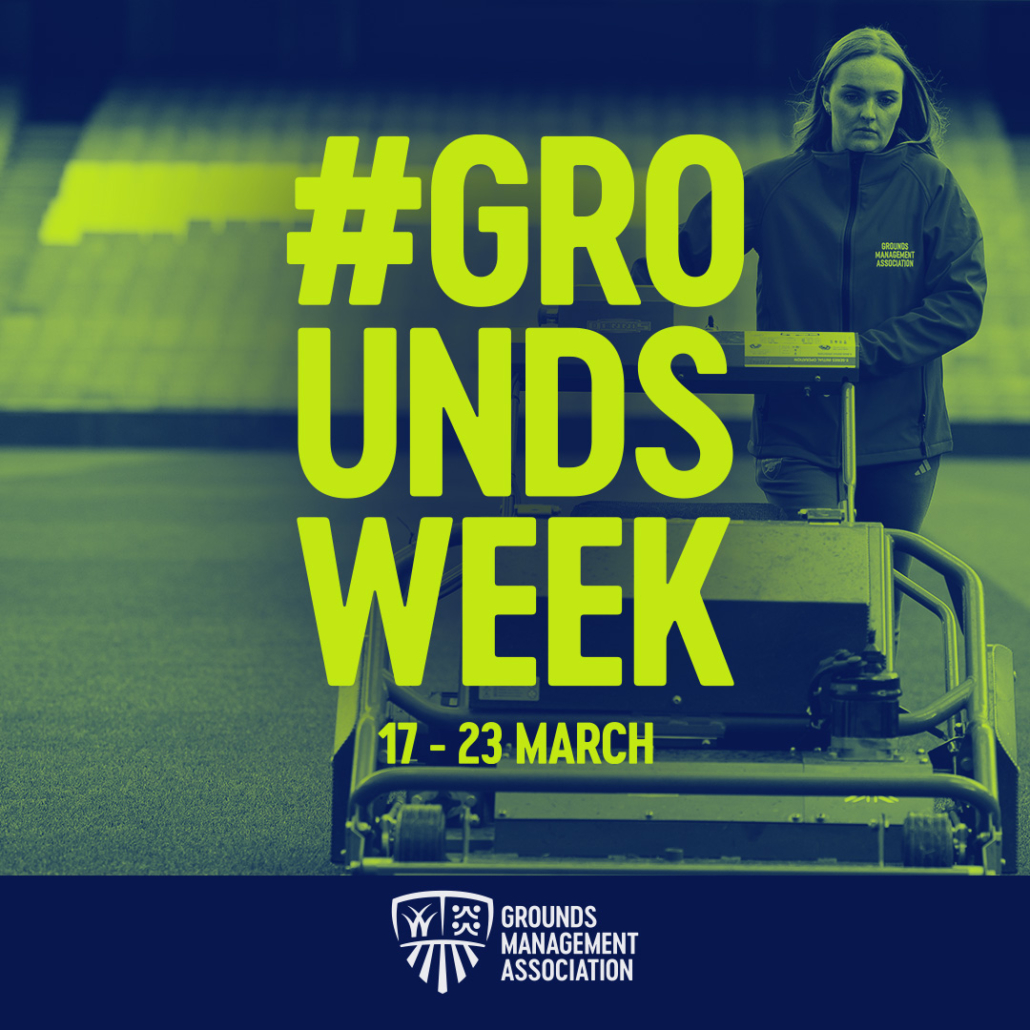
How You Can Get Involved With #GroundsWeek: #GroundsWeek 2025, taking place from 17 to 23 March, is fast approaching.

This nationwide celebration, led by the Grounds Management Association (GMA), shines a spotlight on the professionals and volunteers who work tirelessly behind the scenes to make sports surfaces and green spaces thrive.

How You Can Get Involved With #GroundsWeek

How You Can Get Involved With #GroundsWeek

The week is all about recognition, whilst inspiring more people to appreciate and explore careers in grounds management. Whether you’re a professional grounds manager, a volunteer or someone who enjoys well-maintained outdoor spaces, there are plenty of ways to get involved and show your support.

Building on the success of the 2024 campaign, which reached an impressive 18 million people, we hope #GroundsWeek 2025 will reach a global audience, shining a spotlight on the vital role of grounds staff not only in the UK but across the world.

Ways to take part in #GroundsWeek 2025:

  • Download the #GroundsWeek Toolkit – Access ready-made graphics, templates and ideas to help you spread the word.
  • Share Your Story – Tell us about your experiences in grounds management for a chance to be featured during the week.
  • Join the Online Conversation – Keep an eye on @wearetheGMA across all social media channels and help us kick off the week by sharing our launch post on Monday 17 March.
  • Show off Your Grounds Team – Post a photo of your grounds staff or volunteers, or share a short video of someone at your club or organisation saying thank you.
  • Use the Official Hashtag – Tag @wearetheGMA in your posts and include #GroundsWeek to ensure your content reaches a wider audience.

#GroundsWeek is an opportunity for everyone to celebrate the people who make great outdoor spaces possible.

Get involved and help raise awareness of the vital work that goes into keeping pitches, parks and green spaces in top condition.

To find out more about #GroundsWeek 2025, please visit thegma.org.uk/groundsweek.

For the latest industry news visit turfmatters.co.uk/news

Get all of the big headlines, pictures, opinions and videos on stories that matter to you.

Follow us on Twitter and Instagram for fun, fresh and engaging content.

You can also find us on Facebook for more of your must-see news, features, videos and pictures from Turf Matters.
Learn how to renovate your lawn this autumn

Learn how to renovate your lawn this autumn: Allett Mowers is inviting lawn enthusiasts from around the UK to gain the Allett Level 1 Lawn Academy Qualification.

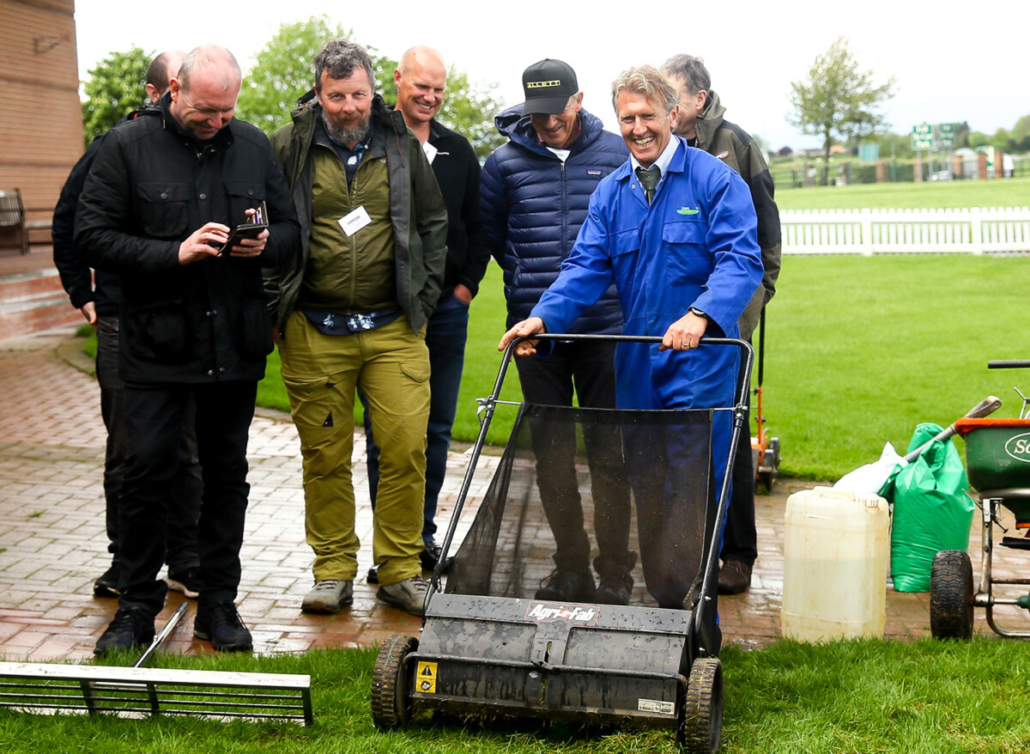
The one-day course, to be held at the Old Fold Manor Golf Club on October 10th 2023, is aimed at the passionate lawn enthusiast or professional lawncare specialists wanting to take their lawns to the next level. It’s an opportunity to learn how to achieve a more impressive and healthy lawn all year round. In the course, attendees will learn the science behind renovating their lawn this autumn to ensure it is in tiptop shape come spring. The day will start at 9 a.m. with a bacon bap and a hot drink with the chance to network with other lawn enthusiasts.

Learn how to renovate your lawn this autumn

Learn how to renovate your lawn this autumn

The learning journey will begin with classroom training led by leading lawn expert Richard Salmon from Pro Lawncare UK. Richard is a well-known figure in the industry, with over 38 years of experience in agronomy and a successful career in lawn management. Subjects to be covered on the day will include the history of grass, the lifecycle and types of grass, grass/lawn maintenance, thatch, soil, nutrients, weeds, moss, and irrigation. A lawn care yearly calendar will be set out where you can learn exactly what you should be doing to your lawn each month of the calendar year.

The classroom will be followed by a hands-on workshop with Allett MD Austin Jarrett. He will talk about the Allett cartridge system, showing how each cartridge works and how to use them. There will be the opportunity to use a range of machines and learn the techniques of how to employ a number of lawn tools to get the best out of your lawn. The price of the course will include a soil analysis test of your own lawn from a sample you bring with you on the day. Results can be used to help develop a personalised lawncare plan. The day will run from 9 a.m. to 4.30 p.m. approximately. The price of the course is £145.00 (including VAT) and also includes a buffet lunch. Attendees will each receive an Allett Level 1 Lawn Academy certificate and there will also be the opportunity to purchase Allett tools.

Booking for the event can be signed up via: https://allett.co.uk/products/allett-level-1-lawn-academy-qualification

There is a 30% student discount available by contacting: sales@allett.co.uk or laura.malkin@allett.co.uk

Allett Mowers Ltd.  01889 271503 www.allett.co.uk  

For the latest industry news visit turfmatters.co.uk/news

Get all of the big headlines, pictures, opinions and videos on stories that matter to you.

Follow us on Twitter and Instagram for fun, fresh and engaging content.

You can also find us on Facebook for more of your must-see news, features, videos and pictures from Turf Matters.

Learn how to create perfect surfaces

Learn how to create perfect surfaces: The Grounds Management Association (GMA) has revealed a spectacular seminar lineup as part of the SALTEX 2022 Learning LIVE Programme designed to help grounds people to create the best playing surfaces across a range of sports and settings.

Following on from the Lionness’ success in the Euros, and with the Rugby League World Cup and the first ever winter Football World Cup coming up, what better time to find out how the surfaces that make such events possible are created.

Learn how to create perfect surfaces

Learn how to create perfect surfaces

There’s something for most sports surfaces from some of the best in the business. For rugby, Catherine Hall (Premiership Rugby), Dr David James (Labosport) and Dan Prest (GMA) talk about raising Premiership Rugby pitch standards. For cricket, Gary Barwell (Edgbaston Stadium), Karl McDermott (Lord’s) and Steve Birks (Nottinghamshire CCC) discuss how new cricket formats impact on the modern-day grounds manager. Tennis is covered off by Neil Stubley (Wimbledon) who presents the All England Tennis and Croquet Club’s court expansion project.

But all top level surfaces start somewhere – at grassroots level – and Rob Sullivan presents the Football Foundation’s strategic ambitions to improve grass pitch quality and Chris Smith tackles the funding process to improve pitches. Perhaps there’s a role for hybrid pitches in the community – Dr Richard Earl (TGMS) reveals data findings from the Sport England hybrid pitch pilot for community use in London’s Regents Park.

Those in the education sector will no doubt be interested to hear how Whitgift School’s recent hybrid pitch installation was the first in the independent school sector and panelists Daniel Ratling (Whitgift School), Dr Richard Earl (TGMS) and D James Welsh (Whitehorse Contractors) session look at the rationale, the design/planning process, the construction, the project outcomes and the ongoing maintenance and renovation of the project.

Geoff Webb, CEO of the GMA, says: “So many visitors to SALTEX work in grounds maintenance and this series of seminars provides relevant, invaluable information whatever the playing surface they work on from speakers and panelists with a wealth of experience and solutions to real-time projects. Anybody wanting to stay ahead of the game in the grounds care industry will benefit from the learning and connections they can make whilst at SALTEX. We are grateful to all those industry experts and leaders that are taking time out to speak at Learning LIVE and support those working hard across the industry to make sport possible across the UK.”

The SALTEX 2022 Learning LIVE schedule this year has been extended to over 30 sessions, they are free to attend across the two days of the show on 2-3 November and contribute to CPD-accreditation. More information can be found on the event’s website at www.saltex.org.uk/learning-live. Free visitor registration is now open at saltex.org.uk / register here.

For the latest industry news visit turfmatters.co.uk/news

Get all of the big headlines, pictures, opinions and videos on stories that matter to you.

Follow us on Twitter and Instagram for fun, fresh and engaging content.

You can also find us on Facebook for more of your must-see news, features, videos and pictures from Turf Matters.
So, how are we doing?

So, how are we doing?: By Ian Mather-Brewster, Key Account Manager/Regional Pitch Advisor at the Grounds Management Association.

This year has been particularly difficult for everyone. Sport clubs and organisations have dealt with sudden openings and closures, along with furloughs, adverse weather conditions and relentless uncertainty.

So, how are we doing?

So, how are we doing?

However, throughout the upheaval, grounds staff – whether volunteer or professional – have continued to work hard each day, holding sport together by ensuring pitches are ready to go at a moment’s notice. At the GMA, these challenges are the reason we felt that this year was the perfect time to launch GroundsWeek.

This inaugural celebration week was an opportunity to give all those in the industry the much-needed credit they deserve, while welcoming others into the sector. Here’s a run-down of how the sector’s doing as sport begins to unlock, and why grounds staff are so central to making sport possible.

Volunteers at the helm

The importance of outdoor exercise has been hugely emphasised as a result of Covid-19. While gyms and other indoor sport facilities have been closed, outdoor facilities have acted as a lifeline for the public to go out and exercise during this turbulent period. Grounds staff have played a pivotal role in making this happen.

Volunteers at local clubs have used their permitted daily exercise to ensure these local pitches continue to be ready to be used at a moment’s notice, giving the public a place to exercise and play. It’s no secret that sport has a transformative impact on our wellbeing – after the past year, the need to supercharge both our mental and physical health is going to be paramount. With the pandemic having had a devastating fallout on mental wellbeing, it’s essential that the public have access to outdoor sport facilities once we’re permitted to play.

After the initial national lockdown was announced last year, volunteer grounds staff had to get surfaces back to a top standard after facilities had been unused for quite some time. Volunteers had to suddenly adopt different skills and learn new ways of working. With industry guidance about how to return and when it was safe to do so, grounds volunteers across the country were able to get back out there and provide high quality, playable surfaces.

Getting the professional game back on

Professional sport resuming during the pandemic has also been a lifeline for many – something to focus on and enjoy, it has also acted as a conversation starter for many who’ve been sat at home with very little to do or talk about. While many are keen to get back to playing themselves with their local teams, friends and family, being able to watch your favourite team play on TV has been a welcome distraction from the outside world. With professional sport having the power to lift us up in times of turmoil, grounds managers and staff’s role in making that possible has been pivotal.

Some staff have worked completely on their own throughout the pandemic, without the help of volunteers or a team, yet still have managed to produce immaculate surfaces which have been televised for professional games. They’ve also had new, additional responsibilities: sanitising all equipment before and after large-scale games in huge venues – many have miraculously managed to do this single-handedly. Reduced budgets from the previous season have meant smaller renovations for many professional sport facilities, however, grounds managers and volunteers have still managed to produce top-standard playing surfaces, despite the condensed season leading professional sport grounds to be used far more often than usual, multiplying the workload for grounds managers and volunteers.

Due to the pandemic, clubs and organisations within professional sport have also had to increase the number of areas used for training to comply with safe distancing rules, with some lower league clubs having had to train at bigger stadiums to reduce risk – this has meant grounds staff have had an even bigger job to do in making sure all these areas are ready for use, time and time again.

At cricket clubs, grounds workers have had to start preparing and covering practice areas far earlier than usual – usually, cricket players would get flown overseas for international fixtures, but currently they are stuck in the UK, meaning these pitches need to be in top condition consistently.

The unsung heroes of sport

Despite the strain put on grounds managers and volunteers at a grassroots and professional level, they have continued to keep facilities in top condition so that we can continue to play after lockdown. Grounds staff are the overlooked upholders of sport, without whom, the game simply could not go ahead.

Among furloughs taking place, budget cuts and a lack of investment, as well as the shorter seasons but the same number of games on the pitches, the grounds industry has had to put more effort than ever before into keeping sport pitches playable, and have managed to do an incredible job. Without grounds staff, sports pitches would be non-existent, compromising the future of sport as we know it.

Grounds staff have also gone beyond keeping sport pitches immaculate – to giving up space at their grounds to allow for Covid-testing to take place, and local clubs have helped set up food banks as well as assisted in delivering food to the vulnerable. The grounds community has had to become more resilient than ever, sticking together in the face of unwanted criticism, and
keeping sport going through these difficult times.

Joining the sector

Despite this, we know the sector is facing a crisis – without a new generation of grounds staff and volunteers, there will be a knock-on effect both for the public wanting to get active, and on professional games. Grounds maintenance requires considerable knowledge, time and dedication to provide a pitch that meets rigorous standards set out by professional sporting bodies, with year-round attention to detail, and intensive labour to ensure surfaces get enough care.

GMA’s new research* shows that young people aren’t considering grounds management as a career, and the grounds sector is facing a significant skills gap as a result. Our research shows that 40% of the workforce is over 50, and 9% of grounds managers and volunteers will be retiring in the next five years. If things continue the way they’re going, unfortunately, 5,120 pitches across the UK could be left without a grounds person soon. However, hope is not lost: 6,000 young people are needed to join the profession, to help the turf care sector get on the road to recovery.

#GroundsWeek was a call on the nation to celebrate the vital contribution of grounds staff, while urging young sports fans to consider the profession. The week was set up to celebrate the vital role that professional grounds staff, volunteers, and the turf sector plays in making sport possible. After what has been a really difficult year for the sector and beyond, we wanted to use this celebration to showcase grounds staff and the brilliant work that they do – and have continued to do – despite sport stopping and starting. #GroundsWeek, which will continue each year, is an opportunity to celebrate our sector, and emphasise the vital role grounds staff play in driving sport forward, from grassroots to a professional level. We’re hoping sports fans and the general public have been inspired to consider volunteering at their local pitches or joining the sector as professionals in the future.

*(Data gathered from Sport England’s Active Lives report, GMA’s Sports Vital Profession Report and Back to Play)