Tag Archive for: Japanese

An Italian Japanese fusion

An Italian Japanese fusion: Scott MacCallum joined the media pack on a visit to Italy.

It seems like a marriage made in heaven. Italian flair and imagination combined with Japanese efficiency and drive. That is exactly what has been achieved by the purchase of Gianni Ferrari by the Kubota company in 2022.

An Italian Japanese fusion

An Italian Japanese fusion

Even in that very short space of time the Japanese influence has been felt in the traditional and characterful, Gianni Ferrari factory in the outskirts of Bologne, and Kubota’s overall product portfolio has been significantly expanded, particularly through Gianni Ferrari’s excellent zero turn mower range and the launch of the XC3 and XC4 into the UK market.

The introduction of the new models like the FC2-221 and FC3- 221 has expanded the company’s portfolio for commercial users.

The Kubota power and influence now driving Gianni Ferrari is truly immense. Kubota is a 3 trillion yen company which, given the complication of so many zeros, makes my estimate of £15.6 billion open to some scrutiny. However, they operate in 120 countries and have sold 5.5 million tractors worldwide and 30 million engines so it is huge by any measure.

In buying Gianni Ferrari Kubota ensured that the gap in their offering for large sized ride on mowers was removed and means that as Kubota celebrates 50 years in the European market, it is strongly placed to build on the success started in 1974.

Since becoming Kubota Gianni Ferrari the company has introduced some efficiency solutions within the factory, removing one wall to make the production line less complex and bringing in light blue trolleys containing frequently required parts rather than the engineer having to return to a central point every time one was needed.

It is a common misunderstanding that Gianni Ferrari and Enzo Ferrari, of Formula 1 fame, are related in some way. As it happens Ferrari is the Italian form of Smith, and is a very common name on some areas of the country.

With the experience and support of Kubota globally, Kubota Gianni Ferrari have been working hard over the last two years to embrace the very best of the Japanese Kaizen approach to processes and manufacturing – which was evident in the streamlined approach to production visible during the factory tour.

In addition, Kubota’s advanced digital marketing has been used to communicate with Gianni Ferrari users about parts and service availability through Kubota dealers.

The assembled press, including all of the major industry titles in the UK, were also able to learn more about the current and ongoing developments within the product range such as the ‘conversion’ of the PG XPRO into the Kubota FC3- 261, and the FC4-501 which has become one of the most powerful, comfortable and operationally equipped mowers on the market.

While the unprecedented rainfall from the ironically named Storm Boris put paid to seeing the range in action, spirits were not dampened as all enjoyed gaining an insight into the approach – both now and that of the future – and the fascinating company ethos by speakers including Kosuke Ota, Vice President of Kubota Gianni Ferrari S.R.L.

Further presentations were also delivered by Henry Bredin, General Manager and Matt Wilson, Groundcare Product Manager, of Kubota (UK).

“It’s been fantastic to witness first-hand the enthusiasm and passion among the Kubota Gianni Ferrari team and to be able to share this with the media from the UK and Ireland was a real pleasure,” said Matt.

“All of us at Kubota are incredibly excited about the bright future we have with the FC range, not just in traditional groundcare applications, but also in other guises where it can also support the maintenance of artificial sports surfaces.”
Japanese excellence at Whitefield GC

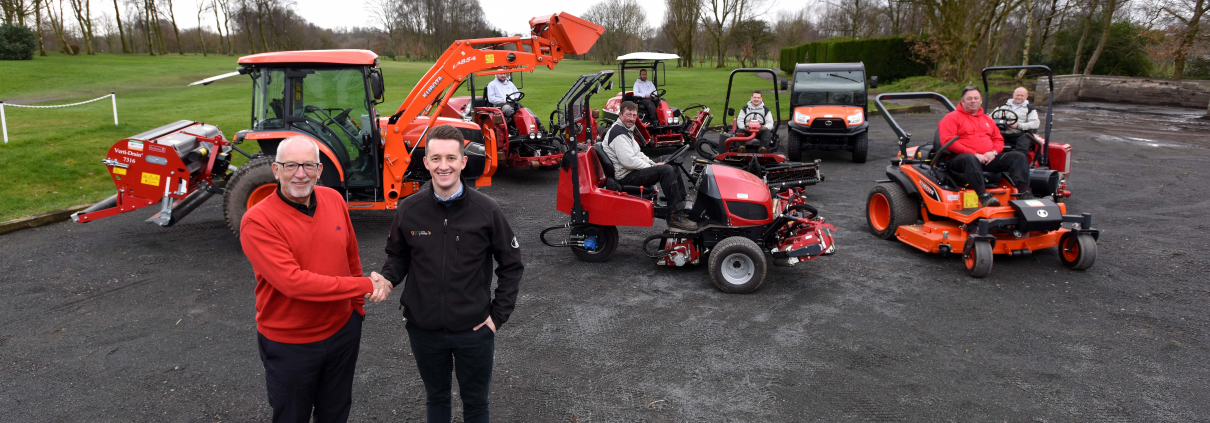
Japanese excellence at Whitefield GC: Whitefield Golf Club, one of the longest established golf courses in the North West have invested in a brand-new fleet of machinery with a retail value in excess of £250,000 to futureproof the club.

The prestigious 18-hole mature golf course, which boasts superb putting surfaces, undulating, partly tree-lined fairways and spectacular views is also renowned for its par 3 and has a reputation as being deceptively difficult, with golfers coming from miles around to take on the challenge.

Japanese excellence at Whitefield GC

Japanese excellence at Whitefield GC

The club’s ageing fleet had started to become an issue, failing to deliver the standard required and with a prestigious tournament booked for this summer, the team realised that a sizeable investment in an entirely new fleet was required.

Course Manager Danny Chamberlain called upon award winning fine-turf specialist supplier GGM Groundscare. Several considerations had to be taken into account when selecting the best machinery for the job, with reliability and productivity of equipment being key. In addition, being based in the North West of England, it was key for the machinery to perform well in all-weather conditions. The club trialled a range of products from leading manufacturers Baroness and Kubota and the Greens team instantly saw the great results, with the machines staying on cut for longer and giving a precise finish, which is so important for maintaining the image of the course”

Danny was particularly impressed with the results from the Baroness LM2700 Fairway Mower, which  delivers a high work rate while delivering exceptional quality of cut, low whole life service costs and also long life and the Baroness GM2810 Rough Mower, renowned for its fast speed when cutting extensive areas of fast growing  rough, the design of the decks allows cleaner discharge of grass giving a high quality stripped finish.

“It’s the simplicity that I love – not only will it reduce downtime, maintenance and service costs – the Baroness is far easier and safer for the team to use and gives a truly outstanding quality of cut”

Additionally, the Kubota L2501 tractor, RTV X900 Utility vehicle and ZD1211 Zero turn mower are all excellent machines and provide the club with the quality and efficient solutions that it needs. The Baroness and Kubota products work so well together and gives the ideal package to golf clubs.

It was this, along with the reliability and output of all the machines the club trialled and the fixed-cost service and support package that was available that were key factors for Danny. It allows the club to budget better and gave the team peace of mind that they won’t be receiving unexpected repair bills that gave him the confidence to place an order to replace the full fleet.

“It was a huge step for the club to move away from the previous manufacturer, and particularly when it came to making an investment of this size however, GGM Groundscare made the process so easy. Working with the right dealership is essential – after all, they become an extension of your own team. Service levels, parts back up and sales advice are all absolutely crucial. It’s fantastic to know that we’re heading into the future with the very best fleet for our club.”

Chris Gibson, Managing Director at GGM Groundscare said:

“We are absolutely delighted to supply this fleet of machinery to Whitefield Golf Club. It is well known as one of the most prestigious courses in the North West with a reputation for pristine greens, and we are thrilled to play a part in the maintenance of them. It really is Japanese excellence working together with Kubota and Baroness as there are no better machines for golf clubs to use to maintain one of their biggest assets – their course”.

For the latest industry news visit turfmatters.co.uk/news

Get all of the big headlines, pictures, opinions and videos on stories that matter to you.

Follow us on Twitter and Instagram for fun, fresh and engaging content.

You can also find us on Facebook for more of your must-see news, features, videos and pictures from Turf Matters.

Rare Japanese knotweed hybrid found

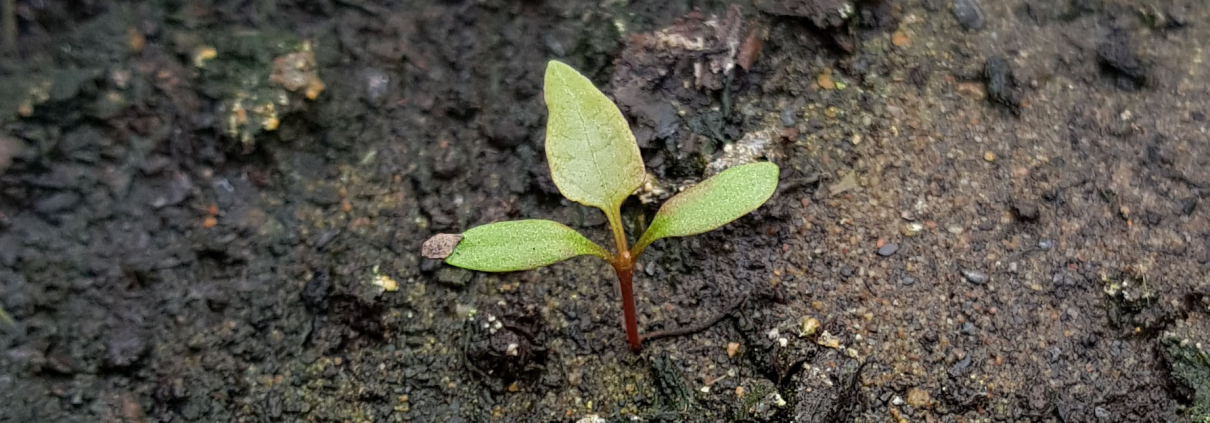
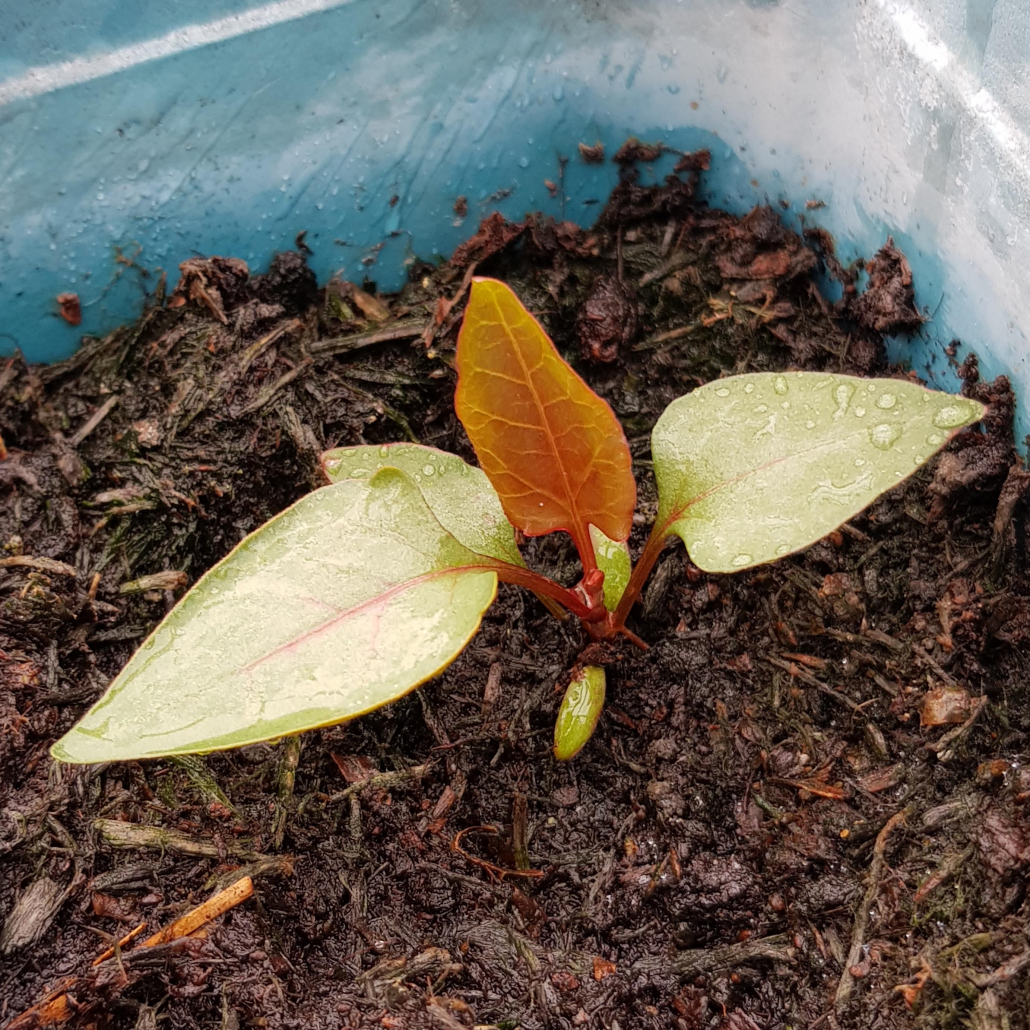
Rare Japanese knotweed hybrid found: A team of Swansea University scientists have discovered a rare Japanese knotweed hybrid in south Wales.

Although this could mean further proliferation of knotweed, the Swansea scientists involved believe the discovery could help them develop new ways of managing the spread of this destructive and notoriously difficult to combat plant.

Rare Japanese knotweed hybrid found

The hybrid knotweed, known as Conolly’s knotweed was discovered during a study led by Sophie Hocking, a PhD student funded through the Knowledge Economy Skills Scholarships (KESS) scheme at Swansea University.  Sophie’s study formed part of intensive research which Swansea University College of Science researchers have conducted over eight years, including the world’s largest Japanese knotweed field trial.  The research has been undertaken in close partnership with Complete Weed Control and Advanced Invasives, a company that has grown from the research.

Sophie said: “We discovered evidence of Conolly’s knotweed during the study, which took place near Cardiff.  Conolly’s knotweed is a hybrid of Japanese knotweed and the common garden plant, Russian Vine. While Conolly’s knotweed is rare in the UK, records of it are increasing across continental Europe.”

Rare Japanese knotweed hybrid found

Sophie said she and the team were surprised to find evidence of the Japanese knotweed hybrid: “Conolly’s knotweed is a bit of a paradox because although it is rare in the wild, it’s the most frequently produced seed found on Japanese knotweed plants in the UK. We didn’t expect to find Japanese knotweed in the seed bank, because plants in the UK come from a single female clone and cannot reproduce successfully without male plants, unless hybridisation with another member of the knotweed family takes place. We actually didn’t expect to find any type of viable invasive knotweed seeds, because it’s extremely unlikely for any to survive wet UK winters.

The fact we did find evidence of Conolly’s knotweed means that hybridisation took place – this could be an important aspect of the Japanese knotweed invasion that we are overlooking.

Japanese knotweed is capable of producing copious amounts of seed when hybridisation occurs. If future climatic conditions become favourable for these seeds to germinate successfully, our Japanese knotweed problem might get worse. A seed bank full of hybrid knotweed could mean a second wave of invasion following treatment of the initial problem.

Finding Conolly’s knotweed in the soil seedbank means that invasive knotweeds may now find an additional means of dispersal.

We are currently looking at the ecology of our Japanese knotweed site to determine whether native plants will regrow after the knotweed has been tackled or whether we need to add new species to restore the habitat. This will help inform a complete best practice for managing invasive plants such as Japanese knotweed, allowing us to move beyond a reactionary approach that has characterised invasive plant management and restoration to date.”

Rare Japanese knotweed hybrid found

The full article is published in Botanical Society of Britain and Ireland News.

For more information, please contact Complete Weed Control’s national office on 01325 324 277 or visit www.completeweedcontrol.co.uk

For the latest industry news visit turfmatters.co.uk/news

Get all of the big headlines, pictures, opinions and videos on stories that matter to you.

Follow us on Twitter and Instagram for fun, fresh and engaging content.

You can also find us on Facebook for more of your must-see news, features, videos and pictures from Turf Matters.

Inquiry Into Japanese Knotweed Impact

Inquiry Into Japanese Knotweed Impact: The Science and Technology Committee are holding an oral evidence session in early 2019, specifically to explore the science behind the effects of Japanese Knotweed on the built environment. To inform that session, written submissions were invited and the Amenity Forum has made a response.

The Amenity Forum welcomed the inquiry. Whilst there has been research and studies on the topic, it is felt more is needed if we are to fully understand the impact and implications. There has been a number of studies observing specific sites where structural damage has been caused but it is felt that more scientific studies are very much required. The Forum also feels that more economic analysis is needed and indeed is vital to establish the financial implications now and in the future. This would assist Government greatly in establishing both its strategy and future plans to combat the issue. It is undoubtedly the case that the presence of Japanese knotweed rhizome within a construction, if left unchecked, can produce significant damage especially within masonry and hard surfaces.Inquiry Into Japanese Knotweed Impact

The Forum also states that what has already emerged, in looking at the range of controls, is the importance of chemical products including those with the active ingredient, glyphosate. Whatever approach has been trialled, chemical treatment remains extremely important and provides the most effective approach in any integrated plan for knotweed management. They go on to say knotweed management is a long term plan and cannot be seen as a quick fix. Clearly it can be controlled by treatments but the point at which such a treatment plan is complete remains uncertain. There would appear to be a need for more research and examination of the rhizome that remains following professional treatment. Establishing the facts relating to the viability of that material when disturbed is key to establishing protocols for sites that have been subjected to a treatment programme.

Professor John Moverley, Chairman of the Amenity Forum, very much welcomed the focus on this topic and emphasised the need to use professionally trained operatives in managing the problem. He said ‘’What is vital is that knotweed control needs to be undertaken properly and by professionally qualified operators and organisations who fully subscribe to the standards and best practice laid down. The Amenity Forum is currently developing an overarching assurance standard for the sector and we would urge all employing any operators to ensure that they can deliver to such a standard and, in so doing, fully support the work and objectives of the Amenity Forum. Bad practice and unqualified operators can make the situation far worse and sadly there is evidence of such practices existing. The need for assured practice and the need for users such as local authorities to adopt these is vital’’

The Amenity Forum is holding a series of half day Updating Events across the UK over the coming months. These are free to attend and will update those attending on current issues and concerns. There will be time for questions and essential networking. For more information on the location and timings of these events, please contact admin@amenityforum.net. Whilst free to attend, it is important that you register in advance.

For the latest industry news visit turfmatters.co.uk/news

Get all of the big headlines, pictures, opinions and videos on stories that matter to you.

Follow us on Twitter for fun, fresh and engaging content.

You can also find us on Facebook for more of your must-see news, features, videos and pictures from Turf Matters.