Tag Archive for: Man

Top man for a top job

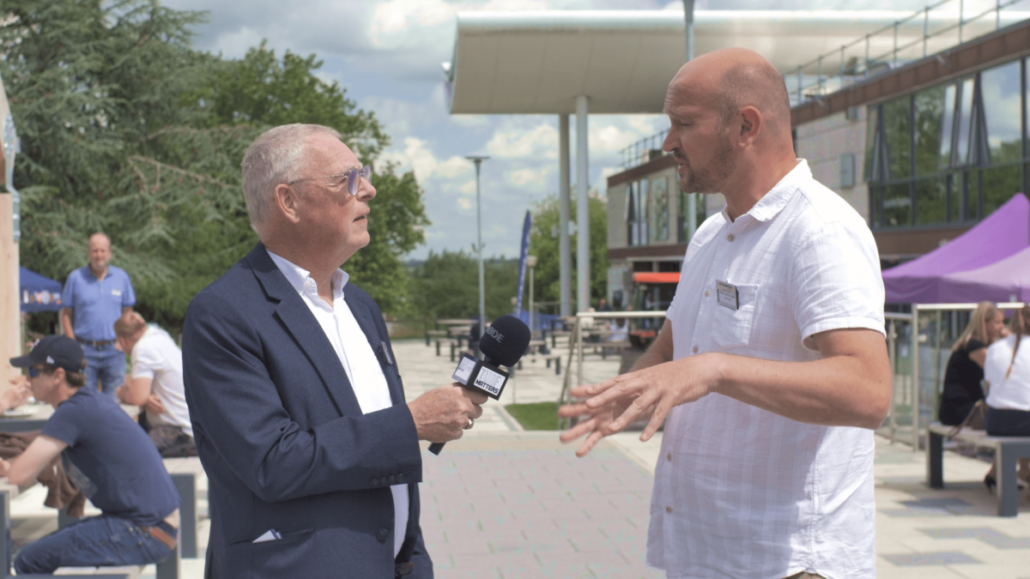
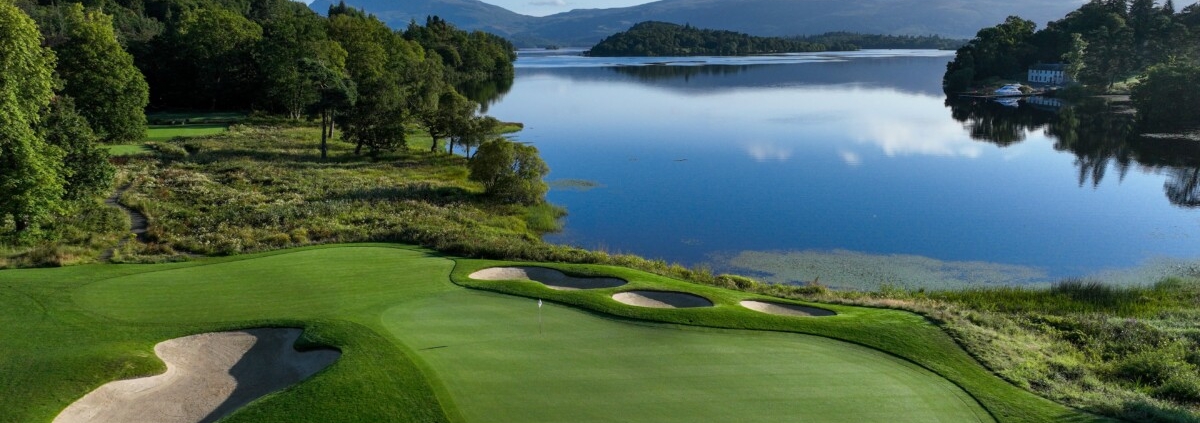
Top man for a top job: Scott MacCallum heads to the Scottish Trossachs to catch up with an old friend in a new job.

When a top job becomes available you know that, within the upper echelons of the industry involved, there will be a rush to polish CVs and Google the trendiest, most up-to-the-moment interview questions.

Top man for a top job

Top man for a top job

There are a few roles which would be at the top of many sports turf manager’s wish list and very high among those would be that of Director of Golf Course and Estate at Loch Lomond Golf Club.

Loch Lomond is one of those special places with a mystique borne out of the fact that for many golfers, it was only when the gates were opened for the Solheim Cup in 2000 and successive Scottish Opens from 1997 to 2010, that they could appreciate first hand the stunning layout and immaculate conditioning. It brings new meaning to the word “exclusive”.

So, when the job was advertised last year the jungle drums were beating. So loud, in fact, that they could be heard across the Atlantic in Nova Scotia, Canada.

Lee Strutt is a man who has never settled for the status quo. In fact, he could be seen as the poster boy for Norman Tebbit’s mantra, back in 1981, when he encouraged everyone to “get on your bike” and better themselves.

In the 30 years that I’ve known him, Lee has been responsible for Richmond Golf Club, in London; the GWest Project in Perthshire; the RAC Club in Epsom; Les Bordes Golf Club in southwest of Paris; and Cabot Cape Breton in Canada.

“None of my moves had ever been pre-planned, they were opportunistic and when I saw the Loch Lomond job being advertised, I knew that it had never been advertised before making it a unique opportunity,” said Lee, adding that he had been happy and content what he was doing in Canada

“I’m never upset by rejection. Quite often people will look at my career and think that I’ve had nothing but success. However, they haven’t seen all the jobs I’ve applied for, didn’t get a response, or got a response which was, ‘No thank you’.”

And before you ask. Lee never left any role with his tail between his legs. His work ethic, professionalism and general decency meant his departing employers were always as sorry to see him leave as his new employers were pleased to have acquired his services.

Lee had been told by a number of people that if he ever had the opportunity to work with Loch Lomond’s General Manager, John Blanch, he should take it.

“I’d heard so many good things about John from his time at Wentworth and then here that I reached out to him on Linkedin before applying for the job,” he said, adding that Ken Seims, long time Loch Lomond head man, was someone he identified as a mentor, while he was also extremely close to David Cole, the man who he was to replace, having himself moved onto an exciting new project near St Andrews.

One Teams call and an in-person on-site interview later and Lee’s ambition was being fulfilled.

“The question is always do you tell a panel what they want to hear or are you true to yourself and outline what you actually believe,” said Lee, of his second interview which came a few hours after he had had the opportunity to walk the golf course.

“I thought, no actually I’m going to tell them exactly what I’m going to do if I get the job.”

His approach worked. Having clinched the role, it appears to be the perfect fit. The country’s top rated inland golf course and a Director of Golf Course and Estate who not only has a passport as well-worn as that of Michael Palin, but also had time to become the only turf manager in the world to have the top greenkeeping distinctions from the top four greenkeeping associations – Master Greenkeeper from BIGGA, the top award from the GCSAA, the Canadian Master Superintendent and the Australian CSTM.

“I’m the only person with all four, although a good friend of mine from the States, Matt Gourley, should be joining me this year. I’m looking forward to celebrating with him becoming the second person to join the club!”

So, if you find yourself in your dream role, at a golf course which has ticked every box since the day it opened, what is left for you to do to make a positive impact? Standards are so high that improvements can be very hard to find.

One of the questions he had been asked was what does 30, 60, 90 days look like?

“I said that I’d spend the first 30 days getting to know people and to understand how they work. People – staff – are a really important component to me. The next 30 days were looking at our operations – what we’re doing on the estate, management processes, our equipment, some of the ambitions of the past. The last 30 days were about what we do going forward,” he explained.

Top man for a top job

Top man for a top job

“This is what I did and then at the end of my 90 days I sat down with John (Blanch) and said, this is what I see going forward. I’m looking at the agronomy, I’m looking at the presentation, I’m looking at our people.”

Given that he has gathered huge experience from around the world what has he taken from his time outside of the UK?

“I guess what I have learnt and developed is to communicate better and articulate what we need to do as well as I can. I keep saying to the team here that I’ve got three principles which I have carried through my career. They are transparency, respect, and trust. Without any one of those, it doesn’t work.”

While he believes his goals are in line with most top golf course managers, he does feel that there are many different ways of achieving those goals. “Everyone is different. I really like data. We have a weekly agronomic meeting where we look at all our data, green speeds, fertility, operations, trying to identify what our sweet spots look like.

“I don’t actually look at all the positives. I’m not wowed by the scenery and how beautiful this is. Because my job is all about what’s not right.”

Taking from the analogy of marginal gains, as preached by Dave Brailsford when he was head of British Cycling, and Formula One teams, Lee explained his philosophy.

“If you went to work for Formula One they’re not saying, ’Oh look at the lovely car, it’s all so shining’, It’s all about where can you save a tenth of a tenth? What needs to be done to motivate the team when changing tyres?

“That’s what I do. I focus on everything that’s not right,” said Lee, who admitted that since he started last August, he had yet to play the golf course, claiming he wouldn’t get past the 1st without finding something he wasn’t happy with.

So, let’s have an example of how his approach works on a day-to-day basis.

“We’ve revisited our agronomic approach and decided to strip it right back and rebuild, instead of turning around and saying, ‘Well in the past X, Y and Z was done.’ Let’s assume we don’t need to apply X, Y and Z and see what happens.

“So, we’re now learning about what actually the site wants and needs and then delivering it. You are not being influenced by a previous approach, even if it was that which got the course to an outstanding level. It is all about focusing on continuous improvement,” said Lee, who attributes Adrian Archer, former Course Manager of Broadstone Golf Club, in Poole, as the man who set him on his greenkeeping path and, in particular, pushed him into attending Sparsholt College.

“Sometimes you have to go back and look at that recipe and go, that recipe’s good. How do I improve it? Or sometimes it’s a case of stripping something right back and rebuilding it. You might get to the point where the results are the same, but there’s now a greater potential for further improvement.”

Loch Lomond was designed by the great Tom Weiskopf and opened in 1993 and while it has always been a majestic golf course it was challenged by the eye-wateringly high rainfall levels endured by local residents, Loch Lomond’s members and staff. The joke about locals having developed webbed feet comes from an average of two and a half metres of rain per annum and is not totally fanciful!

Over recent years, and before Lee’s time, the club invested £7.5 million to sand cap the entire site.

“They did a phenomenal job with the sand capping. It was started before Covid and completed in 2022. A new irrigation system has also been installed,” said Lee.

“However, it’s only part of that silver bullet because what has happened is that you’ve added an inert sand and we’ve got to change that sand into more of a root zone so it’s not so inert.

You need more biology and that’s something that we’re working on now.

“How we can evolve the plant to benefit from all that sand capping and for the plant to grow and to grow to be happy. So that’s one of our programmes that we’re working on, and it will help fine-tune presentation and playability.”

Top man for a top job

Top man for a top job

What constitutes success for Lee?

“That is a brutal question. I was chatting to a guy yesterday and we were talking about how do you get to a state of satisfaction? I do think that satisfaction is the closest I can get to success.

“If I have maxed out on all the opportunities to make things better, that to me would be satisfaction and would mean that I’ve succeeded.

Another area where he is seeking to make improvements is in the facility for the 38 members of his team – which includes six in the garden team, three in the workshop and the rest on the golf course.

“When I arrived, I thought that our facility of workshops, offices and mess room, built from breeze block, looked very austere. So, I’m working to improve things. I’ve got pictures of the team members up on the walls, while I’ve got hold of two fabulous leather armchairs for this room. I’m also having a table specially built from wood from the course for meetings, while the chairs are ideal for one-to one chats with staff, talking to reps etc,” said Lee, as he and I tested the comfort levels of the chairs.

Lee has inherited an extremely fine group of people, who have bought into his three values – remember, transparency, respect and trust – while he is also keen to encourage those looking to change career to join the industry.

“I’ve got a guy in my team that used to run building sites. He now works for us. I’ve got a guy that used to repair submarines. He now works for us. I’ve got a guy that spent 17 years as a court officer. He’s now greenkeeping, and a guy who spent five years as a video editor. He said that he just wanted to scratch that itch. They all have a work ethic,” said Lee.

“The issue with school kids is they don’t know anything different, so they can start greenkeeping and then wonder if they should try something else? Whereas the people that have got a past career, they’ve got something to associate and they’ve had enough time to think that they want more of this and less of that.

“I would say we, as an industry, need to find a means whereby we can say to people out there who had had a first career, that we can give you an opportunity for a second career.”

Speaking with Lee you quickly sense that here is a man who has got his teeth well into his new role and that he won’t stop until he finds satisfaction… which you suspect will always just sit tantalisingly outside of his grasp.

So, it is fair assumption that while Lee was absolutely delighted to have heard the sound of those jungle drums all the way in Canada last year, he won’t be listening out for them again any time soon.
The with man perfect pitch

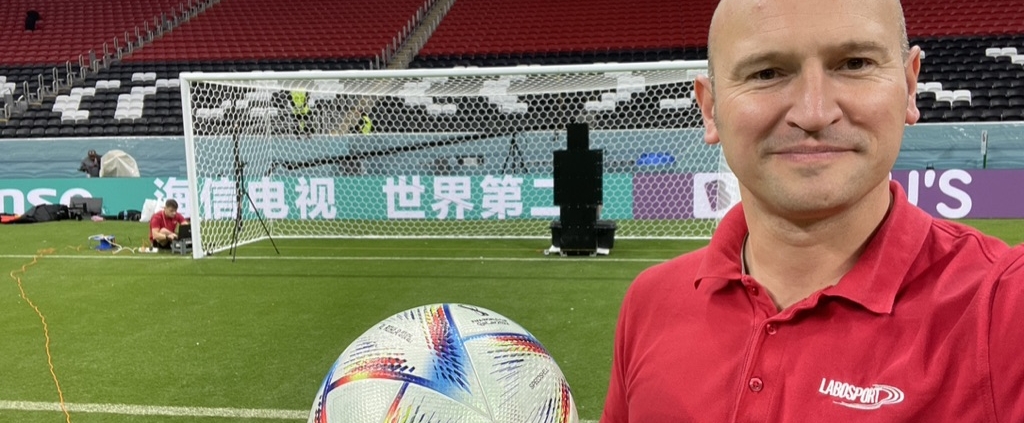
The with man perfect pitch: Scott MacCallum met up with CEO of Labosport, Professor David James, the man at the forefront of sports pitch development.

If we think back to sport in the 1970s there are two images that spring to mind. There was Ronnie Radford scoring a remarkable goal for Hereford United to defeat Newcastle in the FA Cup in 1972 and then England prop Fran Cotton playing for the British Lions, in Melbourne, in 1977, looking like the muddiest man you’ve ever seen in your life.

The with man perfect pitch

The with man perfect pitch

Both iconic sporting images, neither of which would ever be replicated today. Ronnie’s goal was incredible as he more or less shovelled the heavy leather ball out of the boggy pitch from 30 yards and into the top corner. John Motson’s commentary and Ronnie’s celebration are part of English football’s folklore, but do you really think that the game would have gone ahead in 2025?

And Fran. Same thing. Would a game that resulted in Fran turning into a monster from a B-movie horror ever have got past a modern day pitch inspection?

Different times and different standards, but I do think it is fair to say that most people forget just how far we have come in the construction, maintenance and preparation of modern day sports pitches. It is now rare for a pitch to become a game-defining issue and it would take a highly trained eye to identify whether a pitch was at the beginning or end of its particular season.

And alongside the development of natural turf surfaces is the quite extraordinary progress of synthetic pitches.

At the sharp end of much of natural and synthetic pitch development is Labosport, the international company which is a the forefront of testing, certification and consultancy on all aspects of sports surfaces. Since 1993 they have spearheaded the development of testing methods to raise the quality of sports surfaces and provide guidance on the design and construction of sports facilities.

And the man who is Labosport’s worldwide CEO is Professor David James. As you might imagine David is a busy guy. When I caught up with him, at Labosport’s unassuming UK Headquarters on an industrial estate on the outskirts of Nottingham, he had just returned from viewing some test pitches at Sheffield Hallam University and was about to head off to New Zealand. Air miles are not something for which he is short!

I first bumped into David at the Syn-Pro Seminar held at Loughborough University early last year where he started by saying that the very first synthetic sports surface was at the Houston Astrodome, in Texas, and had been installed in 1966 – the same year as some people ran onto a natural pitch in North London, thinking it was all over!

Given that David is a man with whom you could talk for hours and hours I decided to limit the bulk of the time to the subject he talked on at Loughborough – synthetics.

As a starting point I asked him that, if that Houston pitch were an Amstrad computer, where were we at now?

“I would say the Apple Mac Pro. However it’s still not a finished development. Looking at synthetic surfaces, they’ve really come on huge amounts in terms of playability, athlete welfare, skin injury risks and other injuries,” said David, adding that as with most industries sustainability is now very much the driving consideration.

As for a Eureka moment for the synthetic turf industry along that path from 1966 to 2024..

“I think the Eureka moment has to be the arrival of the so-called 3G. “The two key components of a 3G pitch are a longer pile. Rather than something that’s 25mm, it’s up at 50mm or 60mm.

“And then having an infill, which does a number of things. First of all, it keeps the fibres standing upright which allows players to wear studded footwear, because the infill allows the penetration of the studs. So it gives traction which is much more similar to natural turf and the ball bounce is more comparable to natural turf. You’ve got much more energy distribution so you don’t get very high bounce or very long roll.

“It really simulates natural turf much more closely than those early generations of pitch,” said David, adding that the original 1966 Astrodome pitch was much better suited to American football than it would have been for our more global version of the game.

And indeed those early pitches were still perfectly suited to a sport that has thrived since the introduction of synthetic surfaces – hockey.

But as development continued the understanding of the benefits of a high quality artificial pitch grew.

The key argument for synthetic turf is that that it can withstand up to ten times more playing hours than a natural turf field.

“That’s really important, as you can then look at the availability of land.

Among the reasons why synthetic turf took off so much is that you’ve got this all-weather playability. We don’t get fixtures being cancelled in February. It’s a sobering statistic that up to 50% of all football matches are cancelled in February in recreational football,” revealed David.

“Added to that rather than having ten football pitches you can have as many games on just one pitch. That literally frees up land. You can sell off your playing fields, perhaps for housing developments, and keep the one synthetic field because it can withstand the amount of use.”

But now having had 20 years when 3G pitches were the gold standard new heights are being reached and new quality levels achieved.

“We’re now looking at the next generation of pitch. What we’re looking at is having a shorter pile system, perhaps 40mm using less infill material and having a shock pad under the turf.

“Using less infill on the top and incorporating a shockpad underneath, you get synthetic surfaces which are more consistent than natural turf,” said David, adding that upwards of 35% of all the recycled tyres in the world get recycled into sport fields.

The EU have made a decision to effectively have a ban on the sale of granulated tyres for this use from 2031. The UK has yet to decide what they are going to do.

“There is a lot of work looking at alternative infill materials and there are many options including coconut husks, olive pips, ground walnuts, shells, corn on the cob, cork, wood chip.”

The with man perfect pitch

The with man perfect pitch

For a system to work everything has to gel – the shock pad, the carpet, the density of the pile, the amount of stabilising infill, the sand and how much performance infill there is.

“We’re now in a period where there’s going to be huge diversity in the market with these different infill materials, different shock pads, different pile lengths.

They’ve got different characteristics. They’ve got different price points. They’ve got different maintenance issues, different longevity. Some of the materials are very robust while others are more prone to deterioration over time.”

One previous area of concern was the level of injury which can be caused by playing on a synthetic pitch.

“I recently gave a speech at the SAPCA conference on the latest research into the injury risk to players from different playing surfaces. There are very strong perceptions among elite football players that synthetic turf has a highest higher injury risk.

“I don’t discount the player experience but, at the same time, I want to look at the data and there have been something like a 120 peer-reviewed scientific publications that have compared inury risk between synthetic turf and natural turf.

“Indeed here has been a recent systematic review, which took 53 of the highest quality studies from all over the world. It showed that there is no elevated injury risk on synthetic turf to natural turf for football. It did, however, show a slight elevation of risk in American football.”

Around about 10 years ago there were newspaper headlines, and some anecdotal evidence, that rubber crumb in synthetic pitches was causing cancer. However all research has since revealed that the level of potentially carcinogenic chemicals in recycled tyres is so low that it is deemed to be of no risk to humans.

Having taken on the global CEO role at Labosport 18 months ago, how did David find himself in such a key role within the sporting world?

“I actually trained as a mechanical engineer at the University of Sheffield, so for me it’s all about materials and how balls and athletes interact with the surface. That’s still my fundamental passion and I view a lot of these topics through the prism of engineering.

I’m not an agronomist, but I did my engineering degree and then a PhD that was funded by the England and Wales Cricket Board. I got to work with Bill Adams, who sadly recently died, He was a huge leading light in agronomy, and worked for the ECB, looking at cricket pitches.

“He was taking soil cores and looking at clay content while I was coming from an engineering perspective, looking at how balls bounced. It’s impact mechanics.

“I was using high-speed video to film balls bouncing and then characterising things such as the pace of the bounce. That got me going on the engineering of sports surfaces, The surface is fundamentally an engineered product, whether it’s natural or synthetic. Amazingly, my PhD actually became an important reference document on cricket pitches and the science of cricket pitches.”

David remained in academia for the next 15 years, focusing on how balls and humans interact with surfaces in all sorts of different ways.

“I was looking at footwear and worked with companies like Adidas, while working for the University of Sheffield and then Sheffield Hallam University.

“I ended up running the Research Centre. We had a great time during London 2012 as well, and did a lot of work with our Olympic teams, taking this engineering perspective around sports performance and understanding the sports environment. But my personal passion has always been the surface, always been understanding the playing surface or the running shoe.”

David joined Labosport six years ago and ran the UK side of Labosport. Then, a year and a half ago, he became CEO of the whole group.

Labosport has 16 laboratories in 11 countries but also has companies, such as PSD, Professional Sports Turf Design, TGMS. Outside of Europe there is Labosport China, Labosport India and Labosport Australia.

“We also have the New Zealand Sports Turf Institute. In the Americas, we’ve got Labosport Canada and in Texas, Labosport USA, which really focuses on golf and the golf industry.”

The company is there to assist anyone wishing to develop sports facilities.

“It could be that we produce a feasibility study. Maybe you’ve got an old facility, you’ve got a piece of empty land, and want to build an athletics’ track. We would look at the ground conditions and then provide options and potential designs and then perhaps assist with the writing of a specification and then assist it through planning. We’re an independent consultant, so we stand aside from construction. However we might be involved in monitoring the quality of the construction and carry out the certification. We would then monitor the pitch throughout its life, carrying out recertifications and ultimately look at the end-of-life options.”

Having been immersed the subject for so many years it would be remiss not to ask David for his thoughts on the future and where he would like to see stadiums and pitches in the next decade or so.

“I would like to see the industry moving away from the model where you have a massive stadium in a city where you play one game every two weeks. It’s a huge facility so why not have four or five games a week there shared by different clubs – men and women, rugby and football, hockey whatever.

“From a sustainability perspective, it just makes so much sense.”

Even if that means we won’t be seeing any modern day images of the likes of Ronnie Radford and Fran Cotton!

New man at the helm

New man at the helm: The new Chair of the IOG is a man who is a believer in evolution not revolution and, such has been the strides taken by the Institute on the recent past, you can be sure that there wouldn’t be a need for any U turns or radical changes in approach under his stewardship. 

David Carpenter has been a member of the IOG Board for nine years and played a key part in the move of Saltex from Windsor Racecourse north to the NEC in Birmingham and he has seen levels of professionalism across the board increase during his time involved.

New man at the helm

“I certainly don’t think that I need to take anything by the scruff of the neck. I have every confidence in the rest of the Board and the Executive team and we have been working together as a group extremely well,” explained David, who can call on his vast and relevant experience from working for the Sports Council and the Lottery Fund.

“I’m not suddenly going to change direction unless there is good reason to do so.” That is not to say that David, who took over the reins from David Teasdale, is going to be passive. He is a deep thinker on the subject of groundsmanship and the issues that are inherent in an industry which rarely gets the credit it deserves.

“I am concerned about the lack of new people coming into the industry, both as volunteers and professionals and I’d certainly like to see more young people entering the profession.

I’d also like to see more women in grounds management and I’d like to see more black and ethnic minorities represented in our profession.

“Such is the lack of level of entry, we can’t afford to not have half the population as potential ground staff,” he said.

He is not overly concerned with the elite side of the industry in terms of surface quality, after all we have many of the finest grounds managers in the world. But at the community end of the industry which impacts most on the greatest number of people there are real issues that must be addressed.

GanTIP has already conclusively identified that natural pitches are not in good condition at community level but already Jason and his team have tackled and improved nearly
4,000 community football pitches. They are doing a great job.

“I do see a scenario where community facilities could actually get worse before they get better. Local authorities are not recruiting and we have to find other routes into the profession. A lot of the volunteers we do have are older people and they are not going to be around forever and we need new younger people to work alongside and eventually take over,”

“We also know that with a little more investment there is an opportunity to make significant improvement.”

On education and professional development David has some interesting views.

“It strikes me that grounds management is where sports coaching was 20 years ago. Then there was no structured pathway for coaching and coaching appointments were very random, particularly outside of perhaps football and cricket.

“The status of the coach was really quite low. As a result of a more structured approach and clear pathways that status is much higher and coaches now receive much more respect. I think that is possible for grounds management if we are able improve the pathway quite significantly.”

One of the ways in which this could be achieved is an education process for operations managers, such as Contract Managers, Bursars and Arena Managers, who are ultimately responsible for grounds management.

“I think this process will take much longer than my time as Chair but it is a very important aspect and one which requires significant input. It is ridiculous that so many sports rely on good surfaces yet groundsmen and women don’t have the same parallel standing as those carrying out other functions within the organisation.”

He does have another interesting idea, which he stresses is his own and not IOG policy.

“I’d like to see education for the volunteer side of the industry available on a free of charge basis. Obviously that would require sponsorship support and we would have to go to the respective sports councils or sport governing bodies to agree volunteer programmes but I do think it is something worth exploring.”

David is also well aware of the change to the role of many groundsmen and women at that elite end.

“Groudscare managers now have to be so flexible. Not only have they to prepare surfaces which are scrutinised on TV and often criticised by players, past and present – when often it is as a result of bad play not bad surfaces – and then have to move seamlessly into preparing a stadium for an arena concert.

“They are working incredibly long hours, late into the night, and sometimes overnight to ensure that concerns booked by the commercial department are a success. I don’t think there is enough recognition for how much effort goes into it all.”

David was appointed to the Board as an independent member nine years ago after he had carried out some consultancy work for the IOG’s Chief Executive Geoff Webb in 2005.

“I also did a study in 2007 in which I called groundsmanship the hidden profession. I was basically saying that there was great work being done and some really good people involved but that they didn’t really have any profile at all.

“In 2010 Geoff asked me to join the Board and I have been really pleased that I accepted his offer because it has been quite an eventful time over the last eight or nine years and the organisation has made really good progress.”

Much of that progress can be seen with the success of the move of Saltex to the NEC in Birmingham, a move that David was involved heavily.

“We agonised about it for quite a long time to be frank but we knew that Windsor was staring to fail and that the status quo was not going to work. We had to shake it up and do something, and we’ve had a successful four years so far.

“The key is for us to keep the Show fresh and innovative, introduce new things and new thinking and we will try to keep it going for strength to strength. Fortunately, we have some good thinkers around the table and people who feed in good ideas and Geoff himself is very good on that front.”

David was elected Chair at the IOG’s AGM in September and firmly believes that progress will be made.

“I feel that I am taking over at quite a good time with regard to where we’ve managed to get to but we must lift the bar higher. We must push forward. For example, we have just appointed an agency to work with us with the aim of lifting the profile of the industry. Their work will not be launched until next spring but we are working very hard behind the scenes with the agency and I see this as the next stage of our challenge.”

Life is full of challenges but if you have a carpenter at the heart of things you can be sure of stability and a well-constructed future.

Mower Man Gets Wembley Invite

Mower Man Gets Wembley Invite: A grass cutter whose efforts in creating a pitch “fit for Wembley” for children has been invited to cut the stadium’s pitch for real.

A tweet Jimmy Broadhouse shared of his work at a council field in Bilbrook, near Wolverhampton, has been seen almost three million times.

It also caught the attention of Wembley’s head groundsman, who sent an invite to Mr Broadhouse, known as Jimmy the Mower, on Twitter.

“It is amazing,” Mr Broadhouse said.

“Isn’t it every groundsman’s dream?”

Karl Standley, the Wembley head groundsman who sent the message, has been approached for comment.

But in the exchange with Mr Broadhouse, he said he was “100% serious” about the offer.

Mr Broadhouse, from Ditton Priors, who runs Ditton Services, added he would “try to sort it for August when the mowing has slowed down a bit”.

“I’m working seven days a week at the moment so it is just trying to find a time when I can get down there, but it is fantastic.”

“When I saw the message I was so excited, I could hardly sleep.”

The original post was massive with more than 43,000 likes and three million views.

Many people also shared their own proud photos of finely manicured turf.

Jimmy was deluged with comments and even offers of work.

“It’s been really great,” he said.

“It has been so positive and uplifting, I’m really happy.

“And it really highlights how much these parks and open spaces mean to everyone.”

Click here to read the original article

For the latest industry news visit turfmatters.co.uk/news

Get all of the big headlines, pictures, opinions and videos on stories that matter to you.

Follow us on Twitter and Instagram for fun, fresh and engaging content.

You can also find us on Facebook for more of your must-see news, features, videos and pictures from Turf Matters.

Toro Fleet At Man City

Toro Fleet At Man City: Manchester City’s Football Academy in the heart of East Manchester has chosen Toro again as it updates its fleet.

The supply of six Reelmaster 3575-D lightweight mowers continues a relationship with Cheshire Turf Machinery and Toro which spans 20 years.

Toro Fleet at Man City

For use across the 80 acres of grounds adjacent to the Etihad Stadium which is used for youth development and first team training, head groundsperson Lee Metcalfe has chosen Toro and the Reelmaster 3575-D mowers to replace its older Toro Reelmaster 5510-D machines.

“We needed to replace the RM5510-D fleet as they had a high number of hours on them,” he says. “This time we opted for the three-wheel RM3575-D mowers, so we wouldn’t have as much impact on the pitches. It’s been a wet winter and we felt this would deliver a better result considering the conditions.”

The RM3575-D machines are lightweight – just 2550lbs including the cutting units – and the front-to-back and side-to-side balance of weight produces a low centre of gravity which, when combined with turf-friendly tyres, reduces any potential turf compaction and damage.

The three-wheel drive system of the new machines will also help with the tight turns at the end of the pitches, says Lee: “These machines are easy to use and with the tight turn areas we have three wheels work very well. Cut is set at 30mm for the academy pitches and at 23mm for the first team pitches. Maintenance is daily by the MCFC staff and a couple of technicians from Cheshire Turf Machinery come out every Monday to check and maintain the machines too.”

The relationship between Manchester City and Cheshire Turf Machinery is almost two decades long as managing director Steve Halley explains: “We’ve worked with Manchester City Football Club for around 20 years, with Lee and grounds manager Roy Rigby. It’s our understanding that reliability of the brand is key and we trust that our support and the longevity of our relationship is too.

“This latest order addresses the club’s constant drive to improve turf quality without sacrificing productivity. As Lee says the three wheel configuration makes the machine very agile and means the team can make tight turns without damaging the turf.”

With the surfaces of the Academy taken care of, Lee, who has been at MCFC for 10 years and manages a team of 13, tells us what’s next: “We are always focused on how we can keep developing the grounds area and team. I’m constantly looking to see what the latest innovations are in terms of machinery and when it comes to our team, these are the people of the future. Everyone in the team is willing to learn and move forward which is very encouraging to see. They question things and attend many training courses to make them all better groundspeople.”

For more information, visit: reesinkturfcare.co.uk

For the latest industry news visit turfmatters.co.uk/news

Get all of the big headlines, pictures, opinions and videos on stories that matter to you.

Follow us on Twitter and Instagram for fun, fresh and engaging content.

You can also find us on Facebook for more of your must-see news, features, videos and pictures from Turf Matters.