Tag Archive for: Park

Park Life

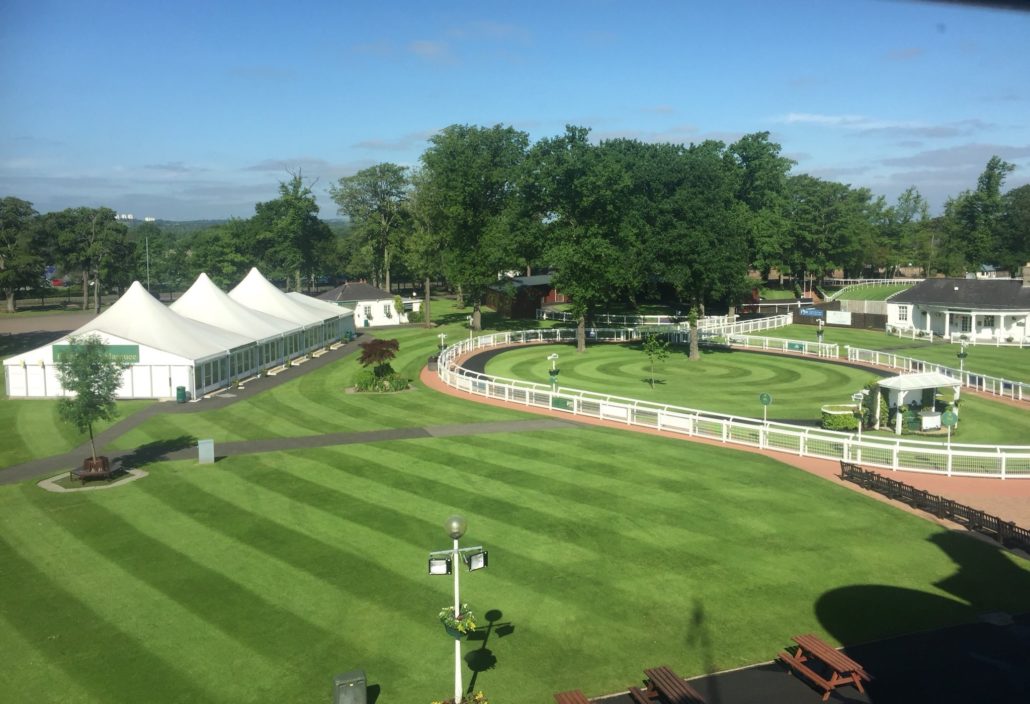
Park Life: A report by the Heritage Lottery Fund, State of UK’s Public Parks, suggests that in the UK 34 million people visit a park regularly. To put this into context, more people visit one in a year than voted in the 2015 General Election.

The Victorian philanthropists who had the vision to create the world’s first public parks understood the importance of green space for the health and wellbeing of society. Access to good quality green space is vital if we are to tackle some of the challenges that we face, including the growing problem of obesity, the rise in mental health issues and the feelings of being disconnected from the communities in which we live. Research shows that having well-managed, accessible green space contributes to tackling many of these issues.

Park Life

This is where the Green Flag Award can help, because it supports organisations that provide quality green spaces. Parks are only well-used and valued if they feel clean and safe. Fear of crime is one of the biggest barriers to certain groups using a park to exercise or relax and if a park looks unloved and uncared for, this can lead to an increase in anti-social behaviour.

Launched in the UK in 1996, the Green Flag Award has transformed our country’s green spaces. It was introduced to reverse the decline in the quality of our parks that had happened in the 1970s and 1980s and it has worked.

When it was launched, only seven parks met the standard required to fly a Green Flag Award today more than 1,600 parks and green spaces have a flag flying. The Green Flag Award has delivered change in the UK’s parks and green spaces and raised standards by setting the standard. It has shown that running a park that is well-used and valued by its community is about more than just cutting the grass.

It has established that effective management and the use of skilled staff, along with support of the local community, are key to creating fantastic public parks. In addition, the Green Flag Award has supported the professionalism of the parks sector. It has provided an opportunity to share good practice through a network of more than 800 volunteer judges that supports new applicants.

For those running our country’s parks and green spaces, the Green Flag Award is an invaluable tool, whether the space they are managing is a traditional park, a cemetery, a shopping centre or a university.

The Award helps focus activity on the important elements of management and provides a proven, successful framework. It enables the development of a costed management plan that allows resources to be focused in areas that will have the biggest effect. It also allows managers to demonstrate that resources are being used to their best effect and money is being spent appropriately and delivering value for money.

The aim of the Green Flag Award is to ensure that everyone has access to a quality green space and to enable them to live more healthy lifestyles.

Park Life

The number of Green Flags Awards flying in Britain –and further afield – today is the proof that many others share that vision.

As a green flag judge, I get to visit some amazing parks and open spaces every year. Judging usually starts in April and completed in June with flags awarded in late August.

This year I judged several parks, one of which was Priory Park in Dudley. The town of Dudley has a long and illustrious history and heritage with is famous castle, National Nature Reserve, limestone and mining history, and fantastic canal system. Dudley Priory is a little known gem nestling in the heart of the town centre. The Dudley Priory was founded by Sir Gervase Paganel and served a community of monks and lay people for several hundred years until it was demolished during the 16th century by Henry VIII during the dissolution of the monasteries.

The Priory Park restoration project which was funded through the Heritage Lottery Fund has developed the park significantly and has restored and enhanced many of its impressive features from its 1930’s inception and beyond. One of the most impressive features which has been improved has been the ruined Priory itself

The Ranger posts which have also been funded for five years have meant that themed events and activities with schools and community groups take place on a regular basis and the park is now a lively and vibrant place once more. Local people have been trained to deliver sporting, horticultural and heritage-based events in the park, and the park pavilion itself, once a derelict and burnt out shell has been reinvigorated and revived to become a local hub for the community, in a splendid green landscaped setting.

Trees make an important contribution to the park’s special landscape and historic interest. The 2009 tree survey recorded 501 trees within the park, with just over half of these being classed as mature. In recent times a significant number of large mature specimens have been removed as a result of disease and as a precautionary measure to protect the safety of visitors. Further felling of 51 trees as part of the restoration work was recommended in the tree survey and has now been completed.

During my visit I get to meet the people and staff responsible for managing the park the lead officer responsible for Priory Park is Liz Stuffins who obliged me by answering a few questions about her role and the work undertaken as part of their Business plan for Priory Park.

Turf Matters:- How long have you been working for Dudley MBC ?  

Liz Stuffins:- I have been with Dudley MBC for nine years

TM:- What is your role with the council and how many parks and open spaces do you manage?

LS:- My role is Development of Parks and open spaces, my team works with residents, visitors and sports groups to improve and restore parks, and make them more pleasant places to visit. I manage large capital programmes such as Lottery Funds, 106 planning obligations, funding and other funding sources to improve parks. We have had large public Health grants and government grants to deliver projects, and we work with community organisations to improve volunteering and events and activities on sites. We have 28 main parks we work on.

TM:- How is the maintenance work carried out in the park?

LS:-The maintenance work at Priory Park is carried out by site based staff plus the north area team who are peripatetic. We also have a number of volunteers who assist the site-based team, plus the apprentices who use the site for learning and project delivery. Although the Authority no longer has glasshouses to grow bedding, the Council is working with Dudley Mind who are working on a Growing in the Park project. They manage the glasshouses and the apprentices will work with them to gain this experience as part of their training.

TM:- Why do you support Green Flag? What benefits do you get from having the award?

LS:- The Green Flag Award is really important to the Borough as it sets the standards for high quality parks. The four Lottery funded parks have all got Green Flag status, plus we have two other parks which have the Flag where the community or public Health have helped to fund raise for intiatives/projects in Coseley and Dudley Town Centre.

Park Life

TM:- How many green flag sites do you have ?

LS:- Six sites have Green Flag Status two of these are Nature Reserves, we are working on a cemetary project which we hope will get Green Flag and some Community projects such as allotment sites.

TM:- You have a good apprentice ships scheme running in the park, what benefits do you get from running this programme?

LS:- The apprenticeship scheme has been running since our government funded Future Skills project ceased 7 years ago. The Council is really committed to training up young people to provide a better workforce. The Green care team recognise that the workforce is very old and close to retirement and needs to develop succession planning.

TM:- As an industry do you think we are doing enough to encourage the next generation of parks managers or are we a dying breed?

LS:- Our industry has a huge opportunity to train others and to encourage others to join the industry. Parks managers need so many different skills these days, but there are people who want to work in the environmental industry, but not necessarily have the traditional horticultural training that parks managers of old had. I have a background in ecology and environmental management with a passion to see local people care for their local green spaces. We are seeing local people becoming the champions for parks with the rise of the Parks’ Friends’ movement.

TM:- What further improvement would you like to see in the Park?

LS:- Priory Park really does need to become a thriving hub for Dudley’s regeneration. Dudley has a number of excellent visitor attractions, Zoo, BC Museum etc, the Park needs to be sold as part of the tourism package. I am working on delivering the café at the park which we hope will be open next year. I would also like the park to be hosting more events and activities, the Churches Together event is being held next weekend and the Friends have several ideas for events in the future.

I really enjoyed meeting the staff and getting to know what Dudley MBC had in mind to secure the future of Priory Park, I may be tad biased, but you really cannot put a price on these valuable parks and open spaces, we collectively have a duty to secure their future for the next generation. Maintaining Greenflag status without doubt plays an important role in doing this.  I like to thank Dudley’s  MBC staff and friends of the park who made me feel very welcome on the day, and we will all look forward to finding out if they managed to maintain Greenflag status later in the year.

Work Underway At Ewood Park

Work Underway At Ewood Park: Work is underway on the pitch at Ewood Park as Rovers prepare for life back in the Championship.

Head groundsman Trevor Wilkin admits preparations for the 2018/19 campaign are well underway and will step up over the next few weeks.

The Ewood groundstaff were highly commended by the EFL for the condition of the pitch during the course of the League One season.

And Wilkins, who has worked for the club for over 35 years, explained the process which will take place over the summer.

He said: “All that’s happening is what we do every season, which is stripping the old turf off, adding some fresh root zone, freshening everything up and reseeding.

“People get it in their head that it’s a brand new pitch, but it’s not. It’s more of a make do and mend job.

“Over the next few days, the old turf will be stripped off, then we’ll get the new root zone on, mix it all together and by the end of the week it should all be levelled and seeded.

“It will then be put to bed for two weeks, then hopefully it should be totally green and ready for me to start cutting again.

“Hopefully we get a decent summer and then we’ll be ready to go from mid to late July.”

Wilkin admits there has been investment from the owners on the pitches at the club’s Senior and Academy training centres at Brockhall with that work also underway.

And he hopes that will bear fruit for the players and coaching staff during the course of the 2018/19 season.

He told the club website: “There’s lots of work going on down at Brockhall as well.

“The owners have spent money on every single pitch this summer, which is great – a good investment.

“Every single pitch at the Senior Training Centre and the Academy is having some work done on it, and that’s the bread and butter for the players.

“We’ll be doing the best we can to produce training pitches as good as Ewood for Tony (Mowbray) and his staff.”

The club were two League One clubs to be highly commended by the EFL for the condition of the pitch, with the overall honours going to Rotherham United.

The rankings are based on marks from referees and away managers, as well as detailed pitch inspections and a review of management operations.

And Wilkin added: “This is a great achievement for everyone involved after what has been a difficult season fixture and weather-wise.

“We had a tough period from late January through to the middle of February, but the winter we had, as everyone knows, was horrendous, plus this season what really hit us was the amount of fixtures we’ve had.

“I think the last league game of the season against Oxford was our 40th fixture here at Ewood, which is an unbelievable number for this stadium, so overall we’re very pleased.”

Click here to read the original article

For the latest industry news visit turfmatters.co.uk/news

Get all of the big headlines, pictures, opinions and videos on stories that matter to you.

Follow us on Twitter for fun, fresh and engaging content.

You can also find us on Facebook for more of your must-see news, features, videos and pictures from Turf Matters.
Irrigation At Bush Hill Park

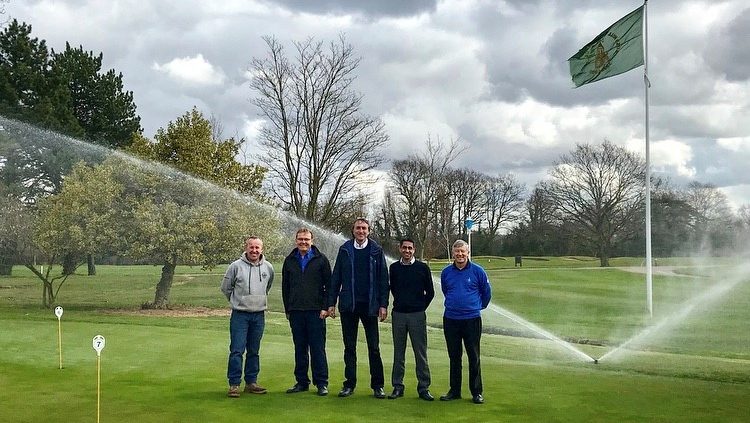
Irrigation At Bush Hill Park: Bush Hill Park Golf Club is based a stone’s throw from Enfield Town in North London. Originally 9 holes, this 100-acre parkland course was designed by Open Championship winners James Braid and Harry Vardon and boasts a running reputation for being the best maintained in the area.

Much of the irrigation system was installed 25 years ago, had deteriorated and needed a complete overhaul. Head Greenkeeper Graham Careford has worked at Bush Hill Park since 1986 and explains,

Irrigation At Bush Hill Park

“The ground here is clay so very dry in summer. With only a small number of heads on tees, irrigation coverage was poor, combined with leaks and frequent system breakdowns. The challenge any club like us faces is that you can’t see how badly the irrigation system’s deteriorated because the pipework’s buried underground. Extra watering takes place in the early hours or at night, and staff working overtime to keep the course in the best condition won’t usually be seen by most club members and players. Keeping an unreliable and ageing irrigation system going becomes increasingly expensive.”

To help build the case for investment in a new irrigation system, Graham began keeping a detailed timeline, recording all system faults, breakdowns and overtime as well as taking photographs of course conditions. This information was presented to the management committee to inform decision-making and help the club properly evaluate its various options.

The club appointed Irritech Limited to undertake the irrigation system design and specification and to coordinate a competitive tender process for a fixed price contract including warranties and retentions.

The committee decided that the major investment of £300k in a new Rain Bird IC™ Stratus™ II Central Control System with Windows™ 10 functionality and mapping for greens, approaches and tees would provide the system reliability and future water efficiencies that would maintain the quality of the course for many years to come.

Irrigation At Bush Hill Park

With over 300 sprinkler heads, 7 miles of piping, 6.5 miles of cable and 3,500-man hours, the contractor, Irrigation & Water brought the project in within budget. The new system will be operational this spring.

Irrigation & Water Director Ashley Proctor, comments,

“Our biggest challenge has been heavy clay and high water table which meant adopting a more sympathetic approach to ground conditions. It’s taken a little more time and care but that’s been essential to minimise damage to the course. This is our first complete Rain Bird renovation and we’ve had a superb Rain Bird team working with us providing all the technical support, training and back-up we needed to make sure the system was installed to the right standards. We’re delighted to have been involved in what’s been a landmark project.”

Jimmy Sandison, Regional Golf Sales Manager for the UK, Ireland, Iceland and Scandinavia, adds, “We were thrilled to be awarded this project and Graham Careford and the project team were a delight to work with from the start. We all knew ground conditions were going to be a challenge but Bush Hill Park now has a highly efficient irrigation system that can be upgraded easily upgraded in future years, reducing the cost of overall ownership.”

For more information, visit: www.rainbird.eu/golf

For the latest industry news visit turfmatters.co.uk/news

Get all of the big headlines, pictures, opinions and videos on stories that matter to you.

Follow us on Twitter for fun, fresh and engaging content.

You can also find us on Facebook for more of your must-see news, features, videos and pictures from Turf Matters.

Aeration At Cumberwell Park GC

Aeration At Cumberwell Park GC: Few course managers have the challenge of creating an aeration programme for 45 holes.  Step forward Matt James at Cumberwell Park GC who is responsible for five nine hole courses at Bradford-on-Avon, eight miles south of Bath.

The original courses – the ‘red’ and ‘yellow’ were created in 1994; ‘blue’ followed in 1999, while ‘orange’ in 2006.  Then, in summer 2016, a shorter Par 3 course was opened. Unlike traditional venues, the USGA based greens and tee constructions on the first four courses are generously sized, their design nonetheless still reflecting the natural contours and landscape of the 400 acre site.

Aeration At Cumberwell Park GC

Matt James’ aerator of choice is the Wiedenmann Terra Spike GXi. Previously the club owned a Wiedenmann 1.4 m wide GXi6 but upgraded to the GXi8 HD when it was launched to take advantage of the productivity an extra 40 cm offered.

“With 36 holes we just about got away with owning one spiker,” said Matt James. “Jumping to 45 we were over stretched. In autumn 2017 we added a second; two brings flexibility.  Take last month as an example: we’ve had one machine set with hollow cores coring greens. The other is on solid tines for tees. So, two machines ready to go when weather permitted helped us catch up. Changing tines is fast on a Wiedenmann, even quicker now when you just swap machines.  Terra Spikes are recognised across the turf profession. You see users happily posting their results on Twitter. We’re pleased with ours and the support we get from Stuart Fry and T H White at Knockdown.

Some form of aeration is carried out at the Wiltshire club every two to three weeks.

The Cumberwell plan is to aerate tees at least once in the winter with 12 mm solid tines varying depth and heave as conditions allow.  A handful of areas displaying signs of more compaction might be given a second run as spring approaches.  During March, hollow coring takes place using 10 mm coring tines. Again repetition may be carried out. Over the summer the tees get lightly pencil tined with several passes.

The true-running expanse of USGA greens which Cumberwell is renowned are tined twice in the winter with 12 mm solid tines and then throughout the year receive maybe half a dozen passes with 8 mm tines. Fairways don’t get spiked.

Increasingly the Cumberwell Park team has been introducing multi tine heads for finer work and for coring throughout the year.  The GXi8 HD can be fitted with multi tine holders on all eight legs, each solid multi- tine head holding up to twelve 5 mm needle tines while each coring multi-tine head takes six tines per head with a coring diameter from 6mm.

“We certainly vary the tines. With the Wiedenmann we can always achieve the depth which is important. In the past we tried fitting tining units on our greens mower but couldn’t get the necessary depth.  Now we get finite control from just a few mm all the way to 250 mm depending on what tines are fitted.”

Cumberwell Park’s innovative and inspired approach to course layout delivers an excellent golfing experience to members and visitors alike. Yet maybe less apparent to the golfer is how in parallel, clever forethought means it delivers a perfect solution to accommodate its many maintenance needs.

“Our Par 3 is separate but in terms of the other four nine holes courses we are quite unique,” explained Matt James. “They all start and finish at the clubhouse. Our booking system is such that golfers play any combination of courses. We treat it as a four tee start.  Crucially I have access to the system.  With appropriate notice I can close an individual course for maintenance.

“For example, tomorrow one course is shut from first thing until 9.30 am for top dressing. It really helps to be able to shut for tining or top dressing.

“I have to make a judgement on operations I can do. You have to be organised and plan activities ahead. Key things get booked well in advance, for example coring is traditionally March time.  Naturally you plan around big events or tournaments. We wouldn’t choose to tine or top dress before something important but you’ve got to fit it all in. Fine tines leave negligible disturbance so it is not particularly disruptive. We wouldn’t do it days before a competition; but aeration is necessary so you fit it in somehow rather than avoid it.”

The scale of Cumberwell Park is not for the feint hearted. Its setting is enhanced by nine lakes, 34 acres of woodland and free-flowing streams.  The establishment has been awarded four stars in Golf World’s Top Courses in Britain and is also an accredited Golf Mark and Club Mark facility. Nine of Cumberwell Park’s 20 greenkeeping staff are trained on the aerators.

So, how does Matt James keep track of what’s been aerated?  “We keep detailed records for all operations carried out. Specifically with spiking, details include which tines used, depth, where on a particular course and the operator name.”

With another nine hole par 3 course in the pipeline, Matt James and his greenkeeping team strive to maintain their constant high standards.  Only last month the club won the Environmental category at the Bath Life Awards 2018 while Head of Conservation, Jon Keepen was announced as a finalist for Conservation Greenkeeper of the Year at this year’s STRI’s Golf Environmental Awards.

For more information, visit: www.wiedenmann.com

For the latest industry news visit turfmatters.co.uk/news

Get all of the big headlines, pictures, opinions and videos on stories that matter to you.

Follow us on Twitter for fun, fresh and engaging content.

You can also find us on Facebook for more of your must-see news, features, videos and pictures from Turf Matters.

Terrain Aeration At Hyde Park

Terrain Aeration At Hyde Park: Terrain Aeration has provided services to relieve compaction of soil at Hyde Park. The company used its Airforce Terralift and SuperScamper machines. The latter works in conjunction with a towed compressor and is therefore a lighter machine producing less weight on the turf surface. The primary areas to be treated were north of the Bandstand, an area of 10,200 m2 with sycamores and elms, along with the ash tree circle north of Serpentine Road, an area of 892 m2

Before work started it was necessary to radar scan for underground services and mark out the areas to be treated. The Terralift hammers a hollow probe one metre into the soil, releasing a blast of compressed air to fracture the compaction and injecting dried seaweed which will expand and contract with the moisture content in the ground. The probe is inserted in spacings of two metres on a grid pattern, to ensure the underground fracturing overlaps. The resulting holes are top-filled with Lytag, lightweight aggregate to provide a long-term aeration and ventilation shaft which will encourage air and water into the root zone. The result is a healthier soil structure, the compaction is relieved and a stronger root growth is promoted.

Terrain Aeration At Hyde Park

This particularly applied in Hyde Park in the areas around the trees.Terrain Aeration have also treated the area around the Horse Chestnut group in Kensington Gardens to the east of Broadwalk and in Regents Park, the area beneath the canopies of the first and second line of trees between Chester Road and Ready Money Fountain. An area of two thousand five hundred square metres beneath canopies of Norway maples at the southern end of Marylebone Green has also had the Terralift treatment. “We have used Terrain Aeration’s services for a number of years now,” says Ian Roger, Royal Parks’ Arboricultural Manager, “and their programme of decompaction of the soil beneath some of our most stressed trees will have long-term benefits, extending their viable lifespan, and ensuring their continued contribution to the amenity of the park and the environment.”

For more information, visit: www.terrainaeration.co.uk

For the latest industry news visit turfmatters.co.uk/news

Get all of the big headlines, pictures, opinions and videos on stories that matter to you.

Follow us on Twitter for fun, fresh and engaging content.

You can also find us on Facebook for more of your must-see news, features, videos and pictures from Turf Matters.