The danger beneath our feet?: A number of media articles regarding possible health risks linked to artificial pitches have prompted Turf Matters to investigate further – and as Scott MacCallum suggests, we must avoid burying our heads in the rubber crumb.
I’m going to tell you a very sad tale from my childhood so don’t be embarrassed to have a tissue close at hand.
I must have been about ten and I got my first pet. A lovely grey rabbit which we named Bilbo Baggins, after the character in The Hobbit, which my dad was reading to us at the time.
Bilbo was great. He ate lettuce, twitched his nose, ensured that my weekly task of cleaning his hutch was a worthwhile pursuit and generally became a member of the family.
Bilbo died. A second rabbit. Slightly more robust, and white this time, took up residence. He too was named Bilbo Baggins. Having taken time to learn one name there didn’t seem much point in deploying a new name for the family pet. Bilbo died.
It was only many years later that something occurred to me. Bilbo’s hutch, a splendid bespoke affair of which I and, I assumed both Bilbos, were extremely proud, was, as I remember, fireproof!
And the reason that it was fireproof was that it was made from asbestos. At that time, the early 70s, asbestos was some sort of wonder material. However, since then some of its more deadly properties have become widely known and now the word “asbestos” sends shudders down the backs of anyone conducting a home survey or a home report, while commercial premises are shut down, or cordoned off, if even a small amount is revealed.
The Bilbos’ sad demise came to mind recently with reports of a young goalkeeper who had died from cancer. He had played on 3G pitches for a considerable period of time and his father had expressed his fears that the rubber crumb could have contributed to his condition. Indeed his father had previously written to the Government asking for a moratorium on the building of 3G rubber crumb infill pitches.
A less tragic incident saw a colleague of mine end up in hospital after rubber crumb got into a cut received while making a tackle on an artificial pitch.
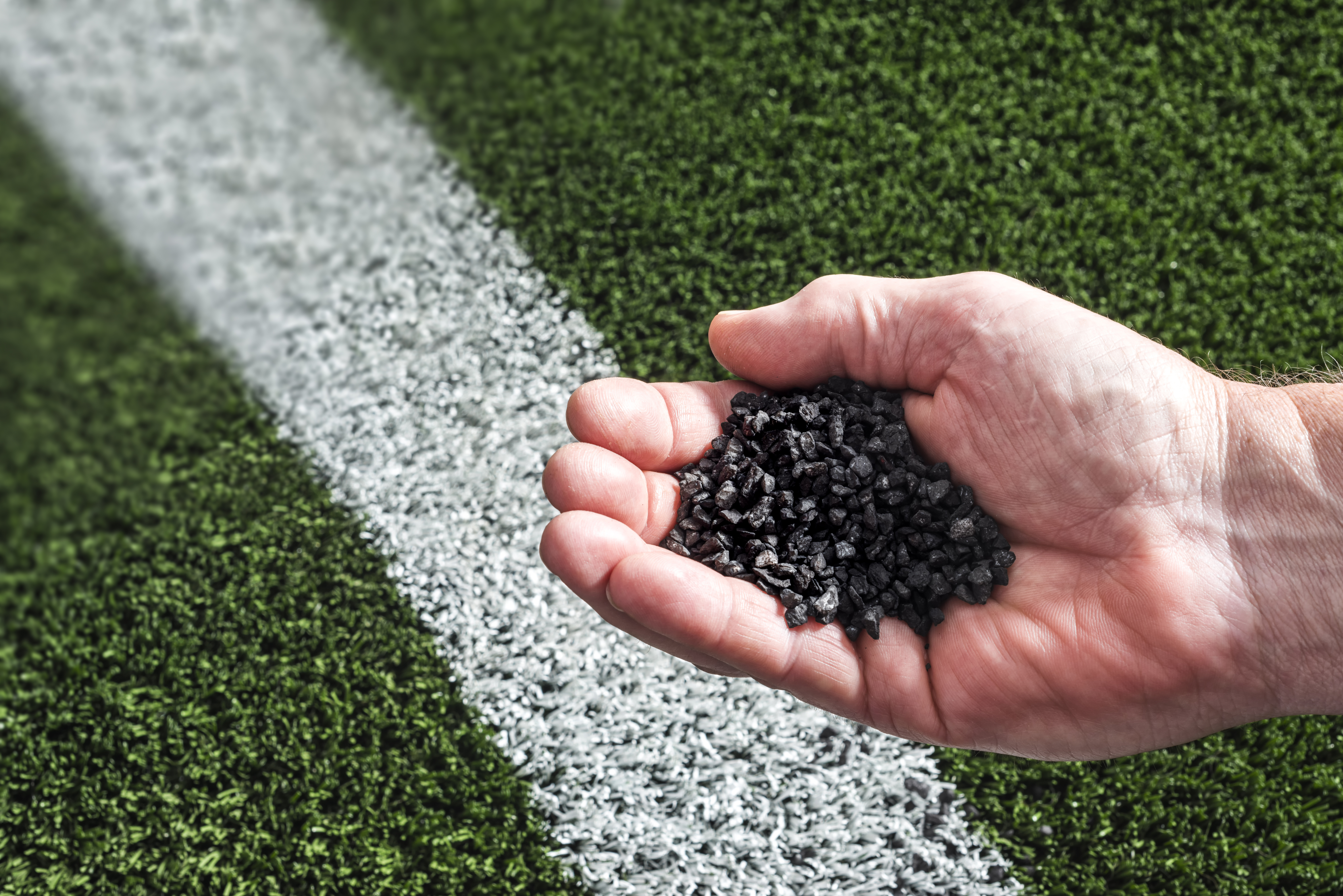
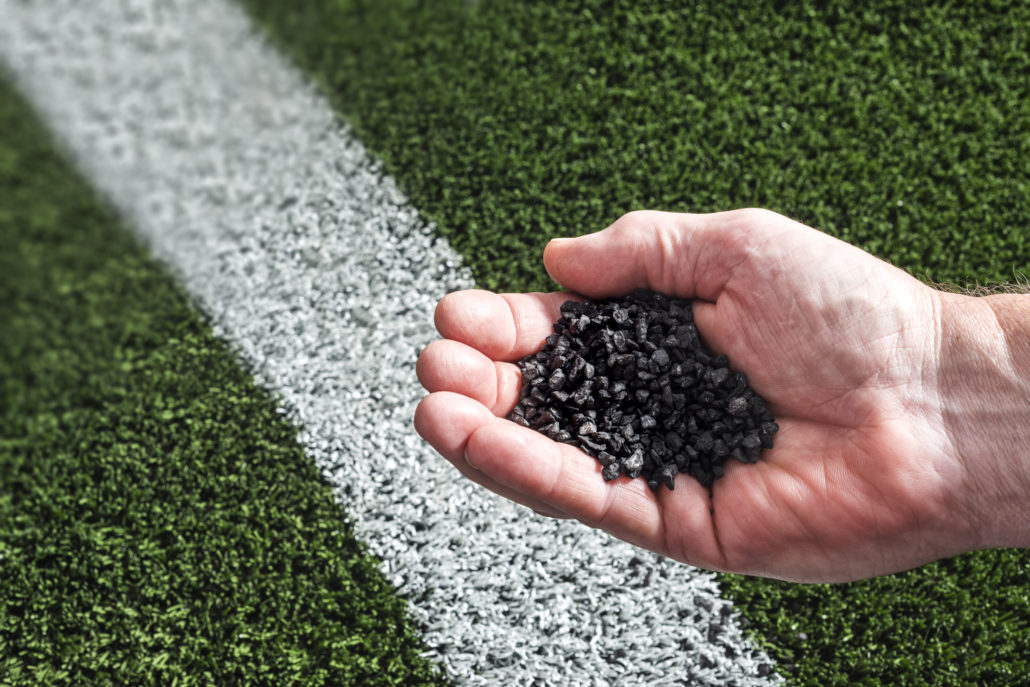
It got me thinking. Rubber crumb is regarded as key to making artificial pitches perform in the same manner as natural pitches, revolutionising maintenance costs and increasing volumes of play. In that regard it is superb, but the nagging thought in my head is – is rubber crumb the new asbestos?
Now there is no blame attached to anyone who felt that rubber crumb was the perfect solution to make artificial surfaces as good as they could possibly be. After all it was recycling – which can’t be bad, and all it was was a deconstructed Michelin Man, wasn’t it?
But we’ve moved on and we must ensure that what we are producing for the the sports lovers, from school children up to the recent phenomenon of walking football, needs to be safe. Period.
Turf Matters has spoken to a number of experts in the field of rubber crumb: independent scientists, Government agencies and the European body tasked with producing the report into all aspects of the subject. Sadly, the people most reluctant to discuss the matter openly with us were those involved in the industry itself – often reports, which have said that any health risk resultant from contact of involvement with rubber crumb is minimal.
Elsewhere, there is continued work being done into the subject and there are other countries – the United States and the Netherlands to name but two – who are being more proactive and are already moving away from rubber crumb pitches.
And as one respected scientist, who has done much work on the subject, told us: when it comes to public health, the precept should be “If in doubt, don’t”.
It is a key time for the industry as ECHA, the European Chemical Agency, will be going public with its latest findings later this month. It may be they will come to the conclusion that health concerns are minimal, then we have nothing to worry ourselves with. However, if evidence of genuine health concerns are reported, well…
Take time to read the following pages – a lot of it is technical and highly specialist in nature, but we’ve tried to take the relevant information and, without dumbing down, highlight both sides of what is a very important issue – and then consider the questions I’d like to pose to those involved in the production, installation and maintenance of rubber crumb sports surfaces – those we have spoken with and those who declined to discuss the matter with Turf Matters.
Are you 100% sure that your rubber crumb is safe? And if the first answer is only “Pretty sure” or “Not really” – what are you, or will you, be doing about it?
Turf Matters’ promise to you is simple: Whatever you are doing to make your artificial surfaces safe, we shall give you space in our magazine, and on our website, to enable you to highlight your work. Remember, Turf Matters, but lives matter more.
Making the The Headlines
Worries Mount Over Potential Link Between Artificial Turf And Cancer…
The federal government launched a new effort in February to study health concerns related to synthetic turf, as worries grow about possible cancer risks to the millions of athletes who play on artificial fields across the country. Now, a former top soccer player who helped convince the feds to investigate the issue says more than 200 athletes have reached out to her after being diagnosed with cancer.
Amy Griffin, a goalkeeper for the U.S. national team that won the first women’s World Cup in 1991, has been informally tracking American soccer players with cancer since 2009, when she noticed a “stream of kids” who’d played soccer on artificial fields were getting sick.
Griffin, now an associate head coach for the University of Washington women’s soccer team, told NBC in 2014 that she’d heard from 38 soccer players who’d been diagnosed with cancer. That tally has climbed to 220 athletes – 166 of them soccer players.
Of the soccer players, 102 were former goalkeepers like Griffin. They spent more time on the ground and were more exposed to crumb rubber – the tiny rubber pellets found in artificial turf – than their teammates.
“I am not making any claims about what is happening with these players,” Griffin said. “But this problem isn’t fading. It’s going the other way.”
It hasn’t been scientifically proven that athletes exposed to crumb rubber have higher rates of cancer than the general population, and the synthetic turf industry insists its product is safe. Research shows that crumb-rubber pellets, made of recycled tires, can contain toxic chemicals, metals and carcinogens, but not necessarily at levels that threaten human health.
But the current lack of scientific consensus on the issue underscores why additional federal research is important. The last time the Environmental Protection Agency studied crumb rubber in 2009, it found potentially harmful substances in the material, but only enough to merit a “low level of concern.”
This year, the EPA said it could no longer stand by that study – which was limited to four crumbrubber fields – and announced a follow-up study with other federal agencies that will evaluate existing research, test different kinds of tire crumb and involve outreach to the public, including athletes and parents.
Existing studies by federal, state and local government agencies “were not designed, nor were they sufficient in size or scope, to draw conclusions about the safety of all fields across the nation,” EPA spokeswoman Laura Allen told The Huffington Post. “They cannot fully answer questions about what if any potential risks might be posed from exposure.”
The Daily Telegraph 15/10/2016
Why 3G pitches are being ripped up in Holland over health fears
Sam Wallace, Chief Football Writer
The parents of boys at the Ajax academy De Toekomst in Amsterdam received letters last week to reassure them that from now on, not only would their children not be playing on any of the club’s 3G pitches with rubber crumb infill, but those pitches were being removed.
It was a swift response to the findings of a documentary on the Dutch public broadcaster NPO which revealed serious shortcomings in the government-sponsored research in 2006 that had declared the rubber crumb to be safe, thus beginning a 3G boom.
From 300 3G pitches in Holland 10 years ago there are now more than 2,000 of them, in a country where artificial turf and the 120 metric tonnes of rubber crumb used on each one – equating to 20,000 shredded tyres – is big business.
The attitudes uncovered in Holland by Zembla have been shocking, to say the least. Last year the Dutch government was lobbied successfully by the artificial pitch and tyre industries not to apply new EU standards for toy safety to rubber crumb. The fear in Holland is that the legacy of rubber crumb 3G pitches will only be known years from now.
On Friday, the Fifa president Gianni Infantino urged an investigation into the carcinogenic properties of rubber crumb and said that, on balance, he would rather Fifa invested the $4 billion set aside for football development over the next 10 years on natural surfaces.
Many clubs across Holland are now faced with the difficult decision of closing 3G rubber crumb pitches to children, especially with parents worried by the evidence against the 2006 report. The same question will be asked of the Cruyff Foundation, launched by the late, great Johan, which funds “Cruyff Courts” in neighbourhoods all over Holland – 3G pitches, with the laudable aim of giving children a place to play.
One Dutch contractor, whose company lays 3G pitches, told Zembla journalists that there was a safer compound that could be used in place of the rubber crumb, an infill made from cork and the fibre of coconut shells. The problem was that it cost 15,000 more per pitch, which made it unpopular.
It also does not have the backing of the tyre and rubber lobby, under pressure to recycle millions of old tyres every year.
The Zembla investigators took their findings to the Dutch FA, the KNVB, who have accepted the 2006 study was as good as useless as a scientific document. At the KNVB’s headquarters in Zeist near Utrecht, a St George’s Park equivalent, they also have a 3G pitch. Out of interest, the Zembla journalist Roelof Bosma asked, what kind of infill did they use on it? The man from the KNVB took a moment and replied that they preferred the cork infill to rubber crumb.
Next steps
Turf Matters tried to speak with a number of people involved with rubber crumb, either the installation, the maintenance, or the testing of it, by telephone or via email. Some didn’t respond at all and most who did were reluctant to discuss the matter, either telling us that all available evidence had shown it to be of minimal risk, or referred us to the Frequently Asked Questions pages on websites or advising us to speak to recognised experts in the field. So we did…
Professor Andrew Watterson
Professor Andrew Watterson, of Stirling University, has been researching the subject of rubber crumb for a number of years.
“Surprisingly, after decades of use, we still lack detailed knowledge about possible uptake of chemicals – some known carcinogens – from crumb rubber in 3G pitches and their mixtures,” he told Turf Matters.
It is also not known how the chemicals break down in the rubber crumb and the impact on the ‘safe’ thresholds for these chemicals, and their effects over the medium and long term, that might have, nor, indeed, how they might combine with a range of other chemicals to which people may be exposed.
“There have also been issues in the past about the accuracy or comprehensiveness of some of the crumb rubber data Safety Data sheets,” revealed Dr Watterson.
He also cast doubt on the quality and quantity of the inspection processes which are meant to ensure that those who work with rubber crumb or play on it do not experience health issues.
“There are real questions to ask about the protection of those making crumb rubber and those installing and maintaining 3G pitches. I am not aware that either trading standards’ officers or environmental health officers have carried out any health checks on users or workers on 3G pitches and crumb rubber children’s playgrounds.
“I put in a Freedom of Information request to the Health and Safety Executive about crumb rubber and they told me that since REACH came into force in 2007, it had carried out no inspections, monitoring or enforcement action on REACH chemicals present in crumb rubber and artificial turf,” he revealed.
“A good precept in public health is ‘if in doubt don’t’. When you could get large populations exposed to even small doses of what are known to be dangerous chemicals, especially at vulnerable points in human development, over a long period of time, that is a real concern.
“If products with lower levels of these dangerous chemicals in crumb rubber are available, then it would make good sense to use them. If alternatives like cork and coir are available that don’t present any risks of exposure, then that is even better. Both options may be available now.”
A government spokesman told Turf Matters, in a comment which mirrored the advice that was being given by Health Protection Scotland.
“Participating in sport and physical activity has significant health benefits, both physical and mental. However, it is also important that those taking part adopt basic hygiene practices.
“The most recent European Chemicals Agency (ECHA) report stated that there was a very low level of concern when playing on artificial pitches that contain rubber crumb. It recommended that people take basic hygiene measures when playing on those surfaces, as they would when playing sport on grass or any other surfaces.
“Sports governing bodies are working on providing general hygiene advice in the coming months in consultation with Public Health England,” said the spokesman, who was speaking on behalf of a range of bodies – Department for Digital, Culture, Media and Sport; Public Health England; The FA; Premier League; Football Foundation; Rugby Football Union and Sport England.
However, that ECHA report also listed a number of other recommendations including the following:
– Consider changes to the REACH Regulation to ensure rubber granules were only supplied with very low concentrations of PAHs and any other relevant hazardous substances
– Ask owners and operators of existing (outdoor and indoor) fields to measure PAH and other substances’ concentrations in rubber granules used in their fields and making such information available to interested parties in an understandable manner
– Ask producers of rubber granules and their trade organisations to develop guidance to help all manufacturers and importers of (recycled) rubber infill test their material
– Ask European sports and football associations and clubs to work with the relevant producers to ensure information related to the safety of rubber granules in synthetic turfs is communicated in a manner understandable to the players and the general public
– Have owners and operators of existing indoor fields with rubber granule infills ensure adequate ventilation public.
Dr Watterson is not aware of any of these recommendations which have been carried through.
American Research
Rubber crumb is something which is exercising some of the finest minds, not just in the UK and Europe but across the pond too.
Yale University chemists, Gaboury Benoit and Sara Demars, examined nine household mulches made from crumb rubber and six crumb rubber samples from sports pitches in the US to find out what was present.
They tested for a larger number of chemicals than in any previous research and found 92 compounds and a range of cancer-causing chemicals and irritants. Some of these results may be relevant to the UK, others not because the sources, processing, treatment and use of crumb rubber in household mulches and artificial sports pitches can vary a great deal.
Professor Benoit is Grinstein Professor of Environmental Chemistry at Yale’s Environment School.
They estimated that up 20 cancer-causing chemicals might be leached out from the crumb tested. They noted, a point often neglected elsewhere, the lack of research on the very small particles that might be produced in crumb rubber and absorbed through the human skin. They had further concerns about the range of chemicals that could be produced in the crumb rubber manufacturing process. They found health hazards information existed on only about half the 92 compounds identified with the rest untested.
They further found “human exposure pathways in relation to shredded tires are poorly known, and almost impossible to simulate or test”.
The findings of these researchers therefore add to our knowledge of the potential human risks from known crumb rubber hazards and highlight the continued need for great caution in their use for all who may be exposed.
ECHA Comment
In June 2016, the European Commission requested that ECHA carry out a preliminary evaluation on whether the presence of certain substances in the recycled rubber granules used as infill on artificial turf sports grounds could pose a health risk. In February 2017, based on analysis of published scientific literature, ECHA published its assessment and the conclusion was that “recycled rubber infill causes a very low level of concern”.
Since then ECHA and the Dutch authorities (RIVM) have continued looking into this due to the uncertainties raised, to determine if further action is required. In particular, the Netherlands, in cooperation with ECHA, are investigating whether to restrict the placing on the market of plastic, rubber and other granules containing PAHs above a set concentration limit.
If it is concluded such a restriction is required, the proposal is expected to be published this summer (20 July 2018).
In short, if the authorities end up proposing that the Commission should decide a stricter limit for PAHs in rubber crumb it could possibly mean that in the European Union the same threshold would apply that is already used in restriction concerning e.g. toys.
Currently the concentration limit in mixtures, such as rubber crumb is either 0.1% or 0.01% depending on the specific type of PAHs. PAHs occurring in recycled rubber used in articles, such as toys, have a concentration limit of 0.0001%.
Alternatives?
Cork is regarded as an alternative infill with similar performance levels without the health concerns of rubber crumb. It is more expensive and doesn’t fulfil the brief of being a recycled product. However, there is another option and, perhaps unsurprisingly, it comes from one of the few companies that were happy to talk to Turf Matters on the subject.
Murfitts Industries have been in the tyre recycling business since 2002, and it was around five years later that Mark Murfitt became aware of the whispers emanating from the United States regarding the associated health concerns.
“My response then was to bring in the best expert I could and ask him what he could tell me and much of that, at that time, was anecdotal evidence,” recalled Mark, who subsequently worked to develop an alternative infill that is genuinely safe.
He admires the work of ECHA, whose remit he describes as “basically to protect humans and the wider environment from the chemicals we use”.
“What they have done is to set limits for consumer products, and these are one milligram per kilo for eight specified polycyclic aromatic hydrocarbons (PAH) found in ‘Articles’ and half that, 0.5 milligrams per kilo, for children.”
Any product adhering to these restrictions is classified as an “Article”. As an example, the plastic on an artificial pitch, i.e. the fibres which make up the strands of artificial grass, is classed as an ‘article’ and subject to the tight regulations. Rubber crumb infill is categorised as a ‘Mixture’, which has a very different set of acceptable limits.
“We thought this was a bit odd. A ‘Mixture’ has a PAH limit set which is several thousand times higher than an ‘article’, which means the rubber crumb you take home in your socks, shoes, ears is legally allowed to have higher PAH levels than the plastic fibres on the pitch,” explained Mark.
“On the one hand, 3G pitches are brilliant and assist in the campaign to get people more active but on the other hand, parents and coaches were having concerns about letting their children play
on artificial pitches.
“How could we alleviate those fears? We know that our rubber crumb is a brilliant infill for performance, but it doesn’t meet the criteria as an ‘Article’ – although by the existing legislation it doesn’t have to. So how could we take that material and make it better and safer?
The answer?
“We developed a polyurethane coating that releases no PAHs or heavy metals, and we encapsulate the rubber crumb granules so that the hybrid infill meets the criteria as an article. It’s called PRO-gran,” said Mark.
“Launched in November, PRO-gran is generating interest from around the globe. We are seeing a significant need for a high-performance infill that delivers exceptional performance benefits, lasts for the lifetime of the pitch and meets the EU’s toxicology criteria as an article.
“It’s perfectly natural that standards keep rising, that’s the way it should be. There is no point in society going through the ages and not becoming a little bit smarter. We’ve only got one crack at this place!” he added.
murfittsindustries.com