Tag Archive for: To

ICL central to performance at Hogs Head

ICL central to performance at Hogs Head: David Daly, Golf Course Superintendent at Hogs Head Golf Club in Ireland, has long relied on a wide range of ICL products, from the initial grow-in to now helping him maintain the award-winning 18-hole course to a consistently high level.

David started in the role when it was formerly known as Skellig Bay Golf Club. That was before the club was bought by current owners Bryan Marsal and Tony Alvarez II. What came next was an incredible transformation which has since seen the course voted “Ireland’s Best Course” and “Best New International Course” by Golf.com.

ICL central to performance at Hogs Head

ICL central to performance at Hogs Head

Designed by the highly regarded Robert Trent Jones Jr., David was heavily involved in the plans and the grow-in period which took place from 2016 to mid-2017. Utilising the experience he gained in his previous roles at Waterville Golf Links and Killeen Castle, and by working closely with Keith Boland from Goldcrop, David thoroughly researched the best products to use for the grow-in.

The products he selected were predominantly from ICL, and they have continued to be central to his yearly turf management plan ever since.

It is safe to say that Vitalnova Stressbuster, which he uses to pre-condition the turf against stress, is one of his most favoured products.

“I like the instant impact the product provides,” he said. “Especially the immediate natural green colour response. The simplicity of use, the ‘fully-loaded’ liquid formulation (the product contains a wetting agent, biostimulants, amino acids, macro nutrients, micro nutrients and iron) and that it is so tank-mixable.”

David mixes Stressbuster with H2Pro TriSmart, PGRs and seaweeds before he applies it monthly from March through to September for best results.

At the start of each year David works with his team to create a yearly turf management plan, and although the weather on the south west coast of Ireland means the plan often has to adapt, ICL products are a common feature regardless.

In 2020 there was 2,000mm of rainfall, but David also has to contend with long periods of drought. It is for these reasons that David needs a proven water management product, and he chooses to use H2Pro TriSmart which he says, “ticks all the boxes.”

TriSmart’s unique triple-active formulation provides great control over moisture management. Containing three water management technologies, it provides effective water penetration, even water spread through the rootzone and improves the water holding capacity of sandy rootzones. David applies TriSmart monthly to his tees and greens at 10L/ha.

When it comes to feeding, he relies on Sierrablen 28-5-5 – a granular fertilizer which provides sufficient nutrition for the entire main growing season in just a single application.

“It is the Rolls Royce of granular controlled release fertilisers,” he said. “The controlled release formulation of this product is key, especially with so much rainfall throughout the year.”

David uses Sierrablen on his fairways and green surrounds, and because he has a short season, starting in May, Sierrablen’s longevity of 5-6 months gives him a certain peace of mind.

Aside from the spectacular golf course, Hogs Head Golf Club also boasts a stunning clubhouse and accommodations consisting of a luxurious lodge and multiple golf cottages. Around the clubhouse and accommodations, David uses Gronamic, an organo-mineral fertiliser which he says has “transformed the areas.”

Please contact ICL on 01473 237100 or visit www.icl-sf.co.uk or www.icl-sf.ie if you are in Ireland.

For more news and insightful views, you can follow ICL on Twitter @ICL_Turf

For the latest industry news visit turfmatters.co.uk/news

Get all of the big headlines, pictures, opinions and videos on stories that matter to you.

Follow us on Twitter and Instagram for fun, fresh and engaging content.

You can also find us on Facebook for more of your must-see news, features, videos and pictures from Turf Matters

Real life scenarios to develop the Ranger Diesel

Real life scenarios to develop the Ranger Diesel: Since its founding in 1954, Polaris has been inviting people to Think Outside and discover the joy of being outdoors.

The innovation, performance and growth that has allowed Polaris to become a global leader in off-road vehicles have been driven by the diversity and passion of its customers, staff, dealers and stakeholders across the world. To celebrate the people behind the brand, Polaris has launched a new initiative, called Polaris People, to showcase how, for many people, Polaris isn’t just a brand but a life choice.

Real life scenarios to develop the Ranger Diesel

Real life scenarios to develop the Ranger Diesel

Polaris People is a video series documenting the stories of individuals across Europe, Middle East and Africa, where Polaris plays an essential role in their lives, all united by a thirst for the outdoors.

EPISODE 2: Rhys Thomas, Hill Farmer in Wales

For more than 20 years, Polaris has been building off-road vehicles that represent years of research and development, allowing them to perform better, work harder and ride smoother. The launch of the new Ranger Diesel in 2019 was no exception: Inspired by its users, Polaris saw the opportunity to develop the Ranger Diesel into something specifically adapted to its European market. To do this, Polaris enlisted the help of existing customers to drive improvements in line with real-life requirements.

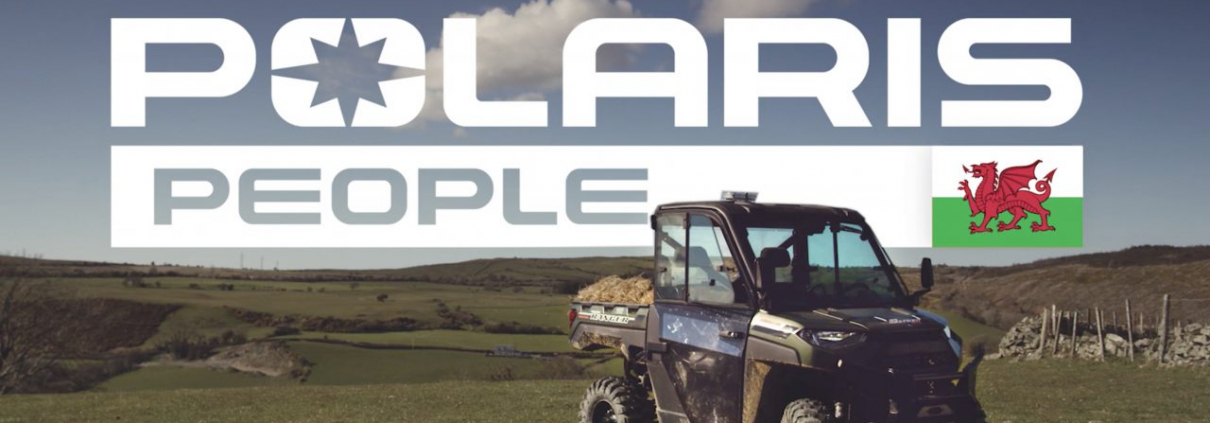
The second episode of Polaris People introduces Rhys Thomas – a hill farmer in Wales, UK, and a longstanding Polaris customer. Living in Wales – a country known for its rugged coastline, contrasting valleys and mountains and temperamental weather conditions – Pen Isa Dre Farm boasts endless rolling hills in a secluded area of Abergele, making it the perfect destination for testing the capabilities of the pre-production Ranger Diesel.

Rhys was one of four UK farmers selected to test the Ranger Diesel before it was launched. Being a hill farmer, he relies on his Polaris machines to reach all areas of his land, as well as making his daily tasks more efficient, like fencing, rounding up and moving around the animals with a trailer, towing the animal feeders, and even as a means of transport in snowy and adverse weather conditions when other vehicles are not able to access the farm.

“We were big fans of the previous diesel model, so we were a little cautious trying the new one,” said Rhys. “But we soon realised that it was indeed a much better, improved machine. My son summed the model up by calling it ‘The Beast’.”

Improved reliability, durability, performance and refinement were all key objectives for the project, and Polaris was keen to ensure the product had delivered on these before it made the final call to release the product into production.

With its new, powerful and durable diesel engine and lower cost of ownership thanks to an increased engine service interval to over 200 hours, plus a host of other design, capability and ergonomic enhancements, the satisfaction from the customer trials was overwhelming, leading to the launch of the Ranger Diesel as we now know it in April 2019.

“The Ranger Diesel is a godsend for us, and we were happy to be a part of its initial trial in the UK. Tried, tested and approved by us.”

Check out the second episode of Polaris People to join Rhys and his son on their family farm in Wales, as they give you an inside look at the beautiful Welsh countryside and how the Ranger Diesel helps their everyday life. Available to watch on the Polaris Off-Road International YouTube channel here.

For the latest industry news visit turfmatters.co.uk/news

Get all of the big headlines, pictures, opinions and videos on stories that matter to you.

Follow us on Twitter and Instagram for fun, fresh and engaging content.

You can also find us on Facebook for more of your must-see news, features, videos and pictures from Turf Matters

BIGGA to host Women & Girls Golf Week

BIGGA to host Women & Girls Golf Week: Women & Girls’ Golf Week returns this month and Monday 16th will see attention turn to those ladies who have built a successful career in the golf industry.

To mark the occasion the British & International Golf Greenkeepers Association (BIGGA) will welcome Emma Ballard, editor of Women & Golf, as she hosts an online chat with four talented female greenkeepers and finds out more about what they enjoy about their chosen careers.

BIGGA to host Women & Girls Golf Week

BIGGA to host Women & Girls Golf Week

The online chat will take place on 16 August at 4pm and joining Emma will be:

  • Lucy Sellick, course manager at Wenvoe Castle Golf Club
  • Sophie Bulpitt, deputy course manager at The Berkshire Golf Club
  • Amanda Dorans, sustainability coordinator at The Gleneagles Hotel
  • Anna Nilsson, irrigation technician at The Belfry

The chat will be an opportunity to find out what attracted these four ladies to the industry and showcase the incredible opportunities for career development it presents.

Anyone interested in a potential career in greenkeeping – male or female – is invited to register and listen in to the conversation.

Emma Ballard, who recently graduated from The R&A’s Women in Golf Leadership Programme, said: “As someone who has been lucky enough to forge a career in golf, I know what a wonderful industry it is to work in. Whether playing, as part of the media – like myself – or as one of the rising number of brilliant female greenkeepers in the industry, there’s no better place to spend your working life than out on the golf course. I’m really excited to sit and chat to these four incredibly talented female greenkeepers, who all come from a wide variety of backgrounds but are united in their shared passion for their profession. I hope you’re able to join us!”

You can register for the event online at: https://www.bigga.org.uk/event/women-and-girls-golf-week-greenkeeping-its-a-great-career.html

Women & Girls’ Golf Week is an online campaign hosted by England Golf that promotes female participation in golf at all levels and seeks to challenge negative perceptions about the game. You can keep up to date with related activities throughout the week by following the hashtag #WhyIGolf on social media.

For the latest industry news visit turfmatters.co.uk/news

Get all of the big headlines, pictures, opinions and videos on stories that matter to you.

Follow us on Twitter and Instagram for fun, fresh and engaging content.

You can also find us on Facebook for more of your must-see news, features, videos and pictures from Turf Matters

Hayter Ltd to change name to Toro U.K. Limited

Hayter Ltd to change name to Toro U.K. Limited: Hayter Ltd, which is part of The Toro Company, will be changing its name to Toro U.K. Limited on 3rd August 2021.

The name change to Toro U.K. Limited will align the UK operation with the rest of Toro’s subsidiaries outside of the United States, and the strategic focus to grow the Toro® brand in the consumer, light construction, landscape contractor and arboricultural markets.

Hayter Ltd to change name to Toro U.K. Limited

Hayter Ltd to change name to Toro U.K. Limited

Toro U.K. Limited remains committed to the Hayter® brand, which this year celebrates its 75th anniversary. The brand will continue to be a significant part of the Toro U.K. Limited portfolio with manufacturing and selling of the Hayter range of premium quality lawn care products continuing from its Spellbrook factory in the UK.

The Hayter brand will retain the Royal Warrant, with which it has been proudly associated since the 1960s and Toro U.K. Limited will continue to invest and develop new Hayter products, including the new 60v Hawk range, which comes to market this autumn.

The Toro Company, a leading worldwide provider of innovative solutions for the outdoor environment, acquired Hayter Ltd in 2005 and continues to invest in the UK manufacturing plant.

The new company name will not change the nature of business, nor will it have any effect on existing relations with customers, partners, suppliers, contracts or personnel.
Craig Hoare, Sales and Marketing Manager Toro U.K. Limited commented, “The change is in name only and everything else is business as usual. The new name will help us to layout our strategy for the Toro & Hayter brands in the UK market and grow with our existing retailers.”

The business is keen to invite anyone who has any questions about the change in name to contact their territory manager.

For more information please visit www.toro.com/en-gb and www.hayter.co.uk

For the latest industry news visit turfmatters.co.uk/news

Get all of the big headlines, pictures, opinions and videos on stories that matter to you.

Follow us on Twitter and Instagram for fun, fresh and engaging content.

You can also find us on Facebook for more of your must-see news, features, videos and pictures from Turf Matters

Good things come to those who wait…

Good things come to those who wait…: Scott MacCallum catches up with the most patient man in greenkeeping – Paul Larsen, who has had to wait an additional 12 months to prepare an Open Championship course.

The Open Championship at Royal St George’s Golf Club is going to be a wonderful event.
Good things come to those who wait…

Good things come to those who wait…

The course, one of the best on the Open rota, will be in immaculate condition, the weather will be superb and the golf will be exciting, irrespective of how many spectators are there to create the galleries.

How can I be so sure? Well, I’m merely following the old adage “Good things come to those who wait”, and oh how the club, and, in particular, Head Greenkeeper Paul Larsen and his team have had to wait.

At the beginning of last year everything was on track for The Open, in July. The long and medium term planning had gone well and Paul and his team were hoping for a good spell of weather in the months ahead so that the course would be fast and running, just how the R&A like it.

And then…

The decision was taken to postpone the Championship for a year on April 6, and immediately the date, which had been penned into the diary since 2017, when Royal St George’s hosting was announced, disappeared over the horizon.

“To be honest when the news about the postponement came through my mind wasn’t really on The Open. It was on the virus,” recalled Paul.

“I only had five people in, including myself, everyone else was on furlough, and we were just doing the bare essentials on the course to keep it going, as we were instructed to do. We also had the heatwave at the same time so we were hand watering everywhere and not really cutting.

“To be fair the fescue was thriving but The Open was suddenly in the background,” said Paul, who admitted that he was one of the first to take the virus seriously.

“Without going OTT we were doing all the cleaning of hands and equipment, which eventually was official advice, from the very beginning.”

With the US Open being moved from June to September, The Masters moving to November and some European Tour events being played before the original Open date, there were thoughts that a slightly shorter delay may be possible but Paul was pleased that the ultimate outcome was the end result.

“They have considered holding it later in the year but had they moved it to September there would have been light issues and it would have had to have been a reduced field, but around that time we were going into quite a severe lockdown.

“I personally think they made the right decision. There was no messing about, and everyone’s health came first,” said Paul.

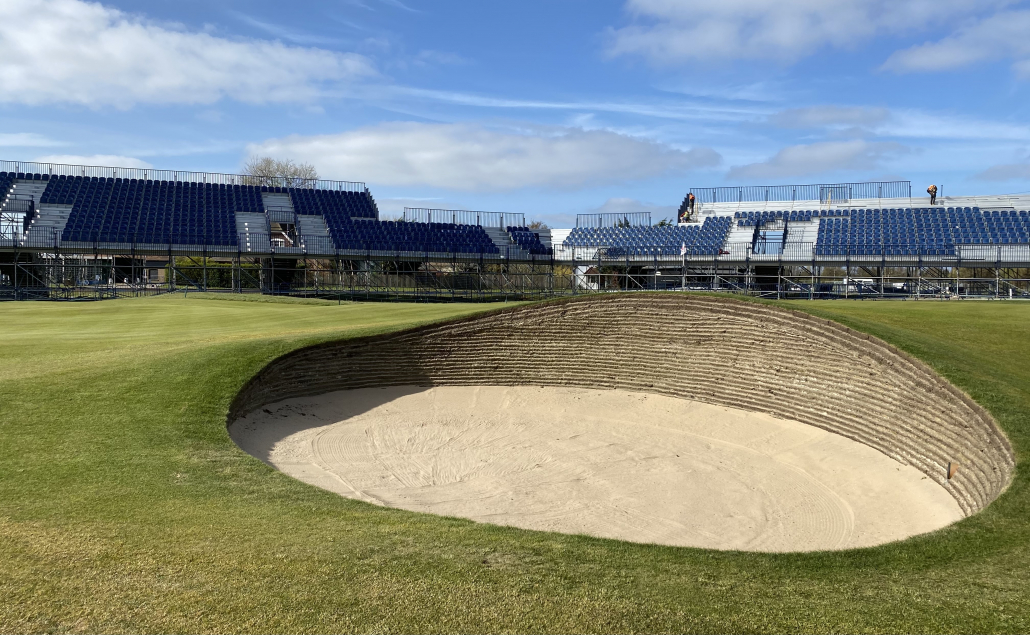
The postponement was announcement before any of the huge stands or marquees had been erected but most of the underground infrastructure, TV cabling etc, was in place.

“In a way it has meant that they had a head start for this year,” reasoned Paul.

The club took the greenkeeping staff off furlough when it was deemed safe to do so and they took the opportunity to carry out work that was possible with the course devoid of golfers.

“It was great by the club that they took everyone off furlough and it meant we could get a lot of work done. We’ve done a lot of path reshaping which would have been difficult with golfers on the course and we’ve cleaned out a sand dune behind the 4th green, an area which might be in play.”

Ironically, the original Open week was an exceptionally busy one at Royal St George’s.

“We held an Open tournament for the members which was open to everyone and people could play off the Championship tees if they wanted to. We were getting 120 people playing each day and the weather was great and the course looked and played really well.

“So it would have been great for The Open if it was played.”

In fact, the week before history was made with the first ever professional ladies’ event held over the old links. The Justin Rose Series, a wonderful initiative to give ladies playing opportunities in these strange times, was played with a strong field of professional lady golfers. Gemma Dryburgh, of Scotland, was the first to have a Royal St George’s victory on her record, with a one under par round of 69.

With everything planned for, and geared up for, a particular week in the diary, having that date move by 12 months could have been deflating for Paul and his team. But not so.

“Keeping motivated, a problem?

Good things come to those who wait…

Good things come to those who wait…

Good question but ‘No’, in a word. The story goes back to when we lost a lot of grass in the drought of 2018. We hadn’t really recovered from that so when we were moved back a year we had great fairways and great playing surfaces in general, but our semi rough was quite hard to get back and contained quite a bit of soft broom.

“So the motivation has been to get that up to scratch . The guys have been hand-dressing the semi. I didn’t want top dressers over it, so we’ve done it in the old-fashioned manner.

The motivation was always there, but the extra 12 months has given us extra motivation to get it better.”

It actually made the very next question a little redundant, but being a stubborn so-and-so, I asked it anyway.

“Was there a date in the calendar that you went back into Championship mode?”

Not too bad eh? But an obvious answer…

But I did get a little more.

“At the end of the day, without the team I’ve got here the results wouldn’t be possible. They’ve been out hand shoveling top dressing day after day, over and over.

They’ve got on with it. It’s not just the hours they’ve put in, it’s the physical energy required to do it.

“I’ve worked on many golf courses and a lot of people think that you just sit on machines in the summer and that it’s easy. We do a lot of hand cutting here and it is physically demanding. They are very fi t from it and they have been absolutely brilliant for me,” said Paul.

Like all Head men Paul is rarely happy with the weather which is dished up to him – a Greenkeeper’s Rain Dance should be up there with the likes of the Argentine Tango and Charleston as a Strictly standard – and sure enough spring didn’t cut the mustard.

“We wanted a good spring, but we didn’t get it. However, this month (May) we’ve had 68mil so that’s rejuvenated everything. Had we had gone from a dry spring to a dry hot summer we’d have got no germination and all our work would have been done and we’d have had no dividend from it. But with all this rain you can see it coming up.”

Elsewhere the delay has meant that the bunkers will be a year older than they would have been.

“We didn’t build any the year before as we didn’t want them to look brand new but with quite a hard winter with a lot of snow we are finding cracks in some of them so we will be finding a way of freshening them up. I’ve got a few techniques to get them right, but they are at the end of their five year cycle.”

For the week itself Paul has had to tweak his original plan and call on his neighbouring golf clubs for help.

Good things come to those who wait…

Good things come to those who wait…

“It will be an unusual Open because normal the team and volunteers stay on site in Bunkabins for the 10 days before and during the Championship. Now everyone has to leave the site and go home at the end of each day and I have had to get 25 local volunteers to help. Normally we have guys for the other Open rota courses but that’s not happening either.”

So 25 local greenkeepers will have the opportunity of experiencing an Open.

“We’ve got to plan what each one will be doing, and we are hoping that they will come for a day’s training beforehand.

There will always be one of my guys with them. It’s going to be interesting. I’ll let you know how it goes after The Open.”

Thinking back to the last Royal St George’s Open – Darren Clarke’s popular win in 2011 – Paul, Deputy at the time had a job he is very pleased to be relinquishing.

“I was painting the holes and I couldn’t relax until the final hole was cut and white painted. I’m glad I’m not doing it this time!”

Despite having been the greenkeeper who has had to show more patience than any other in modern times for his Open to arrive, Paul hasn’t let his mind wander to the week itself.

“I don’t live for the future. I always have a plan, but I don’t particularly think about how I’m going to be feeling. I just accept it on the day. It is what it is, otherwise you are just worrying about what it is going to be like.”

But I really don’t think Paul and his team should be worrying. As I say “Good things come to those who wait”