Tag Archive for: With

Ganton goes green with Deere

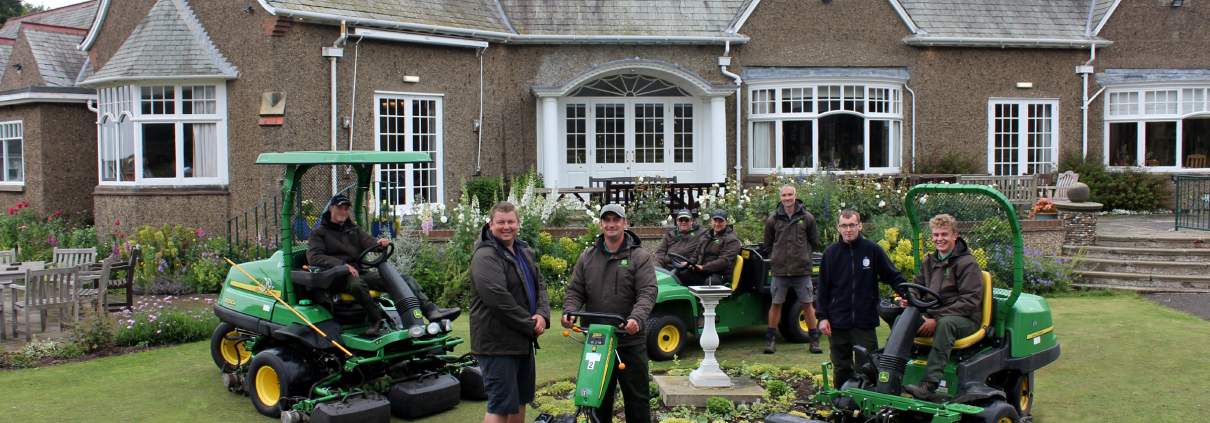
Ganton goes green with Deere: One of the world’s top 80 courses, Ganton Golf Club in the Vale of Pickering ranks among the very best of Britain’s inland courses.

It has played host to many amateur and professional tournaments, including the Walker Cup in 2003 – so joining Royal Birkdale, The Honourable Company of Edinburgh Golfers at Muirfield and Royal Lytham & St Annes as one of only four venues to have also staged the Curtis Cup and Ryder Cup matches.

Ganton goes green with Deere

Ganton goes green with Deere

Ganton will also be hosting an England v France International Match in May this year, and is scheduled to host the English Men’s Open Amateur Stroke Play Championship for the Brabazon Trophy and also the R&A Womens and Girls Home Internationals in 2021. The sandy, gently undulating site was once a North Sea inlet, so it has all the characteristics of both a links and a heathland course. Another striking feature is over 100 bunkers, some huge in size.

Head greenkeeper Andrew West says he has always had a vision of opening up more areas of the course to give it more of a links feel, and he is now beginning to achieve this more effectively since the club invested in a new set of John Deere hybrid electric E-Cut mowers. These were supplied by dealer F G Adamson & Son on a five-year finance lease deal with annual repayments from John Deere Financial.

“We’ve got some very challenging undulations here and around two hectares of aprons and collars altogether, which really can’t be managed with triples,” Andrew explains. “But with quite a low height of cut required at 7mm on these areas during the playing season, this was proving difficult to achieve with our previous five-gang mowers and we were always struggling to hold the cuts.

“However, I always felt we could do this job better and in a reasonable time frame with the right machine, so we spoke to our course consultant Gordon Irvine and he really influenced our thinking. Both he and the STRI’s head of agronomy Alistair Beggs encouraged us to consider following Royal Birkdale’s example, noting improvements to the course presentation and finish and complimenting the contribution John Deere’s 8000AE PrecisionCut fairway mower had made there.”

Following an extensive review and evaluation of the different manufacturers’ machines, the club opted for a John Deere package deal from Adamsons and the new hybrid mower fleet now includes two 8000AEs as well as two 2500E triplex and three 220E walk-behind greens mowers. These were joined by a 4049R compact tractor with front loader, two HPX diesel and two TE electric Gator utility vehicles, as well as a Charterhouse Verti-Drain 7416 aerator and top dresser.

“The whole team was involved in the process and John Deere scored the best in our view,” says Andrew. “In addition to all the course demonstrations that Adamsons organised, we visited Royal Birkdale and spoke to friends and other contacts in the industry, to see what they thought.

“The club rightly expects us to be accountable for our decisions, and to see improvements as a result of the investment in any new machinery. Reliable dealer service and parts support has to be there too, and knowing this was behind the deal also made our final decision easier.”

Another important element of the deal for Andrew and his team was the effort made by John Deere and Adamsons to deliver the quality of finish the club was looking for, as well as provide full training to the greens and workshop staff.

“Machine optimisation was the key focus, working closely and extensively with the club to identify the right machines and set them up exactly the way they wanted them by trying out different specifications and configurations,” says John Deere territory manager Marcus Morris. “Together with the dealership, we try our hardest to do what the customer needs and deliver on our promises.”

“The finance deal really helped a lot too,” says Andrew West. “Ganton has traditionally bought all its equipment outright, but this has probably held the club back from adopting the latest technology, and we’re really keeping up with the times now. For any club it’s amazing what John Deere Financial can do – this deal helped us to buy a JCB digger and the Verti-Drain. It was an extremely cost-effective way of purchasing our new equipment.

“I’m also convinced we’re saving money using the new E-Cut hybrid electric mowers, which provide both fuel savings and reduced noise levels. Overall, you can have the best agronomic advice in the world, but if you haven’t got the right equipment with the latest technology, it doesn’t necessarily work. Having started the process, I believe there’s a good future for John Deere at this club.”

For the latest industry news visit turfmatters.co.uk/news

Get all of the big headlines, pictures, opinions and videos on stories that matter to you.

Follow us on Twitter and Instagram for fun, fresh and engaging content.

You can also find us on Facebook for more of your must-see news, features, videos and pictures from Turf Matters.

Better with a bit of Buttar…

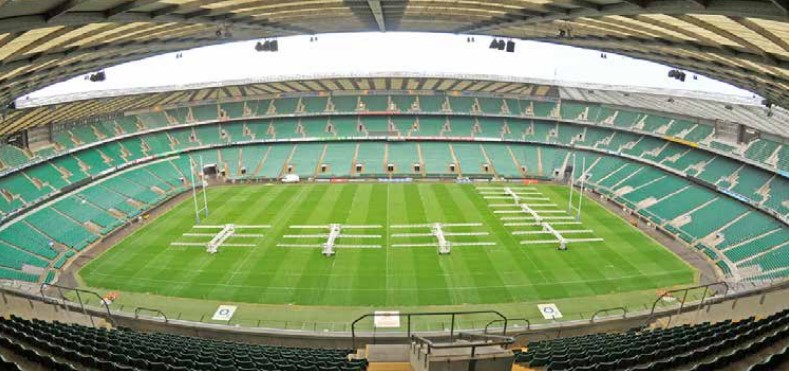
Better with a bit of Buttar…: In his first interview since taking over as Head Groundsman at Twickenham, Jim Buttar speaks to Scott MacCallum about his new role.

Sunday February 23 will be a huge occasion at Twickenham.

Better with a bit of Buttar...

It is the first chance for the 82,000 supporters to congratulate England on a fine World Cup. Sure, they didn’t get over the line in the final against South Africa, but they snatched away the cloak of invincibility from New Zealand in the semi. A feat worthy of congratulation in itself.

With Ireland the opponents it is sure to be a massive match and when the 46 players take to the field for the anthems there will be much emotion.

Add another one to that list. Number 47 will also be full of emotion, pride and a few nerves. His chest will swell and the odd tear will be wiped away as those anthems ring out.

Except, except, except…

That was the introduction to this article I had fully intended writing, until “number 47”, recently appointed Head Groundsman Jim Buttar, answered the question I had specifically posed
to elicit the appropriate response.

It was an answer which wouldn’t delight any feature writer, but would certainly please his new employer, the Rugby Football Union, and give them confidence that they had appointed the right man.

Question: “How do you think you will feel when the teams run out on February 23rd for your first Six Nations game against Ireland – Nervous, excited, proud? What do you think your emotions will be?”

Answer: “To be honest, Scott, you get to that point in your career when you’ve done a certain number of games that you have gained the ability to tune out. You are aware that it is going on but busy focussing on pitch performance and noting where scrums have taken place for repair etc.”

Thanks Jim!

In fairness, perhaps having sensed my disappointment, he did go on to throw me a bit of a bone.

“How will I feel? I think I’ll probably be a little bit excited, with it being my first match under England Rugby. It will be slightly different to what I’m used to doing.”

Better with a bit of Buttar...

But then he couldn’t help himself. “On the whole I’ll be cool, calm and collected and too busy to have my mind on other things.”

Taking over from the redoubtable Keith Kent is a big task, but Jim boasts a strong CV, one which suggests he is a good fit to maintain one of the most iconic patches of turf in, not just UK sport, but worldwide.

He was Stadium Head Groundsman at White Hart Lane for a number of years before moving to become Pitch Consultant for ProPitch, a role which saw him jetting around the world working on pitches at events such as the Champions’ League, the African Cup of Nations, the Club World Cup and the Asian Cup.

It was while travelling between two countries in his ProPitch role that he saw the advert for the Twickenham Head Groundsman job and decided to throw his hat in the ring.

“My time at ProPitch pushed me right out of my comfort zone and put me in places where I had to deliver pitches where there weren’t the resources, and there was often a language barrier.

It was a very good test for me as a manager and as a groundsman.

“I must also pay tribute to Dean Gilasbey, who was there to guide me in many of the scenarios we dealt with and how to deal with different climates and countries,” explained Jim.

Better with a bit of Buttar...

The opportunity to work with the RFU at such a magnificent national stadium as Twickenham came at a time when was spending more time away from his wife and three young children than he was at home.

As you can imagine the interview process was rigorous and demanding, while his opportunity to view the pitch itself was limited as the stadium was being prepared for a Metallica concert!

“The whole process was how I expected it would be for an elite sporting organisation – very stringent, very thorough, with lots and lots of queries and questions. Afterward there were a million things going through my mind, and I must admit, a little self doubt. As usual I sought counsel from my mentor, my Dad, who I can always rely on for sound advice.

“That advice and being at an age now when I think that’s done, park it and see what happens, saw me through and it worked out,” he revealed.

He has already prepared the pitch for a Barbarians verses Fiji match and, as we talked, he was a couple of days away from the Varsity Match. Overall, however, he has had a good chance to bed in before the start of the Six Nations.

“Because I started in a World Cup year there were no Autumn Internationals, so it’s given me time to get up to speed with policies and meeting all the different teams of people who work for the RFU. I am slowing starting to remember names now.”

Having majored in football for most of his career a move into the oval ball game presents a different set of challenges.

But he is confident that while there are differences, it is fundamentally about plant health.

“With hybrid reinforcement the grass plant for rugby are very similar to football and they are only to move so far before they able to get traction, even during scrummaging, so the aim for a rugby groundsman is the same as every other groundsman – make sure the turf is as healthy as it can possibly be,” explained Jim, who added that it was a case of working to deal with the stress of sports being played on the pitch, and in the stadium environment “We have an array of products we can use to pre-condition the pitch and help it recover as quickly as possible while the introduction of stadium lighting rigs which came out in 20052006 has been a real game changer.

There was a learning curve with something so new but in the last three or four years everyone has got to the point where we understand what they can do and how to get them to work at their best – some underestimate what they can do and others overestimate.

It was trial and error for a few years,” said Jim, who will be working with the rigs of Dutch company, SGL.

Better with a bit of Buttar...

Jim is an advocate of pitch performance data and using the evidence provided to develop the best maintenance practices for the pitch and to help other stakeholders understand with data to measure pitch performance.

“There are many variables, the most obvious one being the weather, which we can’t do anything about, but we can gain a bit of control over other variables and by checking data and tweaking practices where necessary we say that we’ve done everything possible to make the playing surface as good as it can be.”

Although born in Kendal, Jim is very much a Northamptonshire lad, commuting home daily when he was at Tottenham and it is something he will continue to do in his new role.

“It gives me time to catch up with my voicemails and make my phone calls. I like it where we live, it’s, nice, quiet and out of the way.”

As a youngster, career wise, it was toss-up between a Governmentsponsored groundsmanship apprenticeship and following his father into the Weetabix company on an engineering apprenticeship. The popular breakfast cereal manufacturer missed out and groundsmanship gained a new recruit. The thought of working in sports and being outside were the big attractions for me and making my decision And so it was a week before his 17th birthday he started at Kimbolton School, in Cambridgeshire, which combined with day release to Moulton College, in Northampton, to give him a solid start in the industry.

“I absolutely loved Kimbolton. I was working predominately on cricket and athletics, and I spent three and a half years there during which time I completed my Level 2 and started my Level 3. Then an opportunity came up at Rushden and Diamonds Football Club and I went in as an Assistant Groundsman. Three years later I was Grounds Manager. I was 22. My then boss had left to go down to Tottenham Hotspur and when a position came up there, I went for the job.

“I was 23 and thought it was now or never! I did have the option to stay but it was a chance to go and work at the very top end and it was a good time for me to go.”

That was in 2003 and by 2005 he was Stadium Head Groundsman, a position he held until 2017 when White Hart Lane closed.

He holds his first bosses in extremely high esteem and still uses the qualities he saw in them as part of his own skills’ package.
Better with a bit of Buttar...

“The Head Groundsman at Kimbolton was Andy Trainell and he was one of those guys who showed me what it took to deliver good surfaces. You have to work hard and if you think it’s not good enough then the likelihood is that it won’t be good enough. He was of the work hard, play hard mentality.

“Ray Bailey, Head Groundsman at Rushden and Diamonds, was a very laid back character, but he showed me that if things were starting to go wrong, just how quickly and easy it was to fix. Just because it doesn’t look good now doesn’t mean that it isn’t going to be looking good when we need it to look good.

“I was Deputy Head groundsman to Paul Knowles. We made a very good team and really strived to produce the best surfaces we could with the resources we had. I learnt what it took to work as a team, we still talk weekly as friends, he’s really great guy.

“Those were the cherry picks that I took for those two guys,” revealed Jim.

Other motivating driving forces over the last decade have been provided by his peers.

“There has been a generation of groundsmen who have really pushed things along and you really want to be a part of that. They are all delivering surfaces which are the envy of the world. That is what gives us the hunger to strive and keep going.”

Jim is relishing his new role and getting the pitch into the best possible condition for the Six Nations.

Better with a bit of Buttar...

Frustratingly, he has to wait for the third series of matches until that first home fixture, then has a couple of weeks to prepare for the visit of Wales.

He has touched base, via twitter, with his fellow Six Nations comrades-inarms and is looking forward to meeting up with Jim Dawson (Murrayfield), Lee Evans (Principality), Majella Smyth (Aviva) and Tony Stones (Stade de France) once engagement commences.

Before that, and a couple of weeks after we spoke, he had a double header on December 28 with Harlequins playing Leicester Tigers followed immediately by a ladies’ match. It might seem that it’s not much of a Christmas break but, coming from the congested Christmas football schedule, Jim is happy to accept his own festive assignment.

It is exciting times ahead for Jim Buttar and Turf Matters wishes him, and the rest of the grounds team, Deputy Ian Ayling and Assistant Andy Muir, all the very best for the future.

Just one thing please, Jim, give us a bit of a hand with the intro next time!

Don’t score an own goal with your borehole

Don’t score an own goal with your borehole: Last November Norwich City Football Club was named joint fifth in a sustainability league table of all 20 Premier League clubs. 

The table was compiled by BBC Sport, working with the United Nations-backed Sport Positive Summit, and one of the reasons for the club’s success was the fact its Carrow Road pitch is watered via a borehole and the training ground recycles the water from the pitches.

Don’t score an own goal with your borehole

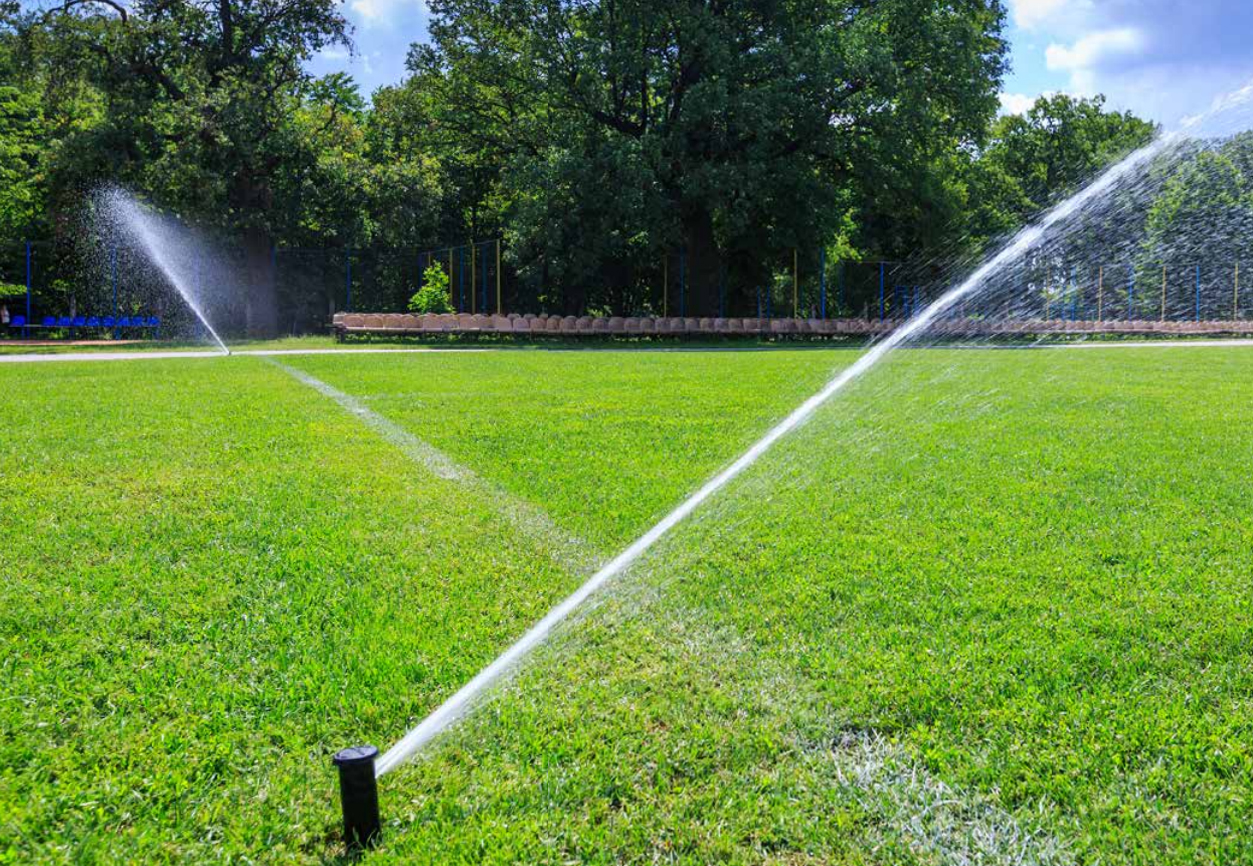
The reality is that many football clubs and other sports facilities, such as golf courses and racecourses, rely on boreholes for the critical irrigation of their sports turf.

Having your own private water supply delivers guaranteed water delivery and keeps costs down, but it also comes with the need to meet certain goals, says Mike Deed, Managing Director of Geoquip Water Solutions, experts in borehole management.

“A lot of the big football clubs have several wells which provide water to their network of training pitches and main ground,” he said.

“It is absolutely essential that playing surfaces are irrigated to the best possible standard and remain in tip top condition throughout the season. If water quality or quantity is affected by borehole problems, then the impact can be wide-ranging.

“Investing in a borehole is a significant capital investment, but given the cost of mains water and the fact that a typical borehole will be expected to deliver a return on investment in less than four years, it can also be very worthwhile – providing you take good care of it.”

The trick, he says, is to make sure that an ongoing monitoring and maintenance programme is built in from day one.

“All too often, borehole owners take a ‘fit and forget’ approach in that they fit the borehole and expect it to continue delivering maximum yield without any proactive maintenance.

“In football terms, it would be like fielding your best team for every single match without addressing their physical or mental needs or considering how they might be able to keep delivering their best without any care or attention.”

Typical borehole problems are likely to include reduced yield, a change in the quality of water and/ or a drop in water pressure.

All three can be caused by contamination, such as iron-related bacteria, iron oxide, manganese oxide and calcium carbonate deposits affecting the pumps, pipes and motors.

Don’t score an own goal with your borehole

If too much iron in the water is allowed to build up, it can cause brown staining on hard and soft landscaping and infrastructure (such as buildings), another reason why boreholes need to be regularly treated.

Other problems will include the encrustation of casings and pipes, clogging of filters – preventing the free entry of groundwater, and potential damage to the borehole wall or pumping equipment.

A monitoring and telemetry programme, with the installation of bespoke panels and dashboards, enables remote data collection from each borehole, allowing the user to see issues such as draw down, water pressure, general temperature and also the temperature of the motor.

Triggers and alarm points can be added to raise alerts when faults or particular combinations of problems arise, enabling early preventive action to take place.

Downhole cameras also provide a bird’s eye view into the heart of the borehole, allowing images to be taken and, from there, essential decisions regarding maintenance can be taken before the condition of the turf is potentially impacted by poor water quality.

Geoquip works with a number of partners, including Nicholls Boreholes, which recently helped one Premiership club struggling with dwindling yields from its two existing wells.

After site visits and a consultation process, the Nicholls team recommended a BoreSaver Ultra C Pro treatment solution, which now includes a biodegradable marker to guarantee that no chemical residue is left in the water.

A special system was put in place to capture the iron for licensed disposal and the clean water was discharged through the club’s drainage system without fear of causing any blockage or contamination.

As a result, both the club and the Nicholls’ team saw an immediate increase in yield and are now considering a regular treatment plan.

First chainsaw with Auto Choke

First chainsaw with Auto Choke: ECHO has launched the world’s first chainsaw with Auto Choke. The CS-352AC is an all-round rear handle chainsaw, with the patented Auto Choke feature enabling quicker, easier and safer starting.

All that’s needed is one pull, regardless of the engine temperature, and the chainsaw starts first time – without the risk of flooding the engine.

First chainsaw with Auto Choke

The chainsaw has a 34.0cc professional-grade ECHO two-stroke engine which provides powerful cutting with low emissions and low noise levels. The Auto Choke comprises a solenoid valve on the engine’s carburettor to control the amount of fuel depending on the engine temperature, giving optimal performance in all conditions. The usual steps of pulling and pushing the choke, starting with partial throttle and pulling the throttle trigger are all dispensed with. The chainsaw is started on idle speed, making it altogether simpler for infrequent users who want to operate their chainsaw without the need to adjust the choke before starting. Combined with ECHO’s ES-Start system you get fast and effortless starting.

The CS-352AC is ideal for pruning and cutting firewood. It is built to ECHO’s usual professional standards for optimum performance, durability and ergonomics. Another key feature of this saw is the professional-grade anti-vibration system, which improves user comfort without sacrificing on power. The inboard clutch enables both easy bar and chain replacement and easy maintenance. Additionally, a large cassette-type air filter, with an aerodynamic air passage, reduces dust discharge entering the airflow into the engine. The CS-352AC comes with a 90PX (0.043 gauge) chain for smoother and faster cutting.

ECHO power tools come with a five-year domestic warranty or two-year warranty in professional use. You can find out more from your local authorised ECHO dealer. You can also visit www.echo-tools.co.uk or call 01844 278800 for more information

For the latest industry news visit turfmatters.co.uk/news

Get all of the big headlines, pictures, opinions and videos on stories that matter to you.

Follow us on Twitter and Instagram for fun, fresh and engaging content.

You can also find us on Facebook for more of your must-see news, features, videos and pictures from Turf Matters.

Lochemse raise standards with Jacobsen

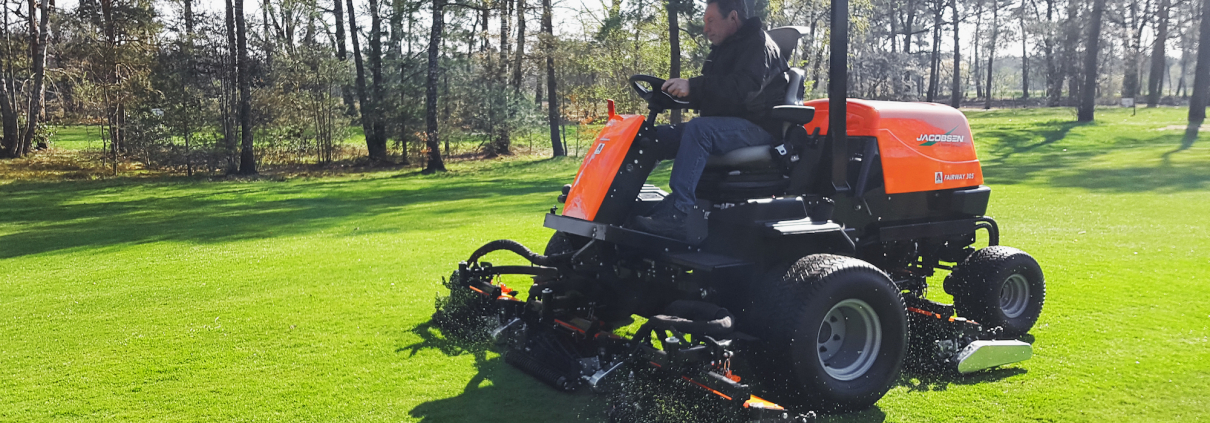
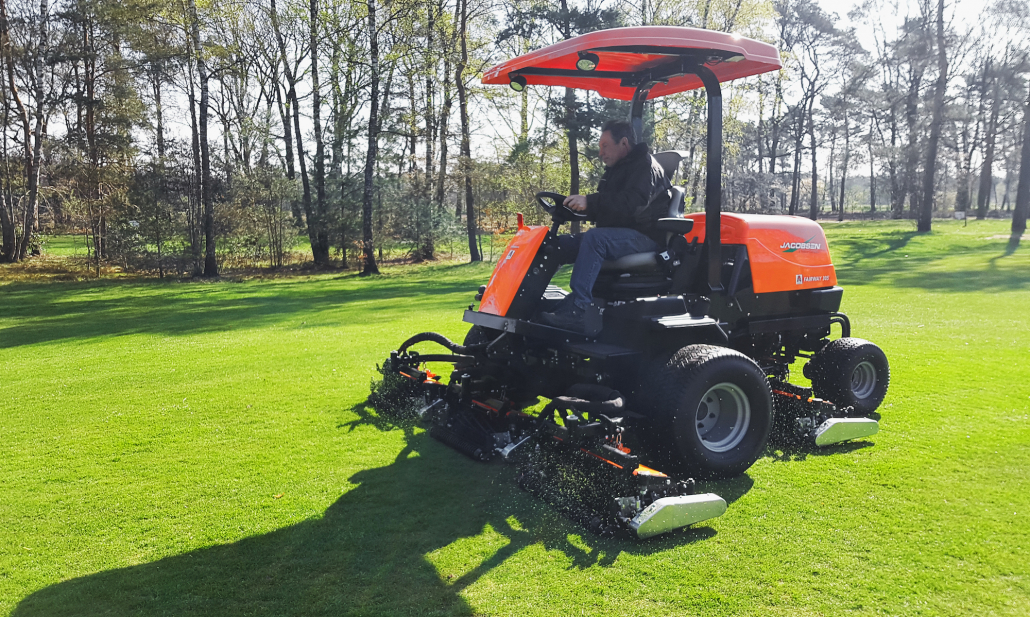
Lochemse raise standards with Jacobsen: After greenkeepers and members became frustrated with the quality of cut and condition of the fairways at Lochemse Golf Club, head greenkeeper, Geert Olthuis, switched brands to Jacobsen and has used a Fairway 305 to turn things around.

No stone was left unturned by Geert in his search for a new fairway mower. He trialled five machines from different suppliers before the cut quality, and simplicity of the Jacobsen 305 was picked to elevate the fairways aesthetics and performance.

Lochemse raise standards with Jacobsen

Initially, Geert was sceptical about the mower specification compared to the machine he had been using, but he explains how his opinion was soon changed.

“When we saw the cutting finish, we couldn’t believe it because it was so good. I was unsure of the Fairway 305 when I first saw it because it only had seven blades and no groomers, but it cut better than our mower that had groomers and 11 blades.

“We were looking for a simple machine with a better quality of cut and higher capacity. We had demos of four other mowers but the 2.94m cutting width, cut quality and simplicity of the 305 really impressed us.

“Nicely cut fairways make a course better, but our members, and us as greenkeepers, weren’t happy with the results of our old machine, even when we were mowing three times a week. Now, we as greenkeepers and our members are very happy with our fairways again.”

The success of the 305 stems from its simplicity. It’s a machine that’s built to be reliable and gives operators unsurpassed productivity while providing an unrivalled quality of cut.

This cut quality comes from the five 66cm floating head cutting units that follow all contours and undulations to ensure an even cut on all areas. The floating head system works with the four-wheel-drive – provided as standard – which provides greater traction and causes reduced turf compaction.

Productivity is increased across the machine in several areas, including the cutting units that don’t require any tools to adjust the reel to bedknife. Quick changes from collection to rear discharge can be easily made using the adjustable grass discharge section, and for prolonged use, the radiator pack and hood have been optimised to increase airflow in hot, dusty conditions, preventing downtime due to overheating.

Because of the increased productivity of the 305, operators spend less time cutting the course, but operator comfort remains a priority. An arm-rest mounted joystick is used for all mower lift and lower functions, and a deluxe adjustable high-back suspension seat has been fitted for optimum operator comfort.

For the latest industry news visit turfmatters.co.uk/news

Get all of the big headlines, pictures, opinions and videos on stories that matter to you.

Follow us on Twitter and Instagram for fun, fresh and engaging content.

You can also find us on Facebook for more of your must-see news, features, videos and pictures from Turf Matters.