Tag Archive for: Work

Woodland Work At Fife Golf Trust

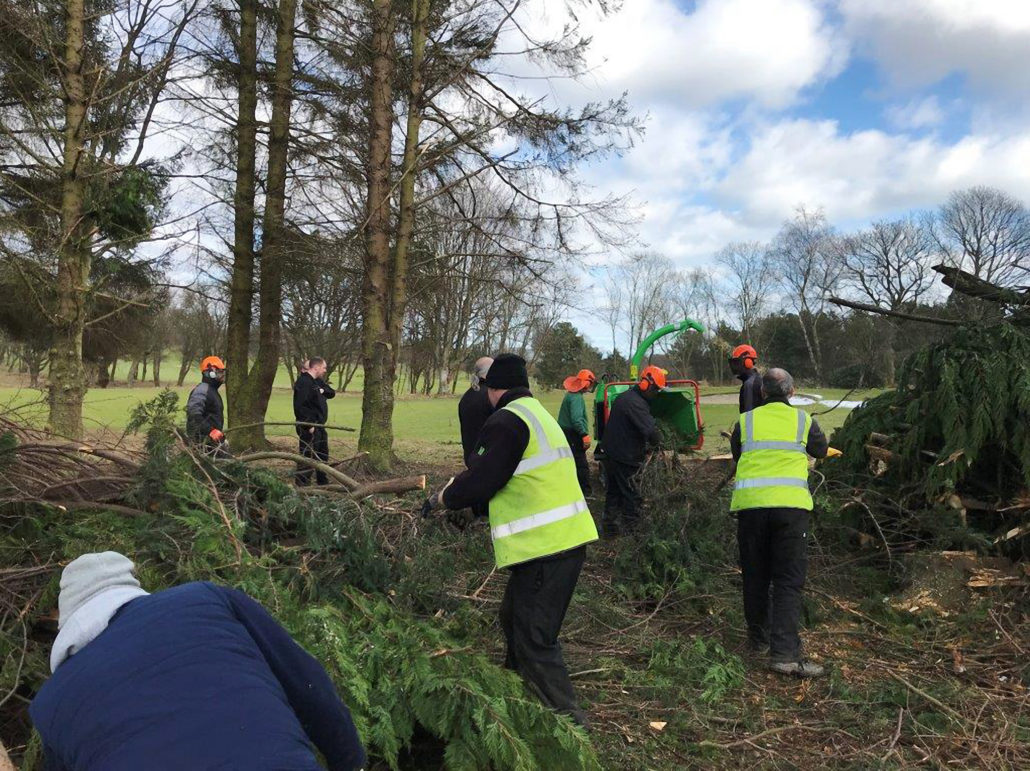
Woodland Work At Fife Golf Trust: Thanks to Fife Golf Trust’s purchase of a GreenMech QuadTrak chipper and trailer, almost 20 years of little woodland management across a number of course in Scotland has come to an end. Fife Council owns seven golf courses and the Trust has maintenance responsibilities for all of them. Golf Courses Manager Paul Murphy and his team of 21 greenkeepers has now put the disposal of the woody waste firmly back on the agenda with their recent purchase.

“Each course is equipped with a basic fleet of machinery for routine maintenance, however we also have a bank of equipment that’s shared between the sites” explains Paul, who has been with the trust for five and a half years. Prior to Paul joining, woodland management had been on the back burner, something that changed two years ago. “We’re now a couple of years into a long overdue tree thinning programme, for which we use an external contractor. However, following the work they mainly conduct with tree harvesters, we found there was a lot of material that required clearing.”

Woodland Work At Fife Golf Trust

When hiring a chipper was ruled out for being too costly, Paul lead the search for a chipper that would fulfil the requirements of the various courses. “We looked at a few alternatives, but I was keen on the GreenMech product from previous experience. We had a demonstration of the QuadTrak from local dealer Henderson Grass Machinery and were impressed with how it performed. That, together with the back up support from them as a dealer and the no quibble warranty from GreenMech, sealed the deal.” Paul took delivery of the QuadTrak, together with a bespoke road-towable trailer in February 2018.

“Having the tracked chipper complete with a trailer gives us the best of both worlds. The self-levelling tracks are fantastic for work on uneven ground while the trailer makes it easy to transport the chipper around the course or between sites.” While it’ll earn its keep mainly between November and February, should anything come down during the season, the team are now equipped to deal with it. “The machine is simple to operate, build quality is fantastic and all of these elements combined will help us ensure our courses are tidy for the start of the season, for many years to come.”

For more information, visit: www.greenmech.co.uk

For the latest industry news visit turfmatters.co.uk/news

Get all of the big headlines, pictures, opinions and videos on stories that matter to you.

Follow us on Twitter for fun, fresh and engaging content.

You can also find us on Facebook for more of your must-see news, features, videos and pictures from Turf Matters.

Work Smarter With Aspen Alkylate Fuel

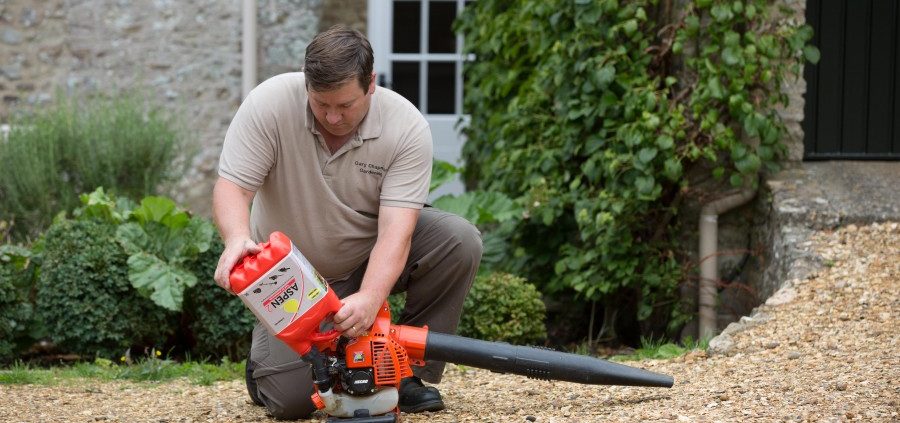
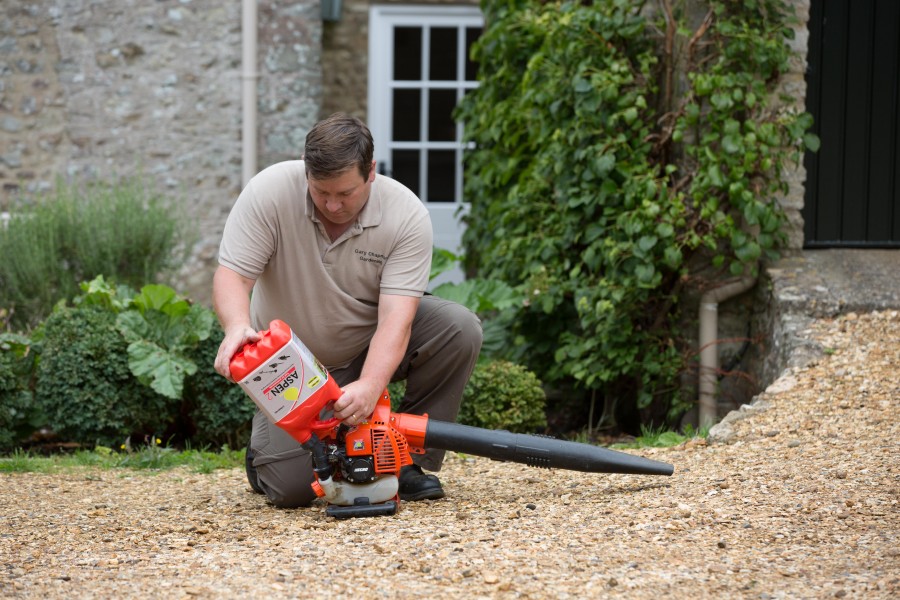
Work Smarter With Aspen Alkylate Fuel: Aspen Fuel is the world front runner in supplying clean burning, low emission alkylate petrol for small engine machinery, originally created back in 1988 to tackle the health problems which forestry workers were encountering when working in an environment filled with fumes from their two-stroke chainsaws.

Available as a ready mixed two-stroke fuel and a straight petrol replacement, it has quickly become the industry standard of petrol for anyone working behind petrol powered, handheld machinery in Sweden, Finland, Norway, Switzerland, Germany, Holland, Belgium, Italy and France. To date, more than 350 million litres of Aspen Fuel has been sold worldwide. In the UK, Aspen fuel is distributed by Anglo American Oil Company Ltd and is sold throughout the country by over 350 dealers.

Work Smarter With Aspen Alkylate Fuel

Delivered directly to you

Businesses and local authorities can benefit greatly by having Aspen fuel delivered directly to their site, saving the time spent going to get petrol and avoiding the possibility of damaging two-stroke equipment due to an incorrect fuel/oil mixture. Aspen fuel contains 99% less harmful hydrocarbons therefore machines running on Aspen fuel will emit much cleaner exhaust emissions compared to standard petrol, making working with these machines a much safer and more pleasant experience.

Not only better for the environment but also better for you and your machines – Simple!

  • Free deliveries directly to your premises – no downtime travelling to collect fuel.
  • Long shelf life allows for fuel to be left in machines for long periods of storage without any damage occurring to the fuel system.
  • Premixed 2-stroke version eliminates the risk of mixing errors or accidents.
  • Less machinery down time due to breakdowns.
  • Machines last longer and are easier to service.
  • Easy for operators to select the correct fuel and avoid costly mixing errors.
  • Improved working environment for your staff by reducing toxic emissions.
  • Easy to monitor fuel consumption and factor into job costs.
  • Simplified accounting with fewer receipts.

To find out more about the benefits of working with Aspen fuel please visit the website https://aspenfuel.co.uk/benefits/professionals/

For the latest industry news visit turfmatters.co.uk/news

Get all of the big headlines, pictures, opinions and videos on stories that matter to you.

Follow us on Twitter for fun, fresh and engaging content.

You can also find us on Facebook for more of your must-see news, features, videos and pictures from Turf Matters.

EcoBunker Starts Work On Dumbarnie Links

EcoBunker Starts Work On Dumbarnie Links: The new Dumbarnie Links course at Lower Largo on the south coast of Fife in Scotland – just a little more than ten miles from St Andrews – is now under construction, and EcoBunkerʼs project team has moved onto site to begin the installation of its synthetic edging product in all of the courseʼs formal bunkers.

The course has been designed by Clive Clark, formerly a Walker and Ryder Cup player, and a long-time BBC Television golf commentator, but now an established golf course architect based in the United States. The golf course is being built by American contractor Landscapes Unlimited.

EcoBunker Starts Work On Dumbarnie Links

Fife Council granted planning consent for the project in April 2018, and the construction team moved onto the site in May. Shaping of the golf holes and bunkers is already underway, and the EcoBunker team is gearing-up to finish constructing the bunkers.

Where bunkers are hard against greens, or surrounded by short grass, they will be fully revetted using EcoBunkerʼs synthetic solution. However, where bunkers are positioned to be a transition between maintained grass and native rough, they will be constructed in a hybrid fashion, with elements of chunked, rough edge and also of revetment. Some of these natural bunkers will be quite large and are sure to be a dominant feature of this very special golf course.

EcoBunker global installation specialist Llewelyn Matthews – like architect Clark a former Walker Cup player – will lead a five-strong construction crew to build the bunkers. Matthews will be on site full time during construction, which is scheduled to last sixteen weeks and come to a conclusion in September. Project manager Paul Kimber and the team from Landscapes Unlimited will work closely with the team on the very important bunker construction.

Richard Allen, EcoBunker inventor and CEO, said: “New links courses are extremely rare, and we are very proud and happy to be playing a major role in the construction of Dumbarnie, which promises to be an outstanding golf course that will attract play from all over the world. This is one of our largest ever projects, and we are very pleased to be working so closely with Paul Kimber and the Landscapes Unlimited team to make Dumbarnie a true destination links.”

For the latest industry news visit turfmatters.co.uk/news

Get all of the big headlines, pictures, opinions and videos on stories that matter to you.

Follow us on Twitter for fun, fresh and engaging content.

You can also find us on Facebook for more of your must-see news, features, videos and pictures from Turf Matters.

Work Of A Non-League Groundsman

Work Of A Non-League Groundsman: In the no-frills, grass roots world of non-league football, it’s possible the most important man on the pitch is the groundsman.

Sitting on a plastic chair, in muddy boots and paint stained jacket, David Page is every bit the non-league groundsman I was hoping to meet.

“The day begins with a cup of tea,” he says, welcoming me into the cosy former shipping container, which serves as his office and general tea room. “You’ve turned up at the perfect time. Days like this provide a glimpse into real life non-league football.”

My journey to Crown Meadow, the home of Vanarama National League North side Lowestoft Town was old school. No out of town, bland stadium here, but a walk along Seago Street, past rows of terrace housing, eventually arriving at the metal gates. It feels like a proper football ground, steeped in history, rooted in the local community. I vividly remember watching games here, on dark winter nights with friends some twenty-plus years ago. Experiences like those stay forever in the mind.

The club has seen mixed fortunes – fighting bankruptcy, relying on supporters’ donations, then an FA Vase final at Wembley, successive promotions, play-off finals and now reaching the heights of National League North non-league football. By any standards, it’s been one heck of a journey for the Trawlerboys.

Sipping our tea, we stare out at the bleak conditions. Rain pummels the pitch with such force that I doubt today’s important match against one of the league’s biggest teams, Stockport County, will go ahead.

“It’ll be on,” says David. He should know. He’s looked after the pitch for 19 years. He takes off his deep blue baseball cap, which proudly bears the club logo. The previous night was a sleepless one, he says, worrying about the pitch and checking for regular weather updates.

“I never switch off. I can’t – I keep thinking about my pitch and what condition it will be in.” David is a Lowestoft man. He used to work in the fishing industry, spending days and nights out on the North Sea on one of the many trawlers that frequented this stretch of coast. But nineteen years ago, he was approached by the Lowestoft Town chairman to become their groundsman. He joined the ground-keeping course at Ipswich Town, learning from the best in the business, Alan Fergusson, now head groundsman at St Georges Park, home of the England international team.

Sitting in the press box, overlooking the ground, I chat to David. He is focused on the pitch, watching rain sweep across, soaking the already soaked turf. It’s like watching a chess player planning his next move.

“What you see is what you get here,” he says. “We don’t have the luxury of training pitches or elaborate facilities, this pitch sees a lot of action. Four of our sides play and train on the surface.” The first team, reserves, youth and women’s sides all regularly use the surface, making the groundsman’s job all the more difficult. It’s in remarkable condition, considering.

Despite the advancement of technology and pitch care, the job of a non-league groundsman has changed little, and the task of getting the pitch ready for match day is much the same as it always was, although, as David is keen to point out, there is a vast improvement in equipment.

“When I first came up here, the groundsman at the time took me to the shed, handed me the rechargeable drill and pointed to the lawnmower – that was it.” The Trawlerboys’ shed is now home to a host of ground improving aids – large and small rollers, slitter, mowers, rakes and no end of tools to help keep the surface in top condition. A combination of good equipment and superb knowledge means the club did not postpone one game last season, impressive for any club, but especially for a non-league side.

It hasn’t always been like that. David recalls one match day when he arrived to find three-quarters of the pitch under water.

“I could have cried,” he says. We head towards the home team changing room. George the kit man is already laying out the players’ match day kit. Rows of bright blue shirts hang from the hooks, while freshly laundered towels and other essentials are carefully placed at the ready for each player.

David checks the facilities, making sure everything is working. The job of a groundsman at this level is one of caretaker too. The club also has several volunteers who help with painting and maintenance.

On a match day David typically arrives around 6.30am and is normally the last to leave in the evening. He returns early Sunday morning to clean the stands and changing rooms, and see to the pitch if there is a women’s game on. “It’s a good job my wife works in the turnstiles, otherwise we would never see each other,” he says.

As the rain eases off, we head out onto the pitch. Holding his trusty groundsman’s fork, David begins slowly lifting the turf, allowing some of the standing water to disperse. The pitch feels spongy and I imagine it won’t take much for the surface to cut up, but David remains hopeful.

“We have the referee coming around 10am for a pitch inspection – I think we’ll be OK”. Heading back to the office I warm up by the heater while David, the referee and club secretary stroll across the soggy pitch.

“Is it on, mate?” asks a Stockport County fan, one of many who have stayed in town overnight after a six-hour car journey. The game is given the go ahead, preparations for match day continue, and as the rain subsides, the line marker is brought pitch side. It’s a job that can take a good hour and means walking miles over the course of a week. I head for the exit.

The next time I see David is at half time in the match. He’s out there, patting and lifting the turf, nurturing the surface. A last minute goal sees the Trawlerboys grab a score draw. The fans pour out of the exit, smiles on their faces. David is pitch side, staring out onto his beloved turf, pondering his next move.

Click here to read the original article

For the latest industry news visit turfmatters.co.uk/news

Get all of the big headlines, pictures, opinions and videos on stories that matter to you.

Follow us on Twitter for fun, fresh and engaging content.

You can also find us on Facebook for more of your must-see news, features, videos and pictures from Turf Matters.

Pitch Work At Pirelli Stadium

Pitch Work At Pirelli Stadium: Work has been completed on a new drainage system at the Pirelli Stadium as the pitch is prepared for the 2018-19 season.

Burton Albion groundsman Simon Marshall says the groundstaff are “always keen to improve the surface”, and extra work has been undertaken this summer to get the pitch in the best condition for Albion’s attempt at earning promotion back to the Championship next season.

Efforts began immediately following the European Under-17 Championships last month, with games having taken place at the Pirelli.

On top of the usual seeding of the playing surface, which is done annually between campaigns and is currently being carried out, the new drainage system was put in place to maintain a better condition for the pitch throughout the coming season.

“Over the years we have had problems with the drainage, so we are having a new major drain system that should keep the pitch in better condition,” said Marshall.

“Then we won’t need to put down as many waterproof sheets due to the inconsistencies across the pitch.

“From the groundstaff’s point of view, we are always keen to improve the surface, and with the chairman and the club’s backing, we are making progress year on year.”

After a season in which the Brewers went seven months without a home victory, Nigel Clough will be hoping his side can become a tougher proposition at the Pirelli again in 2018-19.

That will rely on the quality of football they can produce in League One – and the surface they are playing that football on.

“Pitch work is done every year, but they need continued investment and major work now then,” said Clough.

“You can see from the pictures the amount of work going on out there, and hopefully it will give us a good playing surface for next season.”

Click here to read the original article

For the latest industry news visit turfmatters.co.uk/news

Get all of the big headlines, pictures, opinions and videos on stories that matter to you.

Follow us on Twitter for fun, fresh and engaging content.

You can also find us on Facebook for more of your must-see news, features, videos and pictures from Turf Matters.